Thursday, March 26, 2015
Video: Danny MacAskill's Solar Eclipse Ride
For last week's total solar eclipse in Europe famed mountain bike rider Danny MacAskill traveled to his homeland on the Isle of Skye in Scotland to take his bike for a spin just as the moon was covering the sun. The video below chronicles that journey – and that ride – in epic fashion, wish some amazing shots of the island, as well as Danny's usual escapades on the trails there. If you've seen any of his other mountain biking films, you know what to expect here, and as usual Danny delivers in spades.

Trail Run Takes Athletes Around Kilimanjaro on Foot

The run is the brainchild of Simon Mtuy, a Tanzanian who has earned world-wide respect for his trail running skills. Back in 2006 Simon set a record for running to the summit of the mountain, reaching the top in just 9 hours and 21 minutes. That record was broken in 2013 when Simon helped Kilian Jornet beat his mark. Jornet managed to make the trip just 7 hours and 14 minutes. The current record, held by Ecuadorian mountain runner Karl Egloff stands at 6 hours, 56 minutes, and 24 seconds by the way. To put that in perspective, on my recent climb up Kili, we spent the better part of seven days reaching the summit.
But they Kilimanjaro Stage Run isn't about speed or setting records. Instead, it covers 260 km (161.5 miles) over 11 days as participants travel completely around the base of the iconic mountain. The runners stay on dirt tails and footpaths the entire way, at altitudes that range from 1400-2000 meters (4593-6561 ft). They pass through dense rainforests, pass beautiful waterfalls, and immerse themselves into Tanzanian culture in small villages along the way. All the while, the snowcapped peak of Kili looms tall overhead.
The Nat Geo article gives readers a good indication of what the run is all about, and provides excellent insights into the experience for intrepid trail runners who are considering attempting the run themselves. You can also check out the fantastic short film called Mountain of Greatness, which you'll find below. It follows a team of runners who completed the KSR back in 2012, and gives viewers an even better sense of what it is like out on the trail.
The 2015 edition of the Kilimanjaro Stage Race is set to take place from October 17-27 of this year. If you're interested in running it, you can find out more here. Sign up and get busy training. There is still plenty of time to prepare.
Himalaya Spring 2015: More On Annapurna Tragedy
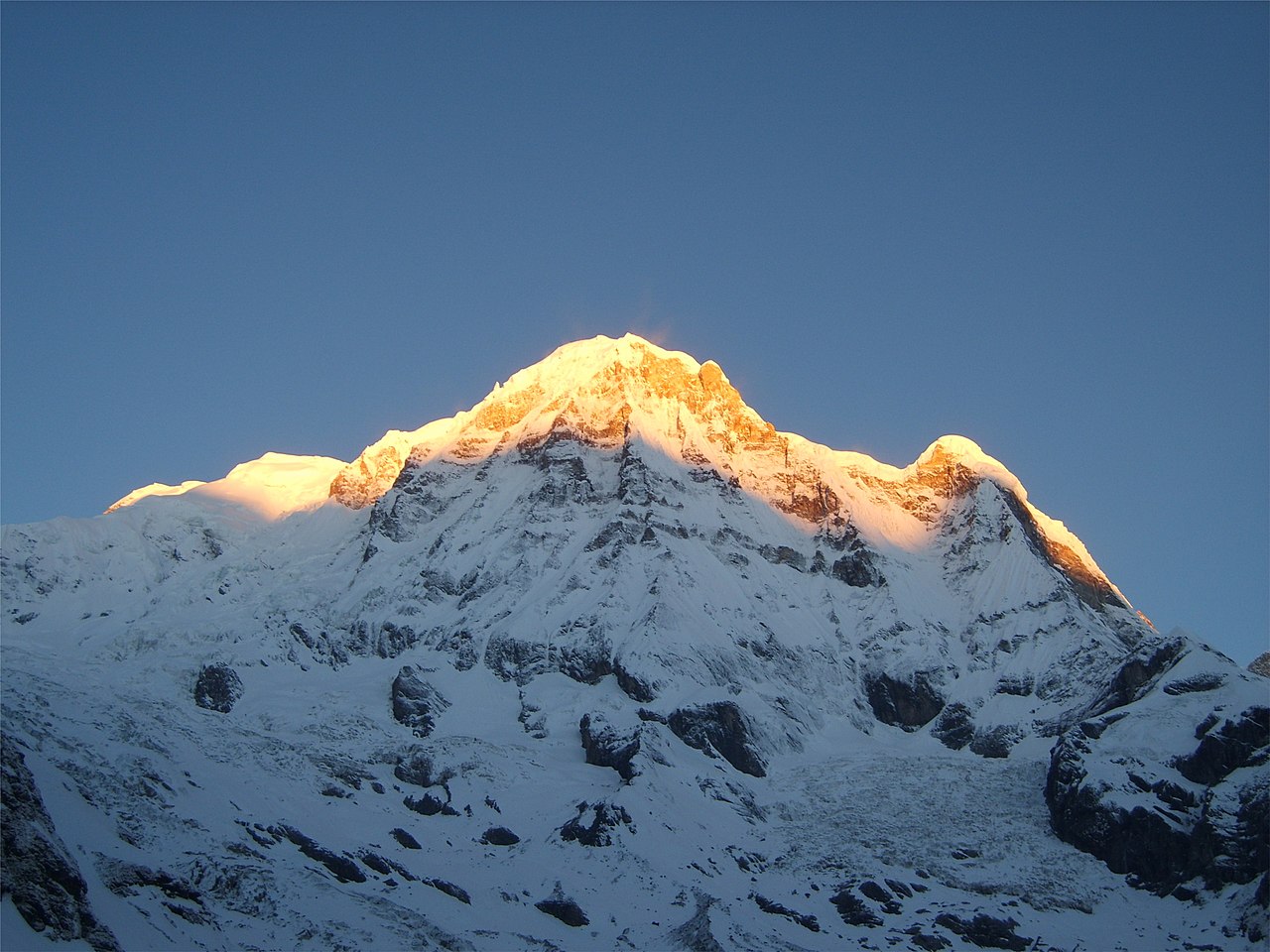
Samuli and Pemba were on Annapurna as part of the Dreamers Destination team. They arrived on the mountain early in the season in an attempt to summit before the spring snows change the complexion of the mountain. Their plan for an early summit paid off, and 13 members of the squad reached the top a few days back.
But apparently the team was slow in descending, and according to reports they ended up not returning to Camp 4 after their summit, and instead bivouacked at 7400 meters (24,278 ft). While they were stranded high on the mountain, something happened to Samuli and Pemba. The reportedly went missing for a time at 7100 meters (23,293 ft), and the rest of the squad wasn't sure where they were located. Their bodies were later discovered at 7000 meters (22,965 ft), but the cause of their death is either unknown, for has yet to be revealed.
The rest of the Dreamers Destination squad has been slowly making its way back down the mountain. Reportedly they are all both mentally and physically exhausted from their climb, and the ordeal that followed shortly there after. The squad is expected back in Base Camp tomorrow, after reaching Camp 1 today. Hopefully there will be no further problems as they descend, as many accidents occur when climbers are extremely tired.
Reportedly the attempts to retrieve the bodies of their fallen comrades has been called off. Yesterday it was reported that rescue helicopters had been dispatched to the mountain, but they were apparently called back. Considering the height at which they perished, it may be unsafe to attempt to bring them down. Particularly considering the state that the DD team is in at the moment.
Meanwhile, two other climbers are preparing to launch their summit bids on Annapurna as well. Both Australian climber Chris Jensen Burke and Spaniard Carlos Soria have reportedly wrapped up their acclimatization rotations and are now eyeing a weather window that will allow them to climb up to the summit. If everything goes as planned, they could be standing on top this weekend, although the conditions on the mountain will probably decide if that happens.
This is a surprising start to the spring climbing season. Most of the teams are only now preparing to arrive in Kathmandu ahead of the start of their expeditions. But we have already seen early season summits on Annapurna, and two tragic deaths. It is an ominous sign for things to come, but lets home the rest of the season goes more safely and smoothly.
Wednesday, March 25, 2015
Video: Reinhold Messner Talks Mountaineering, Adventure, and More
Reinhold Messner is a true legend in mountaineering. He is the first man to climb all 14 8000-meter peaks, and he pioneered the idea of climbing without the use of supplemental oxygen. As you can imagine, he has seen and done a lot of amazing things throughout his career. In the video below, he shares his thoughts on a number of topics, and offers some advice to young climbers today. If you're not familiar with Messner, this video is a great introduction. If you already know all about him, it is a good reminder of the impact that he has had on mountaineering. Great stuff as always from National Geographic.
Video: Riding the Tour of the Dragon in Bhutan
Bhutan is home to many things, including towering mountains, impossibly deep canyons, and amazing Buddhist temples. It is also home to the Tour of the Dragon, a one-day mountain biking race that covers 268 km (166.5 miles) between Bumthang and the capital city of Thimphu, crossing over four mountain passes in the process. The video below gives us a taste of what that race is all about, with stunning footage of landscapes of Bhutan serving as a backdrop. If there are any riders out there looking for a new challenge for 2015, this could well be it. The next Tour of the Dragon is scheduled for September 5, so get training.
Gear Closet: Rocky S2V Substratum Direct Attach Hiking Boots

I will say that while I was very excited to receive the Substratum Direct boots as part of my pre-Kilimanjaro care package from the good folks at Rocky S2V, they did not accompany on my journey to Africa. As I wore them prior to departure, I realized two things. First, they needed to be properly broken in before I could scale a mountain in them, and secondly they are incredibly warm, which would have been great on the summit push, but not so useful on the lower portions of Kili where you're hiking through muggy rainforests. For those reasons, I chose to leave them at home and carry a pair of boots that were more suitable for all of the climate zones on Kilimanjaro instead.
That said, it should be noted that these boots are actually fairly easy to break-in, I simply didn't have the time to do so before leaving for my climb. But upon return, I have been wearing them regularly, and it has taken very little time at all to get them completely broken in. They were already very comfortable straight out of the box, but the flexibility wasn't quite where I wanted it at first. But it didn't take long at all for the boots to loosen up, and feel more natural on my feet.
As with all of their gear, Rocky S2V has built the Substratum to perform incredibly well in the poorest conditions imaginable. They are completely waterproof, with the fabrics that make up the boot treated with Rocky's proprietary Hydro IQ which repels moisture incredibly well, while still allowing your feet to breathe nicely. They also use both PrimaLoft and Aerogels as insulation, which explains why they are so incredibly warm, even in very cold conditions.
Of course, it doesn't matter how warm and dry a boot keeps your feet if it doesn't provide good traction on the trail. The Substratum deliver in that department too with Vibram sole that sticks to just about any surface – wet or dry – and provides plenty of protection for the foot too. I've used these boots on dry and muddy trails, as well as on snow and ice, and have found that they provided excellent traction on all of those surfaces. Something that provides a nice piece of mind when heading out on more challenging excursions.
The Substratum gets high marks for durability as well. As with Rocky S2V's other products, the level of construction is incredibly impressive, and it feels like these boots were built to last a very long time. My pair looks practically brand new despite having a few miles on them. The designers of these boots picked high quality materials for every element of the Substratum, and while I've only had them a short time, it seems this is the kind of hiking boot that will last you for years.
Those high quality materials will definitely extend the life of the boots, but they also have added a bit of extra weight to the shoes as well. I don't have very many nits to pick with the Substratum, but they are on the heavier side when compared to the competition. If you're a backpacker or climber who counts every ounce, you may find that a lighter boot is more to your liking. But when you consider the level of durably, protection, and performance that the Substratum bring to the table, you may find that there is very little else that can actually compete with them in all categories.
As mentioned several times, these boots are quite warm. So much so that I'm not sure they'll be something that I could wear on the trail during the summer months. They are definitely well suited to cooler weather hikes, and will perform exceptionally well in the winter, but during the summer most people will probably find them to be uncomfortably warm. Keep that in mind when you consider what you're looking for out of a boot, and when and where you'll be using them.
Rocky S2V designs their gear to be used in extreme conditions, and as such they often build in features that are meant to help us survive in the backcountry, even when disaster strikes. With the Provision Jacket for example they include a handy little survival kit complete with a signal mirror, compass, and so on. Both the Jacket and the Provision Pants also incorporate the Recco rescue technology as well, making it easier for SAR teams to locate the wearer should they go missing. With the Substratum boot the mad scientists in the Rocky labs have incorporated two fire sparkers and two wet cubes in the insole, making it very easy to start a fire should you find yourself in a situation where that is necessary. This is a nice touch that helps set Rocky's gear apart from the competition, and while you may never need to use these survival items, it is nice to have them just in case.
The Substratum carry an MSRP of $299.99, which puts them into a more expensive price range than most people will probably want to spend on a boot. But then again, these boots aren't built for most people. They are made for the active outdoor adventure who demands high performance out of their equipment, and expects it to meet those demands in the harshest environments imaginable. This is a boot that is made for backpackers and mountaineers heading into remote areas where conditions can be a bit unpredictable, and they will serve those men and women very well. If you're in need of that kind of performance, than this is certainly the boot for you.
On a side note, Rocky S2V makes a lot of boots that are used by U.S. military personal stationed across the globe. Much of the design and technology that goes into those boots have also made their way into the Substratum as well. In fact, both of the Green Berets that accompanied me on my Kilimanjaro climb owned boots from Rocky, and had nothing but praise for their high quality and high level of performance. One of those soldiers even brought a pair along for the trip, and he wore them throughout. The Substratum take many of their cues from those same boots, and the Rocky legacy and quality is evident across their entire line of gear. I can't tell you how impressed I am with all of their products, and I will be recommending them highly for a long time to come.
Himalaya Spring 2015: Two Climbers Perish on Annapurna Following Successful Summit

As reported yesterday, Samuli and Pemba were part of the Dreamers Destinations team that topped out on Annapurna. The squad managed to put 13 climbers on the summit amidst good, early spring weather. It seems likely that following their successful summit bid the team returned to Camp 4 and rested there overnight before attempting to descend back to Base Camp today. Apparently an accident must have occurred on that descent, claiming the lives of both climbers. What that accident was remains a mystery, but Annapurna is notorious for having frequent and deadly avalanches.
According to the article linked to above, the teammates of the two fallen climbers are hoping to retrieve their bodies from the mountain. Rescue helicopters have also been sent to assist in that process. The two men lost their lives at roughly 7000 meters (22,290 ft), so that process will not be an easy one.
This is a sad start to the climbing season which remains on the brink of actually starting. As mentioned, most climbers are only now preparing to set out for the Himalaya, with most not arriving in Nepal until next week. But the Dreamers Destinations team – amongst others – arrived on Annapurna early in an attempt to climb the mountain before it gets more dangerous later in the spring. At this point, the mountain is mostly still frozen following the long winter, and the heavy snows that come later have not started yet. Their plans for summiting early seemed to have worked brilliantly, although this accident will cast a long shadow over Annapurna, a mountain that is considered to be one of the deadliest in the world.
My condolences go out to the friends and family of Samuli and Pemba in their time of need.
Subscribe to:
Posts (Atom)