Showing posts with label Gear. Show all posts
Friday, April 3, 2015
Video: Flying the Aura 2 Wingsuit
After not having a good wingsuit video for quite some time, we now have two in one day. This seven-minute clip is a promo for the Aura 2 suit from Squirrel, which just went into production a few days ago. While it is used to sell the product – which most of us will probably never buy – it does feature some beautiful shots of pilots putting the new suit to the test in some beautiful locations. If you like BASE jumping and wingsuit videos, this will be pure bliss for you. Truly some fantastic footage on display here.
Squirrel >> AURA 2 from squirrel on Vimeo.
The North Face is Giving Money Away!
While we all know that The North Face is a great outdoor gear company, it also has some highly successful charitable ventures that it funds throughout the year as well. Two of those project are underway right now, and the company is giving away hundreds of thousands of dollars as a result.
Protect Our Winters Hot Planet/Cool Athletes Promo from protect our winters on Vimeo.
The first of these ventures is the Explore Fund, a program that provides funding for nonprofit organizations that encourage people to get outside and interact with nature in a meaningful way. While the program is open to any outdoor-related nonprofit, it puts a particular emphasis on those that are focused on motivating young people to get outside and pursue their own adventures.
To be eligible for an Explore Fund grant, an organization must be a 501(c)(3) or in a formal relationship with such a qualified fiscal sponsor. Applications are being taken through April 17, with more than $500,000 available to help launch major initiatives. To start the application process, click here.
The other program that is currently accepting applications is the Hot Planet/Cool Athletes initiative, which is being conducted in association with the Protect Our Winters organization. The mission of Hot Planet/Cool Athletes is to educate future generations about the threats we face from global warming and climate change. With that in mind, middle schools and high schools are invited to submit a plan to receive a Powder Grant that would help fund projects that address environmental action in their schools or communities. The grants are valued at up to $10,000. Schools can also request an assembly given by a pro outdoor athlete, or a DVD that can be shown multiple times. For more info, visit HotPlanetCoolAthletes.com.
While both of these initiatives are quite different from one another, they demonstrate The North Face's commitment to protecting the environment and encouraging future generations to get outside and enjoy our planet to its fullest. While I respect the company for the often excellent gear that they produce, these kinds of programs give me an even greater sense of satisfaction about what they do.
The other program that is currently accepting applications is the Hot Planet/Cool Athletes initiative, which is being conducted in association with the Protect Our Winters organization. The mission of Hot Planet/Cool Athletes is to educate future generations about the threats we face from global warming and climate change. With that in mind, middle schools and high schools are invited to submit a plan to receive a Powder Grant that would help fund projects that address environmental action in their schools or communities. The grants are valued at up to $10,000. Schools can also request an assembly given by a pro outdoor athlete, or a DVD that can be shown multiple times. For more info, visit HotPlanetCoolAthletes.com.
While both of these initiatives are quite different from one another, they demonstrate The North Face's commitment to protecting the environment and encouraging future generations to get outside and enjoy our planet to its fullest. While I respect the company for the often excellent gear that they produce, these kinds of programs give me an even greater sense of satisfaction about what they do.
Backpacker Picks the Best New Gear of Spring 2015
With spring officially here, it is time to start planning some outdoor adventures, with hiking, backpacking, and camping trips on the agenda. It is also a good time to pick up some new gear for those excursions, and Backpacker magazine is here to help in that department.
The outdoor adventure-focused mag has recently published its spring gear guide, providing readers with lots of insights and information on a wide variety of products. For instance, their backpack overview alone covers more than 18 new packs, each of which were put to the test by over 160 different people in the field. Which packs came out on top? The team at Backpacker were especially fond of the new Atmos/Aura packs from Osprey, as well as the Baltoro and Deva from Gregory.
But backpack aren't the only gear items on the slate of products that were tested. The best new hiking boots were also run through the ringer, as were the latest sleeping bags and pads as well. The magazine even took a look at the top shell jackets, as well as the very best tents for the camping season ahead.
If you're in the market for some new backpacking gear this spring, than you'll definitely want to drop by the site and check out what products won the coveted "Editor's Choice" awards. If you're going to be spending your hard-earned dollars on new boots, packs, or tents, you want to ensure that you're selecting the best that your budget allows. As usual, the Backpacker team is very thorough in their methodology, and there is lots of good insight to be gleaned from their testing. Before you head out to your local gear shop, see what they had to say about the products you're considering adding to your gear closet.
The outdoor adventure-focused mag has recently published its spring gear guide, providing readers with lots of insights and information on a wide variety of products. For instance, their backpack overview alone covers more than 18 new packs, each of which were put to the test by over 160 different people in the field. Which packs came out on top? The team at Backpacker were especially fond of the new Atmos/Aura packs from Osprey, as well as the Baltoro and Deva from Gregory.
But backpack aren't the only gear items on the slate of products that were tested. The best new hiking boots were also run through the ringer, as were the latest sleeping bags and pads as well. The magazine even took a look at the top shell jackets, as well as the very best tents for the camping season ahead.
If you're in the market for some new backpacking gear this spring, than you'll definitely want to drop by the site and check out what products won the coveted "Editor's Choice" awards. If you're going to be spending your hard-earned dollars on new boots, packs, or tents, you want to ensure that you're selecting the best that your budget allows. As usual, the Backpacker team is very thorough in their methodology, and there is lots of good insight to be gleaned from their testing. Before you head out to your local gear shop, see what they had to say about the products you're considering adding to your gear closet.
Labels:
Backpacking,
Boots,
Camping,
Gear,
Hiking,
Jacket,
Packs,
Sleeping Bags,
Tents
Thursday, April 2, 2015
Gear Closet: Cogito Connected Watch (Updated!)
Update: After applying a firmware update to the Cogito Classic watch the issues I've mentioned below about it not staying connected to my iPhone have pretty much disappeared. That said, the device now puts more of a hit on the battery of my phone as well. The tradeoff is that you have a much more reliable connection between the two devices for passing updates, messages, and so on.
One of the hottest trends in technology at the moment is in field of wearables. With the impending release of the Apple Watch, there is a lot of buzz about smartwatches can do for consumers, although it has yet to be seen if there is a true market for these products. But Apple's latest gadget isn't the first entry into this rapidly developing space. There are a number of options available, including a wide variety of Android Wear devices, and the very successful Pebble line as well. Recently, I've had a chance to catch a glimpse of what all the fuss is about while testing the Cogito Classic Connected Watch, a timepiece that both shows the potential of these products, and sheds some light on their shortcomings as well.
At first glance, the Cogito Classic doesn't look like it is a smartwatch at all. In fact, it actually appears to be a rather stylish casual watch that you would wear for many occasions without drawing attention to its tech-centric features. Available with a wide variety of leather, nylon, and metal bands, it can take on a surprising number of looks, while its stainless steel body is eye-catching without being overly flashy in any way. This isn't always the case with other smartwatches, many of which stand out due to their poor design. But while wearing the watch over the past few weeks I've had more than a few people compliment me on how good it looks. When I explain a bit further about what it can do, they are often intrigued further.
In addition to looking much like a normal watch, the Cogito Classic has a few tricks up its sleeve. With its integrated Bluetooth technology, it is capable of paring with your smartphone (both iOS and Android) to provide basic information right on your wrist. For instance, it can tell you when you have received new emails or app notifications, and alert you to upcoming appointments on your calendar. It will also tell you when you have a new text message as well, and display it on a tiny screen hidden on the watch face. It can even alert you to incoming phone calls, providing the caller ID on that same screen. The device is also able to act as a remote control for playing music from your smartphone, and can snap photos with its camera too. As if that wasn't enough, the watch also functions as a basic activity monitor as well, keeping track of the number of steps you take throughout the day as well.
Much of the functionality baked into this watch is meant to provide convenience for the user. The alerts and notifications allow you to have some idea of what is going on with your phone without ever having to take it out of your pocket or bag. This can be enormously helpful when you're in a meeting or other gathering where looking at your phone is frowned upon, as a glance at your watch is much more subtle and less distracting.
While in theory all of that sounds great, in the real world it doesn't always function as nicely as it could. For instance, the watch will buzz at you constantly to alert you that you have emails or notifications waiting, but it isn't capable of displaying any of those messages on its screen. You still end up having to take your phone out to see exactly what is waiting for you. That might be a good thing though, as the Classic's screen is so tiny that it is difficult to read much on it anyway. When it does display a text message or calendar alert, it needs to scroll multiple times just to give you the notification. You won't simply be glancing at your watch to read a text message, you'll have to wait patiently for it to appear on the very small display.
That said, it is nice to be able to see those text messages, calendar events, and caller ID's displayed on your wrist. This actually gives us a tantalizing hint of the potential that smartwatches could deliver, I just wish the Cogito could offer a bit more in that area. But that's part of the problem with the Classic, it feels like there is a lot of potential here, but it it is hamstrung somewhat by the small display and lack of full interactivity with either the iPhone or Android devices.
Cogito is very careful in marketing this product as a "connected" watch rather than a smartwatch. I think that is a wise move on their part, as this is clearly not in the same category as the Apple Watch, which will be capable of doing a heck of a lot more once it is released. Of course, Apple's product also comes at a much higher price tag than this one, and it needs to be recharged every day. Cogito uses standard watch batteries in their devices, and claims it only needs to be replaced about once a year.
One of the main problems I had with this watch was keeping it connected to my iPhone. Pairing the two devices via Bluetooth is a simple matter, but if they wander more than about 20-30 feet from one another, they'll loose their connection. Typically they'll automatically reconnect to one another once back in range, but not always. I've had to manually reconnect on more than one occasion, and sometimes it requires jumping through a few hoops to make that happen.
On top of that, there are sometimes delays in notifications arriving on the watch. On occasion I'll actually feel or hear my phone buzz to tell me I received a text message or some other kind of update, but it takes the watch awhile to actually refresh and display the alert. While I don't expect instantaneous updates, I would expect them to be a bit more consistent with timing. Anything more than a few seconds seems less convenient, as often I could have taken my phone out of my pocket, and read the message before the watch has passed on the alert.
I will say that Cogito stands behind the watch very nicely. The company continues to push out firmware updates to improve functionality and reliability, and they have routinely updated the iOS companion app as well. This is good sign for anyone who is actually thinking of purchasing the Classic, as it means that you'll get a device that continues to improve and be refined. One example of this is the fitness tracking aspects of the watch. That wasn't part of its original feature set, but it was added later.
If you're in the market for a great looking watch that can provide some "connected" functionality than the Cogito Classic is a good buy. It's ability to provide notifications and alerts is useful, even if it doesn't deliver completely on the promise of a smartwatch. The basic fitness tracking features are a nice addition as well, and as a frequent traveler I appreciate its dual-time capability too. This watch is also quite affordable at $179.95, comparing favorably to the Apple Watch which starts at $350. Add in the fact that the battery lasts for months, rather than hours, and you can begin to see how the two companies have taken a different approach to putting technology on your wrist.
I am a person who pretty much wears a watch every waking hour of the day. As such, I have several watches to choose from depending on the days activities and the social setting. The Cogito Classic fits in nicely with that line-up, offering some extra functionality that I don't get out of the others in my collection. I appreciate that it is stylish and good looking too, although it now has me intrigued about what a more full featured smartwatch will be capable of. I'm not sure yet if I'll invest in an Apple Watch, but I definitely see the potential that is there.
One of the hottest trends in technology at the moment is in field of wearables. With the impending release of the Apple Watch, there is a lot of buzz about smartwatches can do for consumers, although it has yet to be seen if there is a true market for these products. But Apple's latest gadget isn't the first entry into this rapidly developing space. There are a number of options available, including a wide variety of Android Wear devices, and the very successful Pebble line as well. Recently, I've had a chance to catch a glimpse of what all the fuss is about while testing the Cogito Classic Connected Watch, a timepiece that both shows the potential of these products, and sheds some light on their shortcomings as well.
At first glance, the Cogito Classic doesn't look like it is a smartwatch at all. In fact, it actually appears to be a rather stylish casual watch that you would wear for many occasions without drawing attention to its tech-centric features. Available with a wide variety of leather, nylon, and metal bands, it can take on a surprising number of looks, while its stainless steel body is eye-catching without being overly flashy in any way. This isn't always the case with other smartwatches, many of which stand out due to their poor design. But while wearing the watch over the past few weeks I've had more than a few people compliment me on how good it looks. When I explain a bit further about what it can do, they are often intrigued further.
In addition to looking much like a normal watch, the Cogito Classic has a few tricks up its sleeve. With its integrated Bluetooth technology, it is capable of paring with your smartphone (both iOS and Android) to provide basic information right on your wrist. For instance, it can tell you when you have received new emails or app notifications, and alert you to upcoming appointments on your calendar. It will also tell you when you have a new text message as well, and display it on a tiny screen hidden on the watch face. It can even alert you to incoming phone calls, providing the caller ID on that same screen. The device is also able to act as a remote control for playing music from your smartphone, and can snap photos with its camera too. As if that wasn't enough, the watch also functions as a basic activity monitor as well, keeping track of the number of steps you take throughout the day as well.
Much of the functionality baked into this watch is meant to provide convenience for the user. The alerts and notifications allow you to have some idea of what is going on with your phone without ever having to take it out of your pocket or bag. This can be enormously helpful when you're in a meeting or other gathering where looking at your phone is frowned upon, as a glance at your watch is much more subtle and less distracting.
While in theory all of that sounds great, in the real world it doesn't always function as nicely as it could. For instance, the watch will buzz at you constantly to alert you that you have emails or notifications waiting, but it isn't capable of displaying any of those messages on its screen. You still end up having to take your phone out to see exactly what is waiting for you. That might be a good thing though, as the Classic's screen is so tiny that it is difficult to read much on it anyway. When it does display a text message or calendar alert, it needs to scroll multiple times just to give you the notification. You won't simply be glancing at your watch to read a text message, you'll have to wait patiently for it to appear on the very small display.
That said, it is nice to be able to see those text messages, calendar events, and caller ID's displayed on your wrist. This actually gives us a tantalizing hint of the potential that smartwatches could deliver, I just wish the Cogito could offer a bit more in that area. But that's part of the problem with the Classic, it feels like there is a lot of potential here, but it it is hamstrung somewhat by the small display and lack of full interactivity with either the iPhone or Android devices.
Cogito is very careful in marketing this product as a "connected" watch rather than a smartwatch. I think that is a wise move on their part, as this is clearly not in the same category as the Apple Watch, which will be capable of doing a heck of a lot more once it is released. Of course, Apple's product also comes at a much higher price tag than this one, and it needs to be recharged every day. Cogito uses standard watch batteries in their devices, and claims it only needs to be replaced about once a year.
One of the main problems I had with this watch was keeping it connected to my iPhone. Pairing the two devices via Bluetooth is a simple matter, but if they wander more than about 20-30 feet from one another, they'll loose their connection. Typically they'll automatically reconnect to one another once back in range, but not always. I've had to manually reconnect on more than one occasion, and sometimes it requires jumping through a few hoops to make that happen.
On top of that, there are sometimes delays in notifications arriving on the watch. On occasion I'll actually feel or hear my phone buzz to tell me I received a text message or some other kind of update, but it takes the watch awhile to actually refresh and display the alert. While I don't expect instantaneous updates, I would expect them to be a bit more consistent with timing. Anything more than a few seconds seems less convenient, as often I could have taken my phone out of my pocket, and read the message before the watch has passed on the alert.
I will say that Cogito stands behind the watch very nicely. The company continues to push out firmware updates to improve functionality and reliability, and they have routinely updated the iOS companion app as well. This is good sign for anyone who is actually thinking of purchasing the Classic, as it means that you'll get a device that continues to improve and be refined. One example of this is the fitness tracking aspects of the watch. That wasn't part of its original feature set, but it was added later.
If you're in the market for a great looking watch that can provide some "connected" functionality than the Cogito Classic is a good buy. It's ability to provide notifications and alerts is useful, even if it doesn't deliver completely on the promise of a smartwatch. The basic fitness tracking features are a nice addition as well, and as a frequent traveler I appreciate its dual-time capability too. This watch is also quite affordable at $179.95, comparing favorably to the Apple Watch which starts at $350. Add in the fact that the battery lasts for months, rather than hours, and you can begin to see how the two companies have taken a different approach to putting technology on your wrist.
I am a person who pretty much wears a watch every waking hour of the day. As such, I have several watches to choose from depending on the days activities and the social setting. The Cogito Classic fits in nicely with that line-up, offering some extra functionality that I don't get out of the others in my collection. I appreciate that it is stylish and good looking too, although it now has me intrigued about what a more full featured smartwatch will be capable of. I'm not sure yet if I'll invest in an Apple Watch, but I definitely see the potential that is there.
Tuesday, March 31, 2015
Gear Closet: SKINS A400 Men's Running Tights
The calendar may say that it is officially spring, but the weather hasn't warmed up completely yet. Recently I've found myself still reaching for a pair or running tights as I set out on an early morning run, and on those chilly days I've fond myself very thankful that I have the new A400 running tight from SKINS in my gear closet. These tights are the latest product from a company that specializes in compression gear for fitness and running, and while I didn't think it was possible, they have found new ways to improve on their already excellent products.
When designing the new A400 tights the team at SKINS wanted to make a product that was both warmer in cold weather, and yet also managed to help you stay cool when the temperature started to rise. In order to do that, they incorporated high tech fabrics that become more breathable as moisture from the body is pulled through. So on warmer days the fabrics wick sweat away from the body, and pass it to the surface of the tight where it evaporates quickly, helping to keep you cooler and dryer. But when it is cold outside, and you are sweating less, the fabrics are a bit less breathable, helping to keep you warmer.
This method of temperature regulation through breathable fabrics isn't anything new of course. We see similar qualities in a lot of our gear that we use when working out, hiking, backpacking, cycling, and so on. But with the A400 SKINS seems to have found the perfect mix for a running tight, as I never once felt too cold or too warm while wearing them. In fact, I was surprisingly comfortable across a fairly wide range of temperatures, which makes these tights versatile enough to be worn in a variety of weather conditions.
As you would expect, the A400 tights provide a snug, but not confining, fit. When creating this product, the designers at SKINS took a new approach when creating these tights, improving the way they wrap around specific muscles groups in the process. In theory this is meant to provide more support during your workouts, keeping your muscles from becoming fatigued, sore, or injured. I found that the high level of compression provided by these tights did indeed keep my leg muscles held more firmly in place, helping to lessen the movement associated with running, and keeping fatigue to a minimum. In fact, on the days that I ran in these tights, I generally found that my legs were stronger and felt better post-run than days that I did not. That alone should be a good indicator of how well they perform.
Made from high quality fabrics, the A400 tights are very durable and meant to withstand the challenges that come along with running on a daily basis. But they are also incredibly comfortable too. Once you have them on they truly do feel like a second skin in the best way possible. They provide a snug fit that reminds you that they are there, but they are not the least bit constraining or confining either.
Over the weekend I used these tights on a 14 mile (22 km) run that took me approximately two hours to complete. Over that time, the temperature rose steadily, and ran with – and into – a cold breeze. But the A400 tights kept me well protected and comfortable throughout the entire workout, even when conditions changed. They also kept me legs feeling great, both during and after the run.
It is clear that SKINS has a winner with this product, and serious runners will definitely appreciate what they have brought to the table here. These are high quality running tights that will help you perform better and stay healthier on your workouts. With a price tag of $159.99 they are a significant investment that the casual runner probably won't want to shell out the case for, but then again they probably wouldn't see the benefits anyway. But if you take your running seriously, this product is worth every penny. This is a running tight designed for athletes who head outside for a run no matter what the weather is. These are made for the runner who gets up before dawn, or stays out well past dark just to get their miles in for the day. The person who doesn't accept excuses from themselves or the gear that they use. If your one of those people, I think you'll find the SKINS A400 are exactly what you're looking for.
When designing the new A400 tights the team at SKINS wanted to make a product that was both warmer in cold weather, and yet also managed to help you stay cool when the temperature started to rise. In order to do that, they incorporated high tech fabrics that become more breathable as moisture from the body is pulled through. So on warmer days the fabrics wick sweat away from the body, and pass it to the surface of the tight where it evaporates quickly, helping to keep you cooler and dryer. But when it is cold outside, and you are sweating less, the fabrics are a bit less breathable, helping to keep you warmer.
This method of temperature regulation through breathable fabrics isn't anything new of course. We see similar qualities in a lot of our gear that we use when working out, hiking, backpacking, cycling, and so on. But with the A400 SKINS seems to have found the perfect mix for a running tight, as I never once felt too cold or too warm while wearing them. In fact, I was surprisingly comfortable across a fairly wide range of temperatures, which makes these tights versatile enough to be worn in a variety of weather conditions.
As you would expect, the A400 tights provide a snug, but not confining, fit. When creating this product, the designers at SKINS took a new approach when creating these tights, improving the way they wrap around specific muscles groups in the process. In theory this is meant to provide more support during your workouts, keeping your muscles from becoming fatigued, sore, or injured. I found that the high level of compression provided by these tights did indeed keep my leg muscles held more firmly in place, helping to lessen the movement associated with running, and keeping fatigue to a minimum. In fact, on the days that I ran in these tights, I generally found that my legs were stronger and felt better post-run than days that I did not. That alone should be a good indicator of how well they perform.
Made from high quality fabrics, the A400 tights are very durable and meant to withstand the challenges that come along with running on a daily basis. But they are also incredibly comfortable too. Once you have them on they truly do feel like a second skin in the best way possible. They provide a snug fit that reminds you that they are there, but they are not the least bit constraining or confining either.
Over the weekend I used these tights on a 14 mile (22 km) run that took me approximately two hours to complete. Over that time, the temperature rose steadily, and ran with – and into – a cold breeze. But the A400 tights kept me well protected and comfortable throughout the entire workout, even when conditions changed. They also kept me legs feeling great, both during and after the run.
It is clear that SKINS has a winner with this product, and serious runners will definitely appreciate what they have brought to the table here. These are high quality running tights that will help you perform better and stay healthier on your workouts. With a price tag of $159.99 they are a significant investment that the casual runner probably won't want to shell out the case for, but then again they probably wouldn't see the benefits anyway. But if you take your running seriously, this product is worth every penny. This is a running tight designed for athletes who head outside for a run no matter what the weather is. These are made for the runner who gets up before dawn, or stays out well past dark just to get their miles in for the day. The person who doesn't accept excuses from themselves or the gear that they use. If your one of those people, I think you'll find the SKINS A400 are exactly what you're looking for.
Wednesday, March 25, 2015
Gear Closet: Rocky S2V Substratum Direct Attach Hiking Boots
Recently I've had the distinct pleasure of putting some of the fantastic gear from Rocky S2V through it's paces. I carried both the Provision Jacket and Provision Pants with me to Kilimanjaro, and if you've read my reviews of those two products, you already know that they proved invaluable in keeping me warm and dry on Summit Day. I've also been testing Rocky's Substratum Direct Attach hiking boot as well, and have once again come away incredibly impressed with the level of design, comfort, and attention to detail that has been put into this product. This is a boot that will see you through many adventures – in incredibly poor conditions – and continue to keep you moving all the while.
I will say that while I was very excited to receive the Substratum Direct boots as part of my pre-Kilimanjaro care package from the good folks at Rocky S2V, they did not accompany on my journey to Africa. As I wore them prior to departure, I realized two things. First, they needed to be properly broken in before I could scale a mountain in them, and secondly they are incredibly warm, which would have been great on the summit push, but not so useful on the lower portions of Kili where you're hiking through muggy rainforests. For those reasons, I chose to leave them at home and carry a pair of boots that were more suitable for all of the climate zones on Kilimanjaro instead.
That said, it should be noted that these boots are actually fairly easy to break-in, I simply didn't have the time to do so before leaving for my climb. But upon return, I have been wearing them regularly, and it has taken very little time at all to get them completely broken in. They were already very comfortable straight out of the box, but the flexibility wasn't quite where I wanted it at first. But it didn't take long at all for the boots to loosen up, and feel more natural on my feet.
As with all of their gear, Rocky S2V has built the Substratum to perform incredibly well in the poorest conditions imaginable. They are completely waterproof, with the fabrics that make up the boot treated with Rocky's proprietary Hydro IQ which repels moisture incredibly well, while still allowing your feet to breathe nicely. They also use both PrimaLoft and Aerogels as insulation, which explains why they are so incredibly warm, even in very cold conditions.
Of course, it doesn't matter how warm and dry a boot keeps your feet if it doesn't provide good traction on the trail. The Substratum deliver in that department too with Vibram sole that sticks to just about any surface – wet or dry – and provides plenty of protection for the foot too. I've used these boots on dry and muddy trails, as well as on snow and ice, and have found that they provided excellent traction on all of those surfaces. Something that provides a nice piece of mind when heading out on more challenging excursions.
The Substratum gets high marks for durability as well. As with Rocky S2V's other products, the level of construction is incredibly impressive, and it feels like these boots were built to last a very long time. My pair looks practically brand new despite having a few miles on them. The designers of these boots picked high quality materials for every element of the Substratum, and while I've only had them a short time, it seems this is the kind of hiking boot that will last you for years.
Those high quality materials will definitely extend the life of the boots, but they also have added a bit of extra weight to the shoes as well. I don't have very many nits to pick with the Substratum, but they are on the heavier side when compared to the competition. If you're a backpacker or climber who counts every ounce, you may find that a lighter boot is more to your liking. But when you consider the level of durably, protection, and performance that the Substratum bring to the table, you may find that there is very little else that can actually compete with them in all categories.
As mentioned several times, these boots are quite warm. So much so that I'm not sure they'll be something that I could wear on the trail during the summer months. They are definitely well suited to cooler weather hikes, and will perform exceptionally well in the winter, but during the summer most people will probably find them to be uncomfortably warm. Keep that in mind when you consider what you're looking for out of a boot, and when and where you'll be using them.
Rocky S2V designs their gear to be used in extreme conditions, and as such they often build in features that are meant to help us survive in the backcountry, even when disaster strikes. With the Provision Jacket for example they include a handy little survival kit complete with a signal mirror, compass, and so on. Both the Jacket and the Provision Pants also incorporate the Recco rescue technology as well, making it easier for SAR teams to locate the wearer should they go missing. With the Substratum boot the mad scientists in the Rocky labs have incorporated two fire sparkers and two wet cubes in the insole, making it very easy to start a fire should you find yourself in a situation where that is necessary. This is a nice touch that helps set Rocky's gear apart from the competition, and while you may never need to use these survival items, it is nice to have them just in case.
The Substratum carry an MSRP of $299.99, which puts them into a more expensive price range than most people will probably want to spend on a boot. But then again, these boots aren't built for most people. They are made for the active outdoor adventure who demands high performance out of their equipment, and expects it to meet those demands in the harshest environments imaginable. This is a boot that is made for backpackers and mountaineers heading into remote areas where conditions can be a bit unpredictable, and they will serve those men and women very well. If you're in need of that kind of performance, than this is certainly the boot for you.
On a side note, Rocky S2V makes a lot of boots that are used by U.S. military personal stationed across the globe. Much of the design and technology that goes into those boots have also made their way into the Substratum as well. In fact, both of the Green Berets that accompanied me on my Kilimanjaro climb owned boots from Rocky, and had nothing but praise for their high quality and high level of performance. One of those soldiers even brought a pair along for the trip, and he wore them throughout. The Substratum take many of their cues from those same boots, and the Rocky legacy and quality is evident across their entire line of gear. I can't tell you how impressed I am with all of their products, and I will be recommending them highly for a long time to come.
I will say that while I was very excited to receive the Substratum Direct boots as part of my pre-Kilimanjaro care package from the good folks at Rocky S2V, they did not accompany on my journey to Africa. As I wore them prior to departure, I realized two things. First, they needed to be properly broken in before I could scale a mountain in them, and secondly they are incredibly warm, which would have been great on the summit push, but not so useful on the lower portions of Kili where you're hiking through muggy rainforests. For those reasons, I chose to leave them at home and carry a pair of boots that were more suitable for all of the climate zones on Kilimanjaro instead.
That said, it should be noted that these boots are actually fairly easy to break-in, I simply didn't have the time to do so before leaving for my climb. But upon return, I have been wearing them regularly, and it has taken very little time at all to get them completely broken in. They were already very comfortable straight out of the box, but the flexibility wasn't quite where I wanted it at first. But it didn't take long at all for the boots to loosen up, and feel more natural on my feet.
As with all of their gear, Rocky S2V has built the Substratum to perform incredibly well in the poorest conditions imaginable. They are completely waterproof, with the fabrics that make up the boot treated with Rocky's proprietary Hydro IQ which repels moisture incredibly well, while still allowing your feet to breathe nicely. They also use both PrimaLoft and Aerogels as insulation, which explains why they are so incredibly warm, even in very cold conditions.
Of course, it doesn't matter how warm and dry a boot keeps your feet if it doesn't provide good traction on the trail. The Substratum deliver in that department too with Vibram sole that sticks to just about any surface – wet or dry – and provides plenty of protection for the foot too. I've used these boots on dry and muddy trails, as well as on snow and ice, and have found that they provided excellent traction on all of those surfaces. Something that provides a nice piece of mind when heading out on more challenging excursions.
The Substratum gets high marks for durability as well. As with Rocky S2V's other products, the level of construction is incredibly impressive, and it feels like these boots were built to last a very long time. My pair looks practically brand new despite having a few miles on them. The designers of these boots picked high quality materials for every element of the Substratum, and while I've only had them a short time, it seems this is the kind of hiking boot that will last you for years.
Those high quality materials will definitely extend the life of the boots, but they also have added a bit of extra weight to the shoes as well. I don't have very many nits to pick with the Substratum, but they are on the heavier side when compared to the competition. If you're a backpacker or climber who counts every ounce, you may find that a lighter boot is more to your liking. But when you consider the level of durably, protection, and performance that the Substratum bring to the table, you may find that there is very little else that can actually compete with them in all categories.
As mentioned several times, these boots are quite warm. So much so that I'm not sure they'll be something that I could wear on the trail during the summer months. They are definitely well suited to cooler weather hikes, and will perform exceptionally well in the winter, but during the summer most people will probably find them to be uncomfortably warm. Keep that in mind when you consider what you're looking for out of a boot, and when and where you'll be using them.
Rocky S2V designs their gear to be used in extreme conditions, and as such they often build in features that are meant to help us survive in the backcountry, even when disaster strikes. With the Provision Jacket for example they include a handy little survival kit complete with a signal mirror, compass, and so on. Both the Jacket and the Provision Pants also incorporate the Recco rescue technology as well, making it easier for SAR teams to locate the wearer should they go missing. With the Substratum boot the mad scientists in the Rocky labs have incorporated two fire sparkers and two wet cubes in the insole, making it very easy to start a fire should you find yourself in a situation where that is necessary. This is a nice touch that helps set Rocky's gear apart from the competition, and while you may never need to use these survival items, it is nice to have them just in case.
The Substratum carry an MSRP of $299.99, which puts them into a more expensive price range than most people will probably want to spend on a boot. But then again, these boots aren't built for most people. They are made for the active outdoor adventure who demands high performance out of their equipment, and expects it to meet those demands in the harshest environments imaginable. This is a boot that is made for backpackers and mountaineers heading into remote areas where conditions can be a bit unpredictable, and they will serve those men and women very well. If you're in need of that kind of performance, than this is certainly the boot for you.
On a side note, Rocky S2V makes a lot of boots that are used by U.S. military personal stationed across the globe. Much of the design and technology that goes into those boots have also made their way into the Substratum as well. In fact, both of the Green Berets that accompanied me on my Kilimanjaro climb owned boots from Rocky, and had nothing but praise for their high quality and high level of performance. One of those soldiers even brought a pair along for the trip, and he wore them throughout. The Substratum take many of their cues from those same boots, and the Rocky legacy and quality is evident across their entire line of gear. I can't tell you how impressed I am with all of their products, and I will be recommending them highly for a long time to come.
Monday, March 23, 2015
New Gear Essentials From Outside and Nat Geo
Now that spring is officially here I'm sure more than a few of you are planning a few adventures of your own. Over the past few days, both Outside magazine and National Geographic Adventure have posted articles sharing essential new gear to take with you on your spring excursions. Each of these articles has some excellent tips on new equipment that can help make your next escape even better.
Outside gets things started with their 5 Best Pieces of Gear for the Road. Among the items that earn a spot on the list are the new Pelican Progear Elite line of luggage, which is built to protect all of your important – and fragile – equipment while traveling. The luggage features a hard external shell to resist impacts, and is fully waterproof as well. Unsurprisingly, the new GoPro Hero 4 Black also makes the list as the "best camera for stick situations," while the Sony Alpha 7 II takes top honors as for making your travel photos look amazing. The new Patagonia Alpine Houdini jacket and the Fugoo Sport Bluetooth speaker round out the list.
Not to be outdone, Nat Geo has provided their list of 8 Spring Gear Essentials which offers their picks for the equipment you need to get you through your upcoming adventures. Some of the items making this list include the Suunto Ambit3 Peak HR GPS watch, which has been a favorite with outdoor enthusiasts for awhile. The new North Face FuseForm Dot Matrix jacket also gets a nod, as do the Teeki Cloud Hot Pants running tights, which can make those early spring runs go much smoother. As the weather gets warmer, you'll want to transition to the Tracksmith Longfellow shorts of course, while Nat Geo recommends running in the Adidas Ultra Boost shoes this spring too.
Spring is the perfect time to get back outside and enjoy the weather, and that is often made easier with some new gear. These suggestions from both publications will get you back to being active, and get you on the road to some new adventures. What more could you ask for with return of warmer weather?
Outside gets things started with their 5 Best Pieces of Gear for the Road. Among the items that earn a spot on the list are the new Pelican Progear Elite line of luggage, which is built to protect all of your important – and fragile – equipment while traveling. The luggage features a hard external shell to resist impacts, and is fully waterproof as well. Unsurprisingly, the new GoPro Hero 4 Black also makes the list as the "best camera for stick situations," while the Sony Alpha 7 II takes top honors as for making your travel photos look amazing. The new Patagonia Alpine Houdini jacket and the Fugoo Sport Bluetooth speaker round out the list.
Not to be outdone, Nat Geo has provided their list of 8 Spring Gear Essentials which offers their picks for the equipment you need to get you through your upcoming adventures. Some of the items making this list include the Suunto Ambit3 Peak HR GPS watch, which has been a favorite with outdoor enthusiasts for awhile. The new North Face FuseForm Dot Matrix jacket also gets a nod, as do the Teeki Cloud Hot Pants running tights, which can make those early spring runs go much smoother. As the weather gets warmer, you'll want to transition to the Tracksmith Longfellow shorts of course, while Nat Geo recommends running in the Adidas Ultra Boost shoes this spring too.
Spring is the perfect time to get back outside and enjoy the weather, and that is often made easier with some new gear. These suggestions from both publications will get you back to being active, and get you on the road to some new adventures. What more could you ask for with return of warmer weather?
Thursday, March 19, 2015
Gear Closet: Chaco Trailscope Waterproof Hiking Shoes
Chaco is well known for making their iconic sandals, which are a favorite amongst outdoor enthusiasts. But not everyone knows that they also make a line of excellent hiking shoes and boots that are worthy of attention too. Recently I got the opportunity to put their Trailscope shoe to the test, both at home and on Kilimanjaro, and what I found was an incredibly well made light hiking shoe that is just as capable on the trail as it is running errands around town.
When shopping for a light hiking shoe I always look for something that is comfortable, versatile, and durable. Those are three words that aptly describe the Trailscopes, which are built for use in a wide variety of environments. These qualities make them an excellent choice for the casual hiker, adventure traveler, or just someone who needs something that is tough, but looks good in a casual setting.
The Trailscope shoes come in two varieties – standard and waterproof. I tested the waterproof version and found them to have all the necessary components for keeping your feet dry even in very wet conditions. They are made with a water-resistant leather upper and have an integrated waterproof bootie as well. Both of those items work together to repel moisture in a very efficient manner. In fact, I wore these shoes in a late afternoon rainstorm on Kilimanjaro, as well as in snow and ice back home, and never once had my feet even feel the least bit wet. I'd venture to say short of complete immersion in a stream, or getting caught in very heavy downpour, they'll manage to keep out all water.
Chaco puts a great deal of emphasis on making their shoes very comfortable, and that starts with the well cushioned footbed that they call the "LUVSEAT." This thickly padded liner molds nicely to the foot over time, and actually does make a difference in the level of comfort that you'll feel when wearing these shoes. I'd go so far as to compare the fit and feel of these shoes to being closer to a sneaker, rather than a hiking shoe, with just the added weight that comes along with the thicker heel belying the difference.
Speaking of the heel, the Trailscope provides solid protection for your feet, protecting it nicely from the sharp rocks, rough ground, and uneven terrain that comes with a hiking trail. I was impressed with how they felt while walking on a variety of surfaces, providing the wearer with a protective shield that doesn't make you feel detached from the ground in any way. This is important on long hikes, as it keeps your feet feeling rested but still allows you to trek with confidence.
On Kilimanjaro, the Trailscopes served as my camp shoes after a long day of hiking on the rough trails. They were excellent in that role as they allowed me to shed my heavier boots for a much more comfortable shoe that was lightweight, yet still managed to keep my feet warm and dry. They were so good at their job in fact that at times my feet felt a little too warm. If I were to complain about any aspect of this shoe it would be that the waterproof versions could possibly breathe a bit better, which would regulate the temperature of your feet more evenly. This is mostly a small nitpick in the greater scheme of things, but it is important to point out none the less, particularly if you suffer from warm feet already.
It should be noted that Kili is a challenging environment on gear. It features multiple climate zones, plenty of rocky terrain, and weather conditions that can vary greatly. But that said, when I returned home my Trailscopes looked like I had just taken them out of the box. There wasn't a scratch, scuff, or ding on them despite wearing them on most afternoons on the mountain. I think that says an awful lot about their long term durability, and their ability to survive in tough environments.
As mentioned, these shoes also served double-duty while at home just kicking around town. We had a few late-winter storms blow through our area, bringing snow and ice to a city that normally doesn't have to deal with those conditions. The Trailscopes performed very well however, with the excellent waterproofing keeping moisture at bay. And as the temperatures dropped, I appreciated the fact that these shoes were able to add a little extra warmth to my feet.
Beyond that however, these shoes just happen look nice and are perfect for wearing in casual situations. They have an understated design that is perfect for the trail, but doesn't scream "outdoorsy" when you just want to wear them around town too. If you like to wear your hiking shoes for a variety of occasions, I think you'll find Chaco has delivered footwear that will keep you happy both on and off the trail.
The waterproof version of the Trailscope runs $135, which makes them competitively priced with similar boots from other manufacturers. Considering the high level of comfort that they deliver however, I'd say that they are a relative bargain. This is a great multipurpose, light-duty hiking shoe that will keep your feet happy and safe on the trail or around town. They are durable, good looking, and well built, which should make them a great addition to your gear closet too.
When shopping for a light hiking shoe I always look for something that is comfortable, versatile, and durable. Those are three words that aptly describe the Trailscopes, which are built for use in a wide variety of environments. These qualities make them an excellent choice for the casual hiker, adventure traveler, or just someone who needs something that is tough, but looks good in a casual setting.
The Trailscope shoes come in two varieties – standard and waterproof. I tested the waterproof version and found them to have all the necessary components for keeping your feet dry even in very wet conditions. They are made with a water-resistant leather upper and have an integrated waterproof bootie as well. Both of those items work together to repel moisture in a very efficient manner. In fact, I wore these shoes in a late afternoon rainstorm on Kilimanjaro, as well as in snow and ice back home, and never once had my feet even feel the least bit wet. I'd venture to say short of complete immersion in a stream, or getting caught in very heavy downpour, they'll manage to keep out all water.
Chaco puts a great deal of emphasis on making their shoes very comfortable, and that starts with the well cushioned footbed that they call the "LUVSEAT." This thickly padded liner molds nicely to the foot over time, and actually does make a difference in the level of comfort that you'll feel when wearing these shoes. I'd go so far as to compare the fit and feel of these shoes to being closer to a sneaker, rather than a hiking shoe, with just the added weight that comes along with the thicker heel belying the difference.
Speaking of the heel, the Trailscope provides solid protection for your feet, protecting it nicely from the sharp rocks, rough ground, and uneven terrain that comes with a hiking trail. I was impressed with how they felt while walking on a variety of surfaces, providing the wearer with a protective shield that doesn't make you feel detached from the ground in any way. This is important on long hikes, as it keeps your feet feeling rested but still allows you to trek with confidence.
On Kilimanjaro, the Trailscopes served as my camp shoes after a long day of hiking on the rough trails. They were excellent in that role as they allowed me to shed my heavier boots for a much more comfortable shoe that was lightweight, yet still managed to keep my feet warm and dry. They were so good at their job in fact that at times my feet felt a little too warm. If I were to complain about any aspect of this shoe it would be that the waterproof versions could possibly breathe a bit better, which would regulate the temperature of your feet more evenly. This is mostly a small nitpick in the greater scheme of things, but it is important to point out none the less, particularly if you suffer from warm feet already.
It should be noted that Kili is a challenging environment on gear. It features multiple climate zones, plenty of rocky terrain, and weather conditions that can vary greatly. But that said, when I returned home my Trailscopes looked like I had just taken them out of the box. There wasn't a scratch, scuff, or ding on them despite wearing them on most afternoons on the mountain. I think that says an awful lot about their long term durability, and their ability to survive in tough environments.
As mentioned, these shoes also served double-duty while at home just kicking around town. We had a few late-winter storms blow through our area, bringing snow and ice to a city that normally doesn't have to deal with those conditions. The Trailscopes performed very well however, with the excellent waterproofing keeping moisture at bay. And as the temperatures dropped, I appreciated the fact that these shoes were able to add a little extra warmth to my feet.
Beyond that however, these shoes just happen look nice and are perfect for wearing in casual situations. They have an understated design that is perfect for the trail, but doesn't scream "outdoorsy" when you just want to wear them around town too. If you like to wear your hiking shoes for a variety of occasions, I think you'll find Chaco has delivered footwear that will keep you happy both on and off the trail.
The waterproof version of the Trailscope runs $135, which makes them competitively priced with similar boots from other manufacturers. Considering the high level of comfort that they deliver however, I'd say that they are a relative bargain. This is a great multipurpose, light-duty hiking shoe that will keep your feet happy and safe on the trail or around town. They are durable, good looking, and well built, which should make them a great addition to your gear closet too.
Wednesday, March 11, 2015
Gear Closet: Rocky S2V Provision Pants
If you read my review of the Provision Jacket from Rocky S2V that I posted a few days back, you already know that I was highly impressed with its performance while on Kilimanjaro. That lightweight, but incredibly warm and protective shell, kept wind, rain, and snow away from my body while on the climb, and proved invaluable on Summit Day when I was most exposed to the elements. But the jacket was only half the story, as I was also wearing a pair of Provision Pants, which provided the same level of protection for the bottom half of my body.
Just like the jacket that bears the same name, the Provision Pants are made from the same high performance fabrics that are designed to repel moisture, while remaining very comfortable to wear, even while working hard at altitude. These pants incorporate the extremely thin and lightweight aerogel insulation, which completely shields the wearer against rain – and perhaps more importantly wind – without adding any kind of bulk or excess weight to the product. In fact, I was continually impressed with how thin and light these pants actually are, particularly when you consider the amount of protection from the elements that they provide.
Much like the Provision Jacket, these pants incorporate multiple zippered pockets, including a handy one on the thigh that is perfect for keeping important small items, such as a point and shoot camera, very close. The high quality zippers help to seal out excess moisture as well, but are also easy to operate even when wearing gloves.
Just like with Rocky S2V's fantastic jacket, these pants incorporate the Recco Advanced Rescue Technology right into the design. A built-in Recco transmitter gives off an electronic signal that makes it easier for wilderness first responders to locate you should you go missing in the backcountry. This is a handy piece of mind to have on your side for those "just in case" moments, and it is just another example of all of the great little touches that have been included with these pants as well.
The knees and seat of the Provision Pants also include reinforced fabrics and insulations to help keep you more comfortable when you sit or kneel on wet or cold ground. Two-way zippers run the length of each leg, giving you the option to vent excess heat as needed as well. These options go a long way towards keeping you comfortable on the trail, no matter what weather conditions Mother Nature throws your way.
Rocky has built these pants with internal waist adjustments so that in theory you wouldn't have to wear them with a belt. I found that the medium sized pants that I wore were still a bit too big however, so I was definitely glad I had a belt along to help keep them in place. It seems sizing runs a bit on the larger size, so keep that in mind when ordering a pair of these pants. I'm typically a medium in shell pants, but the Provisions were practically falling off of me prior to putting on a belt.
Other than that very small observation however, I found the pants to not only fit fine, but also move fluidly no matter what I was doing. The last thing you want when climbing a mountain like Kilimanjaro is for your clothing to restrict your movements, but that wasn't the case at all. In fact, I wore these pants all the way up to the summit, and was very glad I did. The amount of protection that they provided from the wind alone was enough to convince me of just how good they were, and the fact that I was able to climb all day in cold conditions, wearing just these pants and a thin thermal layer underneath, is a testament to how warm they are as well.
Tough and durable, the Provision Pant feels like it is the type of product that will accompany you on many adventures without showing any signs of abrasion or wear and tear. In fact, my pants, which were worn several days on Kilimanjaro, still look absolutely brand new, which is a testament to the quality of the fabrics used in their construction. Built for the harshest of weather conditions, these pants will certainly come in handy on many future trips as well.
Rocky S2V sells the Provision Pant for just $119.99, which I found to be quite a bargain considering the level of performance that they deliver. This is a high quality product that will keep you warm and dry in the worst of conditions, and allow you to continue your active outdoor pursuits even when the weather takes a turn for the worse.
I can't tell you how incredibly impressed I am with products from Rocky S2V. I know that they certainly made it easier for me to climb to the summit of the highest mountain in Africa, and I can't imagine how much more challenging my Kili climb would have been without them.
Just like the jacket that bears the same name, the Provision Pants are made from the same high performance fabrics that are designed to repel moisture, while remaining very comfortable to wear, even while working hard at altitude. These pants incorporate the extremely thin and lightweight aerogel insulation, which completely shields the wearer against rain – and perhaps more importantly wind – without adding any kind of bulk or excess weight to the product. In fact, I was continually impressed with how thin and light these pants actually are, particularly when you consider the amount of protection from the elements that they provide.
Much like the Provision Jacket, these pants incorporate multiple zippered pockets, including a handy one on the thigh that is perfect for keeping important small items, such as a point and shoot camera, very close. The high quality zippers help to seal out excess moisture as well, but are also easy to operate even when wearing gloves.
Just like with Rocky S2V's fantastic jacket, these pants incorporate the Recco Advanced Rescue Technology right into the design. A built-in Recco transmitter gives off an electronic signal that makes it easier for wilderness first responders to locate you should you go missing in the backcountry. This is a handy piece of mind to have on your side for those "just in case" moments, and it is just another example of all of the great little touches that have been included with these pants as well.
The knees and seat of the Provision Pants also include reinforced fabrics and insulations to help keep you more comfortable when you sit or kneel on wet or cold ground. Two-way zippers run the length of each leg, giving you the option to vent excess heat as needed as well. These options go a long way towards keeping you comfortable on the trail, no matter what weather conditions Mother Nature throws your way.
Rocky has built these pants with internal waist adjustments so that in theory you wouldn't have to wear them with a belt. I found that the medium sized pants that I wore were still a bit too big however, so I was definitely glad I had a belt along to help keep them in place. It seems sizing runs a bit on the larger size, so keep that in mind when ordering a pair of these pants. I'm typically a medium in shell pants, but the Provisions were practically falling off of me prior to putting on a belt.
Other than that very small observation however, I found the pants to not only fit fine, but also move fluidly no matter what I was doing. The last thing you want when climbing a mountain like Kilimanjaro is for your clothing to restrict your movements, but that wasn't the case at all. In fact, I wore these pants all the way up to the summit, and was very glad I did. The amount of protection that they provided from the wind alone was enough to convince me of just how good they were, and the fact that I was able to climb all day in cold conditions, wearing just these pants and a thin thermal layer underneath, is a testament to how warm they are as well.
Tough and durable, the Provision Pant feels like it is the type of product that will accompany you on many adventures without showing any signs of abrasion or wear and tear. In fact, my pants, which were worn several days on Kilimanjaro, still look absolutely brand new, which is a testament to the quality of the fabrics used in their construction. Built for the harshest of weather conditions, these pants will certainly come in handy on many future trips as well.
Rocky S2V sells the Provision Pant for just $119.99, which I found to be quite a bargain considering the level of performance that they deliver. This is a high quality product that will keep you warm and dry in the worst of conditions, and allow you to continue your active outdoor pursuits even when the weather takes a turn for the worse.
I can't tell you how incredibly impressed I am with products from Rocky S2V. I know that they certainly made it easier for me to climb to the summit of the highest mountain in Africa, and I can't imagine how much more challenging my Kili climb would have been without them.
Labels:
Adventure Travel,
Africa,
Climbing,
Gear,
Kilimanjaro,
Pants,
Trekking
Monday, March 9, 2015
Gear Closet: Rocky S2V Provision Jacket
Summit Day on Kilimanjaro is a long, grueling push to the top of the mountain that begins early hours of the morning, and continues well into the afternoon. It is a difficult scramble up the side of the mountain that – if you're lucky – eventually culminates with you standing at Uhuru Peak, the highest point on the African continent. On the day that I summited a few weeks back it was a cold, windy affair that threatened to make the final push to the top a very uncomfortable one. But fortunately for me I was wearing a new Provision Jacket from Rocky S2V, which proved to be the perfect shell for my high alpine pursuits.
Built from the ground up for outdoor adventures, the Provision Jacket features a form fitting cut that is designed to keep you warm and dry, without inhibiting your ability to move freely. Made from 4-way stretch polyester fabrics and combined with a blend of Hydro IQ, this is a jacket that is meant to repel even the harshest of conditions you'll face during your favorite outdoor activities. In fact, it can resist a torrential downpour, shrug off sleet and snow, and continue to keep you both warm and dry, even when mother nature is throwing her worst at you.
Rocky S2V has incorporated Aerotherm insulation into this jacket to make it the warmest shell possible without adding undue bulk and weight. Aerotherm is made from aerogel, which you may recall was being tested as part of a ultralight, but incredibly warm, climbing suit on Everest a few years back. In this case, the Aerotherm is woven into the chest and arms of the Provision Jacket to provide extra warm and protection from the elements. This wonder-material is unbelievably thin, and yet it is still both water and windproof, something that came in very handy on Kilimanjaro, where the howling winds on the summit would have bitten through lesser materials.
The fantastic design of this jacket doesn't end with the high tech fabrics that are used to keep the elements at bay however. In fact, there are a number of very nice touches woven into this jacket that help to make it a great choice for outdoor enthusiasts who find themselves braving poor weather on a regular basis. For instance, there are numerous pockets both on the exterior of the jacket and the interior, which can help to keep important items organized and close at hand at all times. On top of that, the designers at Rocky S2V also wisely incorporated easy access pit-vents under both sleeves, giving the wearer the ability to regulate their temperature without sacrificing any of the protection that the jacket offers. I found that this feature came in handy while on the ascent of Kilimanjaro, allowing me to stay nice and cool even when I was working hard. But when the situation changed, and I needed to bundle back up, a quick zip of the vents had me warm and cosy once again.
Other nice features include the inclusion of Recco Advanced Rescue Technology into the jacket, which emits an electronic signature that search and rescue and medical first responder units can use to locate a missing or injured person. An integrated snow skirt, a helmet-ready hood, and an easy to adjust drawstring for fitting help to round out an already impressive package.
As if that wasn't enough, Rocky S2V even includes a nice little kit of "survival essentials" for use with the jacket as well. That kid provides users with some indispensable gear to keep with you at ll times. Items like a signal mirror, an emergency LED flashlight, a company, emergency whistle, and so on. Each slides efficiently into one of the many pockets on this jacket, giving you an extra sense of security while out on the trail.
For me, Kilimanjaro was the ultimate testing ground for this jacket, and it couldn't have performed more impressively. On Summit Day, when I needed it most, it kept me warm all the way to the stop, and prevented the very strong winds from delivering a chill on what could have been a very long, and uncomfortable day. Even after we successfully topped out on the mountain, I wasn't safe from the wind and the cold. That evening we camped at 18,700 feet (5700 meters) in the snowy crater of the volcano, and the Provision Jacket continued to perform incredibly well there as well.
If you're looking for bullet-proof shell to protect you from the weather on your outdoor adventures, you'll be hard pressed to find a better choice than Provision Jacket. It is tough, durable, looks good, and performs even better. Considering everything that this jacket has to offer, the $274.99 price tag is actually quite a bargain as well. Whether you're climbing in the mountains, snowshoeing or skiing in the backcountry, or on a weekend backpacking trip, this is the kind of jacket that you'll want to have with you. Armed with the Provision Jacket, rain, sleet, snow, and wind will hold no fear over you, nor will they prevent you from achieving your outdoor goals.
Great jacket. Great design. Great price. What more could you ask for?
Built from the ground up for outdoor adventures, the Provision Jacket features a form fitting cut that is designed to keep you warm and dry, without inhibiting your ability to move freely. Made from 4-way stretch polyester fabrics and combined with a blend of Hydro IQ, this is a jacket that is meant to repel even the harshest of conditions you'll face during your favorite outdoor activities. In fact, it can resist a torrential downpour, shrug off sleet and snow, and continue to keep you both warm and dry, even when mother nature is throwing her worst at you.
Rocky S2V has incorporated Aerotherm insulation into this jacket to make it the warmest shell possible without adding undue bulk and weight. Aerotherm is made from aerogel, which you may recall was being tested as part of a ultralight, but incredibly warm, climbing suit on Everest a few years back. In this case, the Aerotherm is woven into the chest and arms of the Provision Jacket to provide extra warm and protection from the elements. This wonder-material is unbelievably thin, and yet it is still both water and windproof, something that came in very handy on Kilimanjaro, where the howling winds on the summit would have bitten through lesser materials.
The fantastic design of this jacket doesn't end with the high tech fabrics that are used to keep the elements at bay however. In fact, there are a number of very nice touches woven into this jacket that help to make it a great choice for outdoor enthusiasts who find themselves braving poor weather on a regular basis. For instance, there are numerous pockets both on the exterior of the jacket and the interior, which can help to keep important items organized and close at hand at all times. On top of that, the designers at Rocky S2V also wisely incorporated easy access pit-vents under both sleeves, giving the wearer the ability to regulate their temperature without sacrificing any of the protection that the jacket offers. I found that this feature came in handy while on the ascent of Kilimanjaro, allowing me to stay nice and cool even when I was working hard. But when the situation changed, and I needed to bundle back up, a quick zip of the vents had me warm and cosy once again.
Other nice features include the inclusion of Recco Advanced Rescue Technology into the jacket, which emits an electronic signature that search and rescue and medical first responder units can use to locate a missing or injured person. An integrated snow skirt, a helmet-ready hood, and an easy to adjust drawstring for fitting help to round out an already impressive package.
As if that wasn't enough, Rocky S2V even includes a nice little kit of "survival essentials" for use with the jacket as well. That kid provides users with some indispensable gear to keep with you at ll times. Items like a signal mirror, an emergency LED flashlight, a company, emergency whistle, and so on. Each slides efficiently into one of the many pockets on this jacket, giving you an extra sense of security while out on the trail.
For me, Kilimanjaro was the ultimate testing ground for this jacket, and it couldn't have performed more impressively. On Summit Day, when I needed it most, it kept me warm all the way to the stop, and prevented the very strong winds from delivering a chill on what could have been a very long, and uncomfortable day. Even after we successfully topped out on the mountain, I wasn't safe from the wind and the cold. That evening we camped at 18,700 feet (5700 meters) in the snowy crater of the volcano, and the Provision Jacket continued to perform incredibly well there as well.
If you're looking for bullet-proof shell to protect you from the weather on your outdoor adventures, you'll be hard pressed to find a better choice than Provision Jacket. It is tough, durable, looks good, and performs even better. Considering everything that this jacket has to offer, the $274.99 price tag is actually quite a bargain as well. Whether you're climbing in the mountains, snowshoeing or skiing in the backcountry, or on a weekend backpacking trip, this is the kind of jacket that you'll want to have with you. Armed with the Provision Jacket, rain, sleet, snow, and wind will hold no fear over you, nor will they prevent you from achieving your outdoor goals.
Great jacket. Great design. Great price. What more could you ask for?
Thursday, March 5, 2015
Gear Closet: Pelican Vault Case for iPad Mini
One of the few symptoms that I suffer from being at high altitude is an inability to sleep. This can lead to some long nights in a tent as you wait for morning to arrive. With this in mind, on my recent trip to Kilimanjaro I decided to take my iPad Mini along to keep me entertained with books, magazines, music, movies, and games. This strategy proved to be a winning one, as often when I woke up in the night, if I read for a bit, I would find myself growing tired once again, and I'd manage to eke out a little more sleep. The problem is, taking a fragile and expensive tablet to a place like Kilimanjaro can be a recipe for disaster. Keeping your precious technology devices safe in that kind of environment can be a real challenge. Fortunately, I wrapped my iPad in a Vault case from Pelican prior to departure, giving it an almost impenetrable suit of armor for the journey.
The Vault case includes everything you would expect to keep your tablet safe in just about any environment. It features a rubber edge seal designed to prevent dust and sand from getting to the iPad's internal circuitry, which is most vulnerable to those kinds of elements. It also keeps water out as well, although the case is not waterproof and does not provide protection from full immersion.
The tough outer shell that the Vault provides is strong enough to absorb just about any impact, and is rated to withstand drops of up to 1.2 meters (4-feet) in length. That should cover most accidental slips, and will keep the tablet safe from getting jarred too heavily in transit or being squeezed inside a backpack or duffel bag as well. On Kilimanjaro I kept the tablet with me almost the entire time, but had to relinquish it to save weight on Summit Day. I felt confident that it was safe in the hands of the porters however thanks to the durability of Pelican's case.
The lid of the Vault not only provides ample protection for the iPad's screen, but it can also serve to prop up the device on a table for viewing. In this easel-mode, the iPad gets a stable platform to stand, allowing hands-free operation as people gather around to watch videos, listen to music, or share photos.
In order to gain the benefits of the Vault case the user must first install their device prior to departure. In the case of the iPad Mini version of the Vault that means removing six tiny screws and the outer seal, and then inserting the tablet inside the case. This is not something that is easy to do in the field, which means once the iPad is in the Vault, it isn't coming out until you come home. Fortunately the case doesn't add a ton of weight or bulk, which make it easy to accept while on an adventure. At home, you'll probably want to return the iPad to its original svelte condition however, which means removing the case once again. It should be noted that the Vault case for the full size iPad actually has more than 20 screws to add and remove, making the process even more tedious.
To say I was impressed with the Pelican's case would be an understatement. Not once on my journey did I ever fear for my iPad, as it always felt safe and secure at every stage of the climb. When using the iPad in my tent, the case also felt solid in my hands, giving me a better grip on Apple's slippery device. This provided an extra sense of security as well, as it meant that I was unlikely to accidentally drop it at any time.
That isn't to say that there aren't a few issues to be had with the Vault. For instance, the thick outer casing made it difficult for my to insert my earbuds into the headphone port as the plug was just a bit too short. I'd recommend testing your headphones ahead of time to make sure they'll work, or you could find yourself in a remote area without working earbuds.
Each of the other iPad ports and switches are also accessible via various access points on the other shell of the case as well, including the volume controls, lighting charing port, and power switch. Most of that could be easily accessed, although the rubberized port covers were sometimes challenging to get firmly back into place. That is an important thing to get right however if you want to continue to keep dust, dirt, and water from the interior of the device.
The power switch button was also very difficult to activate at time. Typically I'll hit this switch on my iPad to put it into hibernation mode, but with the Vault case in place I often had a hard time getting it to register a click. Sometimes I'd simply close the case at let the device go to sleep on its own rather than trying to continually press a button that wasn't responding.
In terms of the lid itself, Pelican could have taken a cue from Apple's own Smart Covers and incorporated magnets that would detect when the lid was open or closed, automatically waking the device, or putting it to sleep, as needed. That is something I truly enjoy about Apple's own screen protector, although they don't offer anywhere close to the same level of protection that the Vault does.
These few nitpicks aside, the Vault case is an excellent choice for adventure travelers venturing out into remote areas with an iPad. It provides all of the protection you could ask for, while providing an excellent sense of security that your device will survive the trip in one piece. Pelican even backs the case with a full lifetime warranty, which is an indication of how much faith they have in this product. If you're like me, and have a hard time leaving your favorite tech gadgets at home when you hit the road, than give the Vault case a look. I think you'll find that it provides excellent piece of mind no matter where your adventures take you. (MSRP: $74.95)
The Vault case includes everything you would expect to keep your tablet safe in just about any environment. It features a rubber edge seal designed to prevent dust and sand from getting to the iPad's internal circuitry, which is most vulnerable to those kinds of elements. It also keeps water out as well, although the case is not waterproof and does not provide protection from full immersion.
The tough outer shell that the Vault provides is strong enough to absorb just about any impact, and is rated to withstand drops of up to 1.2 meters (4-feet) in length. That should cover most accidental slips, and will keep the tablet safe from getting jarred too heavily in transit or being squeezed inside a backpack or duffel bag as well. On Kilimanjaro I kept the tablet with me almost the entire time, but had to relinquish it to save weight on Summit Day. I felt confident that it was safe in the hands of the porters however thanks to the durability of Pelican's case.
The lid of the Vault not only provides ample protection for the iPad's screen, but it can also serve to prop up the device on a table for viewing. In this easel-mode, the iPad gets a stable platform to stand, allowing hands-free operation as people gather around to watch videos, listen to music, or share photos.
In order to gain the benefits of the Vault case the user must first install their device prior to departure. In the case of the iPad Mini version of the Vault that means removing six tiny screws and the outer seal, and then inserting the tablet inside the case. This is not something that is easy to do in the field, which means once the iPad is in the Vault, it isn't coming out until you come home. Fortunately the case doesn't add a ton of weight or bulk, which make it easy to accept while on an adventure. At home, you'll probably want to return the iPad to its original svelte condition however, which means removing the case once again. It should be noted that the Vault case for the full size iPad actually has more than 20 screws to add and remove, making the process even more tedious.
To say I was impressed with the Pelican's case would be an understatement. Not once on my journey did I ever fear for my iPad, as it always felt safe and secure at every stage of the climb. When using the iPad in my tent, the case also felt solid in my hands, giving me a better grip on Apple's slippery device. This provided an extra sense of security as well, as it meant that I was unlikely to accidentally drop it at any time.
That isn't to say that there aren't a few issues to be had with the Vault. For instance, the thick outer casing made it difficult for my to insert my earbuds into the headphone port as the plug was just a bit too short. I'd recommend testing your headphones ahead of time to make sure they'll work, or you could find yourself in a remote area without working earbuds.
Each of the other iPad ports and switches are also accessible via various access points on the other shell of the case as well, including the volume controls, lighting charing port, and power switch. Most of that could be easily accessed, although the rubberized port covers were sometimes challenging to get firmly back into place. That is an important thing to get right however if you want to continue to keep dust, dirt, and water from the interior of the device.
The power switch button was also very difficult to activate at time. Typically I'll hit this switch on my iPad to put it into hibernation mode, but with the Vault case in place I often had a hard time getting it to register a click. Sometimes I'd simply close the case at let the device go to sleep on its own rather than trying to continually press a button that wasn't responding.
In terms of the lid itself, Pelican could have taken a cue from Apple's own Smart Covers and incorporated magnets that would detect when the lid was open or closed, automatically waking the device, or putting it to sleep, as needed. That is something I truly enjoy about Apple's own screen protector, although they don't offer anywhere close to the same level of protection that the Vault does.
These few nitpicks aside, the Vault case is an excellent choice for adventure travelers venturing out into remote areas with an iPad. It provides all of the protection you could ask for, while providing an excellent sense of security that your device will survive the trip in one piece. Pelican even backs the case with a full lifetime warranty, which is an indication of how much faith they have in this product. If you're like me, and have a hard time leaving your favorite tech gadgets at home when you hit the road, than give the Vault case a look. I think you'll find that it provides excellent piece of mind no matter where your adventures take you. (MSRP: $74.95)
Tuesday, March 3, 2015
Alan Arnette Officially Announces Lhotse Expedition, Shares Gear For Everest

Back in early January, Alan Arnette announced his intention to become just the second American to climb all 14 of the world's 8000 meter peaks. Having already successfully topped out on Everest, Manaslu, and K2, he will now set his sights on the remaining 11 mountains starting with Lhotse this spring. The initiative is part of Alan's ongoing efforts to raise awareness and funds to fight Alzheimer's, an affliction that he has a very personal connection with having lost his mother to the disease a few years back. To date, his efforts have reached more than 50 million people, and he had raised $250,000 for the Cure Alzheimer's Fund. With Project 8000, he hopes to raise those numbers to 100 million and $1 million respectively.
This spring Alan will travel to Nepal where he'll be attempting to summit Lhotse, the 8516 meter (27,940 ft) neighbor to Everest. In fact, the two mountains are so close that they share much of the same route to the top, as mountaineers go up the Lhotse Face before diverting in separate directions. Much of the climb will be very familiar to Alan, who has spent plenty of time on Everest in the past. This should make his climb a bit easier, as he won't be facing a completely new experience while scaling this Himalayan giant.
Alan will depart the U.S. on March 30 and soon there after he'll begin blogging about his adventure both from the trail, and Everest Base Camp. Throughout the spring, we'll be able to get some very candid and personal dispatches from the climb, which should make for a very enjoyable experience for those that follow along. Alan writes with an engaging style that makes it fun to follow his efforts, and I'm sure he'll keep readers posted about any and all developments on the mountain.
Speaking of Everest, we're now just a month away from climbers setting out for Kathmandu, and in the days ahead they will be frantically packing all of their gear and preparing for the challenge ahead. Just what equipment they bring with them is crucial to their comfort on the mountain, and eventual success on a summit bid in late May or early June. With that in mind, Alan has also written a very interesting blog post about the gear that he takes with him on his expeditions. The story includes his selections for warm sleeping bags, boots, gloves, packs, and more. If you've ever wondered about what gear is best for an Everest climb, than you'll certainly want to give this article a read. He also shared the video below, which is a couple of years old, but also gives us some insights into the gear situation for climbing in the Himalaya.
This spring Alan will travel to Nepal where he'll be attempting to summit Lhotse, the 8516 meter (27,940 ft) neighbor to Everest. In fact, the two mountains are so close that they share much of the same route to the top, as mountaineers go up the Lhotse Face before diverting in separate directions. Much of the climb will be very familiar to Alan, who has spent plenty of time on Everest in the past. This should make his climb a bit easier, as he won't be facing a completely new experience while scaling this Himalayan giant.
Alan will depart the U.S. on March 30 and soon there after he'll begin blogging about his adventure both from the trail, and Everest Base Camp. Throughout the spring, we'll be able to get some very candid and personal dispatches from the climb, which should make for a very enjoyable experience for those that follow along. Alan writes with an engaging style that makes it fun to follow his efforts, and I'm sure he'll keep readers posted about any and all developments on the mountain.
Speaking of Everest, we're now just a month away from climbers setting out for Kathmandu, and in the days ahead they will be frantically packing all of their gear and preparing for the challenge ahead. Just what equipment they bring with them is crucial to their comfort on the mountain, and eventual success on a summit bid in late May or early June. With that in mind, Alan has also written a very interesting blog post about the gear that he takes with him on his expeditions. The story includes his selections for warm sleeping bags, boots, gloves, packs, and more. If you've ever wondered about what gear is best for an Everest climb, than you'll certainly want to give this article a read. He also shared the video below, which is a couple of years old, but also gives us some insights into the gear situation for climbing in the Himalaya.
Labels:
Alan Arnette,
Everest,
Gear,
Himalaya,
Lhotse,
Mountaineering,
Nepal
Monday, February 2, 2015
Outside Shares Their Favorite Gear of Winter Outdoor Retailer Too
Last week I posted a link to the Gear Junkie's coverage of the Winter Outdoor Retailer gear show, in which he shared his favorite new gear that will be making its way to store shelves later this year. Now, Outside magazine has also posted their selections for the Gear of the Show, spotlighting 10 items that stood out with the editors.
Amongst the items that received "Gear of the Show" honors were The North Face's new Modulator ABS which has received a lot of press in the wake of its unveiling at the show. This safety device can convert any backpack into an avalanche airbag system, potentially saving your life while in the backcountry. This is counter to most other ABS devices which typically come built into a pack, requiring you to use a different sized backpack depending on your needs. The North Face now gives us a single option that is adjustable to any pack we want to carry on our adventures.
Also earning a spot on the list is a new waterproof, breathable jacket from a new company called Voormi, an incredibly warm down jacket from Columbia, and the new shoes from Under Armour that incorporate a sole that resembles a fat tire. That funky-looking footwear is also garnering a lot of attention as well. Other items include a couple of pair of ski and snowboard googles from Julbo and Abominable Labs, as well as a few other items designed with the skier in mind.
Since this was the Outdoor Retailer Winter Market, most of the items shown there were focused around winter sports. The Summer Market show is scheduled to take place in early August and will feature more general outdoor gear with a focus on hiking, backpacking, and so on. Neither show is particularly healthy for your pocketbook since they always introduce great gear that we just have to have.
Amongst the items that received "Gear of the Show" honors were The North Face's new Modulator ABS which has received a lot of press in the wake of its unveiling at the show. This safety device can convert any backpack into an avalanche airbag system, potentially saving your life while in the backcountry. This is counter to most other ABS devices which typically come built into a pack, requiring you to use a different sized backpack depending on your needs. The North Face now gives us a single option that is adjustable to any pack we want to carry on our adventures.
Also earning a spot on the list is a new waterproof, breathable jacket from a new company called Voormi, an incredibly warm down jacket from Columbia, and the new shoes from Under Armour that incorporate a sole that resembles a fat tire. That funky-looking footwear is also garnering a lot of attention as well. Other items include a couple of pair of ski and snowboard googles from Julbo and Abominable Labs, as well as a few other items designed with the skier in mind.
Since this was the Outdoor Retailer Winter Market, most of the items shown there were focused around winter sports. The Summer Market show is scheduled to take place in early August and will feature more general outdoor gear with a focus on hiking, backpacking, and so on. Neither show is particularly healthy for your pocketbook since they always introduce great gear that we just have to have.
Tuesday, January 27, 2015
The Best Gear of Winter Outdoor Retailer 2015
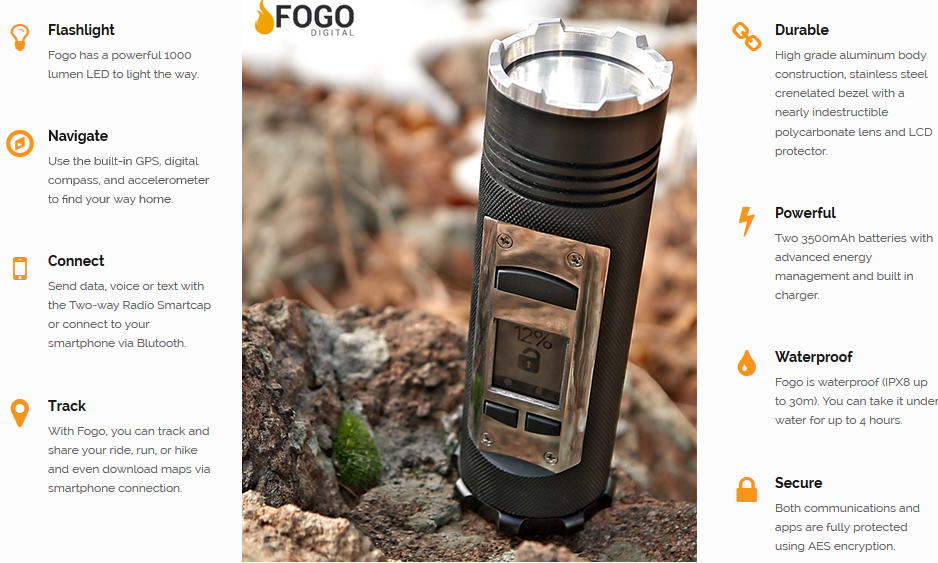
The 2015 Outdoor Retailer Winter Market gear show wrapped up this past weekend. The bi-annual event attracts the biggest gear companies in the world to show off their latest and greatest products, most of which won't arrive on store shelves until this coming fall. As usual, there were a host of interesting products on display, some of which were even truly groundbreaking. In fact, there was so much good stuff to see, that the Gear Junkie had to post his best of show selections in two different articles.
In Part 1 of his "Best of Show" round-up we get a look at a super-comfortable looking new hiking boot from Hoka, an avalanche air-bag system from The North Face, and a versatile new crampon developed by Black Diamond. There is also an ultra-light hammock from Eno, and a new moveable goggle lens design from Julbo, amongst other products.
Part 2 of the "Best of Show" round-up introduces us to a charger for our smartphones that provides power from a candle, as well as a new shoe from Under Armour that incorporates the tread from a fat tire mountain bike. There is also a cool device called the Fogo that incorporates a GPS device and two-way radio into a 1000-lumen flashlight. There is also a new battery pack for your GoPro courtesy of Brunton which not only provides a 400-lumen light, but promises to keep your camera running for 24 hours.
This is just a small taste of the gear that GJ highlighted from the show, and what he spotlights is just a tiny fraction of all of the items that were unveiled at Outdoor Retailer. Some of what was unveiled there will be arriving in your favorite gear shop soon, but much if it is slated for release in the Fall/Winter of 2015. This gives you plenty of time to start saving your pennies for that one item you need to complete your gear closet.
In Part 1 of his "Best of Show" round-up we get a look at a super-comfortable looking new hiking boot from Hoka, an avalanche air-bag system from The North Face, and a versatile new crampon developed by Black Diamond. There is also an ultra-light hammock from Eno, and a new moveable goggle lens design from Julbo, amongst other products.
Part 2 of the "Best of Show" round-up introduces us to a charger for our smartphones that provides power from a candle, as well as a new shoe from Under Armour that incorporates the tread from a fat tire mountain bike. There is also a cool device called the Fogo that incorporates a GPS device and two-way radio into a 1000-lumen flashlight. There is also a new battery pack for your GoPro courtesy of Brunton which not only provides a 400-lumen light, but promises to keep your camera running for 24 hours.
This is just a small taste of the gear that GJ highlighted from the show, and what he spotlights is just a tiny fraction of all of the items that were unveiled at Outdoor Retailer. Some of what was unveiled there will be arriving in your favorite gear shop soon, but much if it is slated for release in the Fall/Winter of 2015. This gives you plenty of time to start saving your pennies for that one item you need to complete your gear closet.
Friday, January 23, 2015
Adventure Tech: The North Face's New Virtual Reality Experience
It's no secret that fewer people are heading outdoors these days, with a particularly sharp decline amongst young people. Researchers believe that the rise of technology, including smartphones, tablets, and video games, has helped to erode interest in outdoor pursuits, as many now prefer to stay inside with their gadgets rather than go for a hike or on a camping trip. But The North Face has come up with an interesting new way to possibly spur interest in the outdoors once again, and with an ironic twist, they're using technology to do so.
At the Outdoor Retailer Winter Market convention, currently taking place in Salt Lake City, the gear company introduced the Virtual Outdoor Project, which uses virtual reality video footage – specifically created for the Oculus Rift – that was shot by the wizards at Camp 4 Collective. Reportedly, the result is an immersive experience designed to create a sense of being outdoors in some incredibly wild and remote area.
For those not familiar with the Oculus Rift, it is a virtual reality headset that has become the talk of the tech world over the past year or so. With high resolution video screens and head-tracking technology, it creates an incredibly immersive experience that allows users to experience an environment that exists 360º around the viewer. In other words, tilt your head to the left and you'll see what is happening in that direction. Turn around completely and you'll see things that are taking place behind you.
According to the Stephen Regenold of the Gear Junkie, the video experience that The North Face was sharing at Outdoor Retailer transported viewers to Yosemite National Park to experience a difficult rock climb up a route called "Separate Reality" from the eyes of the climber himself. The VR film included amazing views of the surrounding landscape, and captured the experience of what it was like to be scaling a big wall. At one point, the climber even loses his grip, falling down the rock face momentarily until his protection arrested the drop. The experience for Stephen made his stomach drop however, as the virtual reality environment simulated the plunge a little too closely. Later, the video even followed some BASE jumpers as they plunged off a cliff, capturing their fall in in "360 and 3D" as well.
North Face intends to roll out this VR project to its retail stores sometime this year. That means if you have a store in your area (Mine just opened!), you'll be able to drop by and give it a go yourself. The hope is that by bringing a virtual outdoor experience to customers, they may inspire more people to actually get outside themselves. Int his case, virtual reality may spur interaction with actual reality.
Call me a pessimist in this regard, but my guess is that it will probably spur consumers to actually want to buy an Oculus Rift or similar product, rather than actually go spend some time int he wild, but we'll see.
At the Outdoor Retailer Winter Market convention, currently taking place in Salt Lake City, the gear company introduced the Virtual Outdoor Project, which uses virtual reality video footage – specifically created for the Oculus Rift – that was shot by the wizards at Camp 4 Collective. Reportedly, the result is an immersive experience designed to create a sense of being outdoors in some incredibly wild and remote area.
For those not familiar with the Oculus Rift, it is a virtual reality headset that has become the talk of the tech world over the past year or so. With high resolution video screens and head-tracking technology, it creates an incredibly immersive experience that allows users to experience an environment that exists 360º around the viewer. In other words, tilt your head to the left and you'll see what is happening in that direction. Turn around completely and you'll see things that are taking place behind you.
According to the Stephen Regenold of the Gear Junkie, the video experience that The North Face was sharing at Outdoor Retailer transported viewers to Yosemite National Park to experience a difficult rock climb up a route called "Separate Reality" from the eyes of the climber himself. The VR film included amazing views of the surrounding landscape, and captured the experience of what it was like to be scaling a big wall. At one point, the climber even loses his grip, falling down the rock face momentarily until his protection arrested the drop. The experience for Stephen made his stomach drop however, as the virtual reality environment simulated the plunge a little too closely. Later, the video even followed some BASE jumpers as they plunged off a cliff, capturing their fall in in "360 and 3D" as well.
North Face intends to roll out this VR project to its retail stores sometime this year. That means if you have a store in your area (Mine just opened!), you'll be able to drop by and give it a go yourself. The hope is that by bringing a virtual outdoor experience to customers, they may inspire more people to actually get outside themselves. Int his case, virtual reality may spur interaction with actual reality.
Call me a pessimist in this regard, but my guess is that it will probably spur consumers to actually want to buy an Oculus Rift or similar product, rather than actually go spend some time int he wild, but we'll see.
Thursday, January 22, 2015
Gear Junkie Takes A First-Look At The Gear of Winter Outdoor Retailer
Right now, the world's top gear companies have all descended on Salt Lake City where they are showing off their latest creations. The 2015 Outdoor Retailer Winter Market got underway a few days back, and as usual there will is a dizzying array of new products being unveiled. Unfortunately some personal commitments have kept me from attending in person, but thankfully the Gear Junkie is on hand, and he has given us a "first-look" at some of the best new gear on display.
Amongst the items that have caught the eye of the Gear Junkie crew is the new Longhor jacket from Ternua. The product is setting new standards in terms of creating sustainable gear in the fact that is uses recycled down as its insulation. The down is apparently re-claimed from the "bedding products" industry, and is cleaned and sanitized before being reused in these jackets. This is an interesting trend that I'm sure will gain traction with other manufacturers as well.
Also earning a spot on the GJ list is a new ice axe design from Black Diamond that incorporates adjustable grips, who also have a new crampon built to quickly and easily transition across a variety of terrains. Columbia gets a nod for their new Heatzone 1000 TurboDown Jacket, which is described as possibly the "world's warmest jacket," while Vasque received kudos for a redesign of their classic Sundowner GTX boot. Other gear of interest include a protective vest that could save you from an avalanche, as well as a new lightweight running vest that incorporates a 150-lumen lamp right into the chest strap.
It should be noted that most of what is shown off at Outdoor Retailer won't hit the store shelves until next fall. So while you may see something on the list that catches your eye, start saving your pennies now. Meanwhile, all of the gear that debuted at last summer's OR show will be arriving in your favorite gear shop sometime this spring.
There is plenty more to check out in the Gear Junkie story, so take a peek at what's coming by clicking here.
Amongst the items that have caught the eye of the Gear Junkie crew is the new Longhor jacket from Ternua. The product is setting new standards in terms of creating sustainable gear in the fact that is uses recycled down as its insulation. The down is apparently re-claimed from the "bedding products" industry, and is cleaned and sanitized before being reused in these jackets. This is an interesting trend that I'm sure will gain traction with other manufacturers as well.
Also earning a spot on the GJ list is a new ice axe design from Black Diamond that incorporates adjustable grips, who also have a new crampon built to quickly and easily transition across a variety of terrains. Columbia gets a nod for their new Heatzone 1000 TurboDown Jacket, which is described as possibly the "world's warmest jacket," while Vasque received kudos for a redesign of their classic Sundowner GTX boot. Other gear of interest include a protective vest that could save you from an avalanche, as well as a new lightweight running vest that incorporates a 150-lumen lamp right into the chest strap.
It should be noted that most of what is shown off at Outdoor Retailer won't hit the store shelves until next fall. So while you may see something on the list that catches your eye, start saving your pennies now. Meanwhile, all of the gear that debuted at last summer's OR show will be arriving in your favorite gear shop sometime this spring.
There is plenty more to check out in the Gear Junkie story, so take a peek at what's coming by clicking here.
Wednesday, January 21, 2015
Gear Review: Hillsound Armadillo LT Gaiters
For many outdoor enthusiasts, the arrival of winter doesn't bring an end to our favorite activities, it just alters them a bit. Winter hiking can still be incredibly rewarding, as often times you'll have trails completely to yourself. But snowshoeing, cross-country skiing, and other seasonal pursuits can be a great deal of fun too. But if you're going to play in the snow, a good set of gaiters will make your life a lot easier and enjoyable, as they help to keep snow, ice, mud, and rocks off your boots, which can become a serious issue at anytime of the year, but especially in the winter.
Gaiters are one of those pieces of gear that you don't really realize you really need until after you have tried them. For those who aren't familiar with how they work, gaiters are like a sleeve that pulls over the top of your boot, and is fixed securely into place there. They provide protection from the vulnerable parts of your shoes, keeping moisture, dirt, rocks, and other debris out of the interior, and way from the laces too.
Recently I've had the good fortunate of testing the Armadillo LT gaiters from Hillsound, a company that specializes in making products for protecting your legs and feet. Searching their website, you'll see that they also make a line of outstanding crampons, as well as waders for fishing. The Armadillo LT is the first product of theirs that I have test however, and I came away suitably impressed.
On paper, gaiters are a simple product that serve a very focused purpose. But modern fabrics and design have allowed these pieces of gear to perform at a much higher level. For instance, Hillsound makes their gaiters out of a stretchy waterproof – yet highly breathable – fabric that repels moisture, and yet is easy to get on and off, even while wearing heavy boots. Those fabrics are soft and have a lot of give, which makes them comfortable to wear too. Easy to adjust foot-straps make it a breeze to dial in a snug fit, even in poor conditions, and while it took a bit of practice to learn how to work the up-side down zipper, I soon was able to pull the Armadillo gaiters on and off with relative ease.
Everything about this product screams quality. The fabrics are durable and slash resistant, preventing accidental cuts from crampons for instance, and the user-replaceable foot-straps are rugged as well. Zippers can be a source of contention on gaiters, as they can sometimes be a place where snow and dirt can collect, but on the Armadillo LT there was no such problem. In fact, the zipper continued to function smoothly and easily no matter the conditions.
Hillsound has created a lightweight, high performance gaiter that will appeal to hikers, backpackers, and alpinists alike. Durable and comfortable, the Armadillo LT provides surprising performance, particularly for the price. At just $49, these gaiters are a bargain. In fact, they're so good that I am planning on taking them with me to Kilimanjaro next month, leaving my older, heavier gaiters behind.
If you've been looking to add a set of gaiters to your gear closet, than I highly recommend the Hillsound Armadillo LT model. They will provide plenty of protection on the trail, and won't break the bank in the process.
Gaiters are one of those pieces of gear that you don't really realize you really need until after you have tried them. For those who aren't familiar with how they work, gaiters are like a sleeve that pulls over the top of your boot, and is fixed securely into place there. They provide protection from the vulnerable parts of your shoes, keeping moisture, dirt, rocks, and other debris out of the interior, and way from the laces too.
Recently I've had the good fortunate of testing the Armadillo LT gaiters from Hillsound, a company that specializes in making products for protecting your legs and feet. Searching their website, you'll see that they also make a line of outstanding crampons, as well as waders for fishing. The Armadillo LT is the first product of theirs that I have test however, and I came away suitably impressed.
On paper, gaiters are a simple product that serve a very focused purpose. But modern fabrics and design have allowed these pieces of gear to perform at a much higher level. For instance, Hillsound makes their gaiters out of a stretchy waterproof – yet highly breathable – fabric that repels moisture, and yet is easy to get on and off, even while wearing heavy boots. Those fabrics are soft and have a lot of give, which makes them comfortable to wear too. Easy to adjust foot-straps make it a breeze to dial in a snug fit, even in poor conditions, and while it took a bit of practice to learn how to work the up-side down zipper, I soon was able to pull the Armadillo gaiters on and off with relative ease.
Everything about this product screams quality. The fabrics are durable and slash resistant, preventing accidental cuts from crampons for instance, and the user-replaceable foot-straps are rugged as well. Zippers can be a source of contention on gaiters, as they can sometimes be a place where snow and dirt can collect, but on the Armadillo LT there was no such problem. In fact, the zipper continued to function smoothly and easily no matter the conditions.
Hillsound has created a lightweight, high performance gaiter that will appeal to hikers, backpackers, and alpinists alike. Durable and comfortable, the Armadillo LT provides surprising performance, particularly for the price. At just $49, these gaiters are a bargain. In fact, they're so good that I am planning on taking them with me to Kilimanjaro next month, leaving my older, heavier gaiters behind.
If you've been looking to add a set of gaiters to your gear closet, than I highly recommend the Hillsound Armadillo LT model. They will provide plenty of protection on the trail, and won't break the bank in the process.
Friday, January 9, 2015
Adventure Tech: Kraftwerk Mobile Power Station
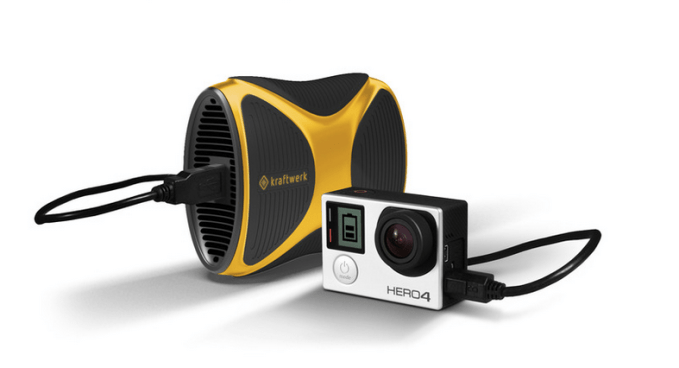
Keeping our electronic gadgets powered up while in the backcountry has become one of the biggest challenges for outdoor enthusiasts and adventure travelers today, with options like solar panels and external battery packs all being employed. But there are other options available too, including an intriguing new called the Kraftwerk that promises efficient power for smartphones, tablets, cameras, and other gadgets in a compact, lightweight form factor.
The Kraftwerk power station uses fuel cell technology to create clean power for all of your electronic devices. It can be completely powered up in a matter of seconds simply by injecting it with standard camping gas or lighter gas, which can be widely found in store across the globe. Once charged, the Kraftwerk reportedly can provide power to an iPhone 11 times before requiring more gas once again.
The Kraftwerk unit, which weighs just 200 grams (7 ounces) when full, converts the gas into power, which is then supplied to the electronic device via a built-in USB port capable of 2 watts of continuous power output, with a peak performance of up to 10 watts. The power station itself is just 3.94 inches (10 cm) long, 2.95 inches (7.5 cm) wide, and 1.18 (3 cm) thick, which means it is very small, and easy to carry with you anywhere. It has also been rated to operate at temperatures ranging from -15ºC to +55ºC (5ºF to 131ºF).
The team behind the Kraftwerk has been busy perfecting the device over the past few years, and it is now nearing production. In order to get the product built, they have launched a Kickstarter campaign that has already raised nearly $290,000 in just a few days. If they can hit their $500,000 goal, they hope to begin manufacturing the device late this year.
The video below will give you more information about the Kraftwerk, how it functions, and what it looks like. As a marketing piece, it's a bit on the corny side, but it does give you a good indication of what to expect when the product is released. To say it looks very promising for outdoor adventurers would be an understatement.
The Kraftwerk power station uses fuel cell technology to create clean power for all of your electronic devices. It can be completely powered up in a matter of seconds simply by injecting it with standard camping gas or lighter gas, which can be widely found in store across the globe. Once charged, the Kraftwerk reportedly can provide power to an iPhone 11 times before requiring more gas once again.
The Kraftwerk unit, which weighs just 200 grams (7 ounces) when full, converts the gas into power, which is then supplied to the electronic device via a built-in USB port capable of 2 watts of continuous power output, with a peak performance of up to 10 watts. The power station itself is just 3.94 inches (10 cm) long, 2.95 inches (7.5 cm) wide, and 1.18 (3 cm) thick, which means it is very small, and easy to carry with you anywhere. It has also been rated to operate at temperatures ranging from -15ºC to +55ºC (5ºF to 131ºF).
The team behind the Kraftwerk has been busy perfecting the device over the past few years, and it is now nearing production. In order to get the product built, they have launched a Kickstarter campaign that has already raised nearly $290,000 in just a few days. If they can hit their $500,000 goal, they hope to begin manufacturing the device late this year.
The video below will give you more information about the Kraftwerk, how it functions, and what it looks like. As a marketing piece, it's a bit on the corny side, but it does give you a good indication of what to expect when the product is released. To say it looks very promising for outdoor adventurers would be an understatement.
Icebreaker Bust Myths, Shares Tips for Staying Warm in the Winter
With an arctic blast bringing incredibly cold temperatures across North America and Europe, this week was a sharp reminder that winter is upon us. But the arrival of winter doesn't mean you have to stay closed up inside until the return of warmer weather in the spring. On the contrary, with the proper gear, and a good layering system, outdoor activities can be just as enjoyable in the colder months, as they are the rest of the year.
With that in mind, our friends over at Icebreaker – a company that knows a thing or two about making quality gear for outdoor adventures – has shared 5 tips for staying warm this winter, while also busting some common myths about layering systems. Their advice could help you to enjoy the season more fully, and be more comfortable while doing so.
MYTH- The majority of body heat is lost through the head and feet.
While hats and gloves are important components to staying warm, you don’t actually lose any more heat through the head or feet than other parts of the body. The key to maintaining heat is keeping your torso insulated. When the core is warm it readily releases blood to hands and feet, keeping them nice and toasty. However if your core is cold it stops sending blood to extremities to preserve for vital organs.
MYTH- You need several layers and a giant puffy coat to stay warm in severe weather conditions.
MYTH- You need to be climbing Everest to wear a technical layering system. Sure, people do climb Everest while wearing our gear, but it’s also great for everyday adventures for ordinary people. Icebreaker is tough enough to wear in the most extreme weather conditions, but chic enough to wear in the city.
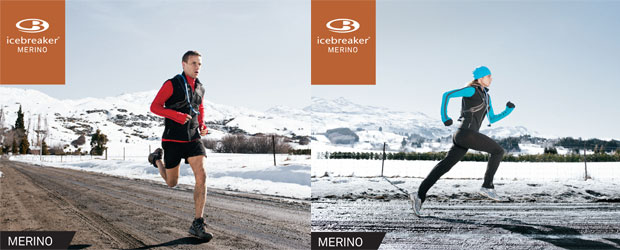
1. Nature Knows Best- Choosing the Right Fiber
Merino wool is silky soft and luxurious. Its adapted technical properties naturally keep sheep insulated in some of the most extreme weather conditions. Our Merino is designed by nature, adapted by Icebreaker.
2. All About That Base- The Base Layer
Our base layer acts as a second skin, with its primary purpose to regulate body temperature by moving perspiration away from your skin. Merino wool wicks away moisture so efficiently that it will keep you warm even when wet.
3. Meet Us in the Middle- The Mid Layer
The mid layer is crucial because it retains heat. Merino wool contains millions of tiny air pockets, which trap body heat while also breathing to keep you warmer, drier, and more comfortable longer than synthetics and fleeces.
4. Protect Yourself- The Outer Layer
The outer layer is your final layer and crucial for protection from wind, rain, snow, and any elements nature throws your way. Our Next Generation Merino combines new technologies with merino wool, creating amazing outer layers that have all the benefits of traditional merino with elevated features including water resistance and windproof layers.
5. Finishing Touches- Socks and Accessories
Adding socks and accessories is the final component to maximizing your warmth this winter season. Icebreaker offers a wide array of socks, gloves, beanies, and neckwear to help you enjoy your cold weather adventures.
There you have it. Some great tips and advice on how to layer properly for the cold. With the right gear, you truly can go out and enjoy the winter, without overly bulky clothing.
With that in mind, our friends over at Icebreaker – a company that knows a thing or two about making quality gear for outdoor adventures – has shared 5 tips for staying warm this winter, while also busting some common myths about layering systems. Their advice could help you to enjoy the season more fully, and be more comfortable while doing so.
BUSTED: Layering Myths
MYTH- The majority of body heat is lost through the head and feet.
While hats and gloves are important components to staying warm, you don’t actually lose any more heat through the head or feet than other parts of the body. The key to maintaining heat is keeping your torso insulated. When the core is warm it readily releases blood to hands and feet, keeping them nice and toasty. However if your core is cold it stops sending blood to extremities to preserve for vital organs.
MYTH- You need several layers and a giant puffy coat to stay warm in severe weather conditions.
Less is more! If you choose the right pieces you can stay super warm without all the bulk and discomfort of excessive layering. Icebreaker is designed as a head-to-toe layering system. Merino fibers wick moisture, therefore when layered on top of one another the fibers bind together to work as one complete piece, keeping you warm and cozy and while being light enough to provide for superior mobility. Our design team works hard to make sure your Icebreaker layering system is comfortable, chic, and functional.
MYTH- You need to be climbing Everest to wear a technical layering system. Sure, people do climb Everest while wearing our gear, but it’s also great for everyday adventures for ordinary people. Icebreaker is tough enough to wear in the most extreme weather conditions, but chic enough to wear in the city.
5 Tips for Staying Warm with Layers this Winter
1. Nature Knows Best- Choosing the Right Fiber
Merino wool is silky soft and luxurious. Its adapted technical properties naturally keep sheep insulated in some of the most extreme weather conditions. Our Merino is designed by nature, adapted by Icebreaker. Our base layer acts as a second skin, with its primary purpose to regulate body temperature by moving perspiration away from your skin. Merino wool wicks away moisture so efficiently that it will keep you warm even when wet.
The mid layer is crucial because it retains heat. Merino wool contains millions of tiny air pockets, which trap body heat while also breathing to keep you warmer, drier, and more comfortable longer than synthetics and fleeces.
The outer layer is your final layer and crucial for protection from wind, rain, snow, and any elements nature throws your way. Our Next Generation Merino combines new technologies with merino wool, creating amazing outer layers that have all the benefits of traditional merino with elevated features including water resistance and windproof layers.
Adding socks and accessories is the final component to maximizing your warmth this winter season. Icebreaker offers a wide array of socks, gloves, beanies, and neckwear to help you enjoy your cold weather adventures.
There you have it. Some great tips and advice on how to layer properly for the cold. With the right gear, you truly can go out and enjoy the winter, without overly bulky clothing.
Wednesday, January 7, 2015
Kickstarter Campaign: MicroJib For GoPro Cameras
I get inundated with Kickstarter campaigns these days, and for the most part I can't post all of the ones that are sent my way. But I wanted to share one particular campaign that is going on right now that might be of interest to many readers.
The MicroJib is an extension pole for a GoPro camera that allows budding filmmakers to capture shots of themselves and the landscapes they are traveling through. But unlike other GoPro extension poles, the MicroJib also allows them to pan and tilt the camera, opening up the possibilities for creative filmmaking even further. To better understand what it can do, take a look at the YouTube video posted below.
The Kickstarter campaign for the MicroJib has just two days left before it is done, and as of this writing it is closing in on its goal of raising $24,000 but it hasn't quite achieved that just yet. The designers of the product are looking to use the cash to put the MicroJib into production and begin shipping later this year. As is typical with a Kickstarter project, backers can also receive the MicroJib at a great price depending on the level that they contribute at.
If this looks like a tool that you could use, then show some support for the team behind the project. It looks like they've put a lot of thought into the design, and are hoping to create a tool that will make adventure filmmaking even more approachable.
The MicroJib is an extension pole for a GoPro camera that allows budding filmmakers to capture shots of themselves and the landscapes they are traveling through. But unlike other GoPro extension poles, the MicroJib also allows them to pan and tilt the camera, opening up the possibilities for creative filmmaking even further. To better understand what it can do, take a look at the YouTube video posted below.
The Kickstarter campaign for the MicroJib has just two days left before it is done, and as of this writing it is closing in on its goal of raising $24,000 but it hasn't quite achieved that just yet. The designers of the product are looking to use the cash to put the MicroJib into production and begin shipping later this year. As is typical with a Kickstarter project, backers can also receive the MicroJib at a great price depending on the level that they contribute at.
If this looks like a tool that you could use, then show some support for the team behind the project. It looks like they've put a lot of thought into the design, and are hoping to create a tool that will make adventure filmmaking even more approachable.
Subscribe to:
Posts (Atom)

