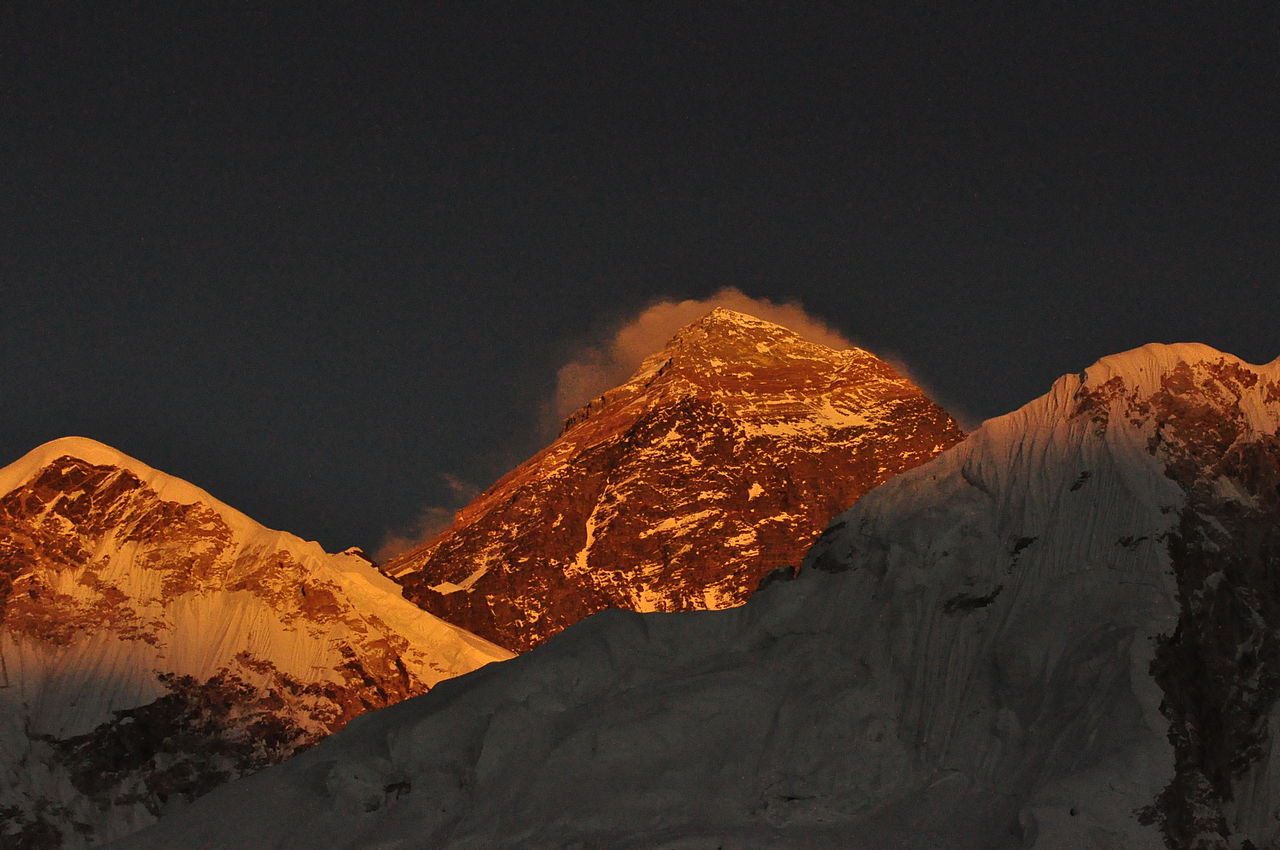
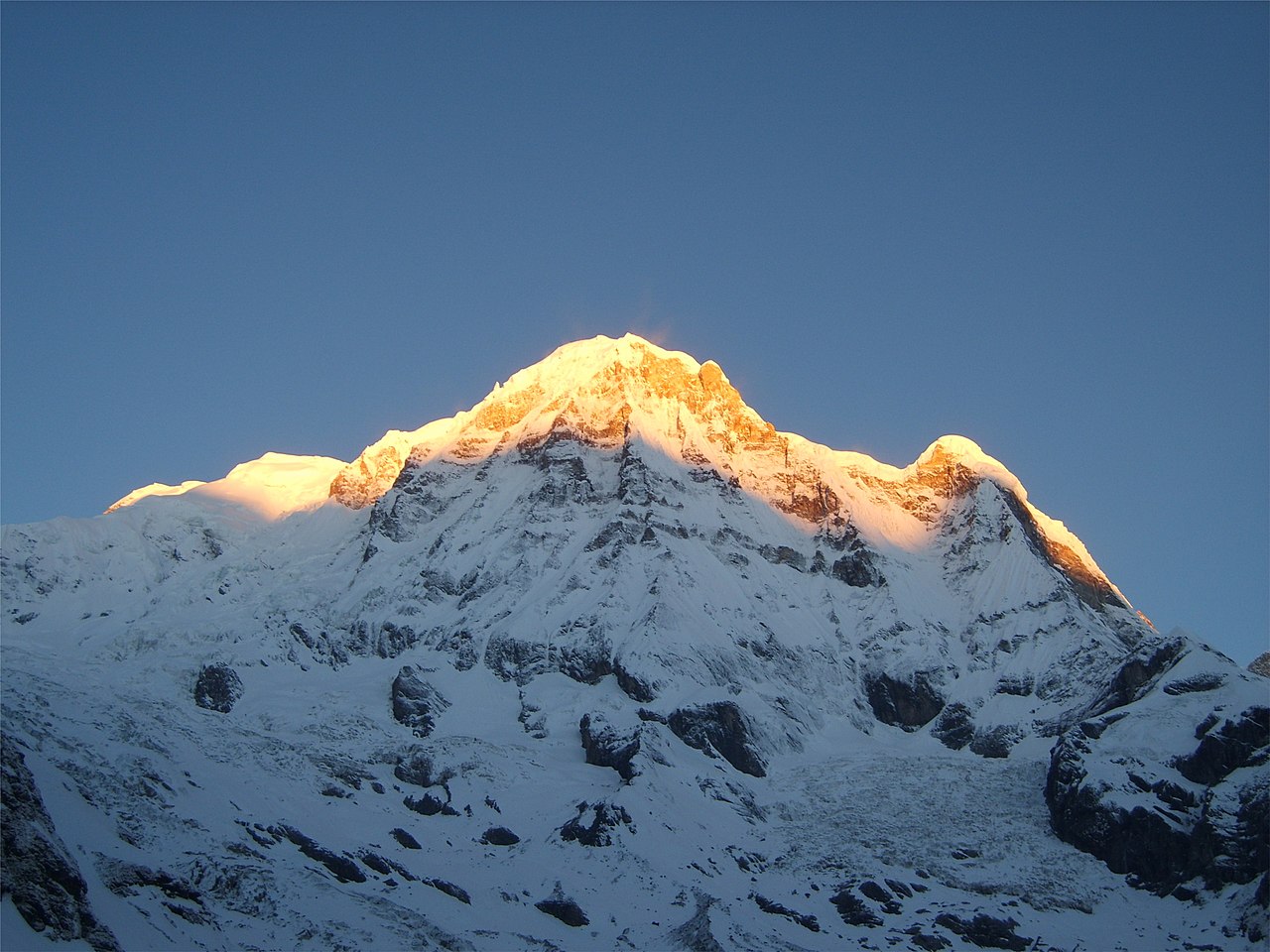
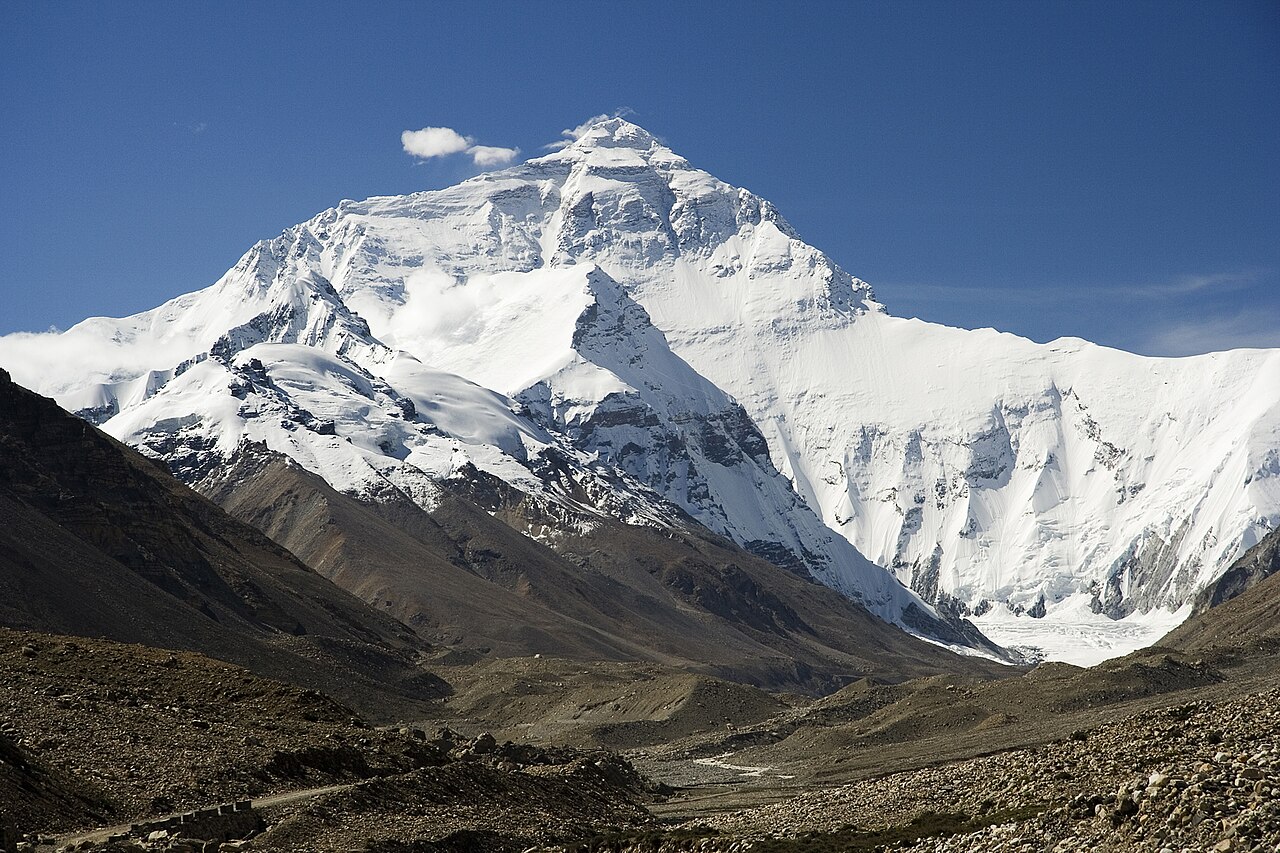
The poor weather that was preventing the climbers in Nepal from departing Kathmandu has dissipated over the past few days, and numerous teams are now on the move in the Khumbu Valley. Many are now making the long hike to Everest Base Camp, which actually marks the beginning of their acclimatization process for the climb to come. The trek takes roughly 8-10 days to complete, but is an important step for getting both physically and mentally prepared for the challenges ahead. Along the way they pass through numerous small villages filled with wonderful, inviting, people as they walk in the shadow of some of the most beautiful mountains on the planet. It is a truly memorable hike for those heading to Lhotse or the South Side of Everest.
Among those currently on the trail is Alan Arnette, who checked in from Namche Bazaar over the weekend. Namche is the largest town in the Khumbu, and one of the first milestones achieved on the trek. It is reached after just two days of hiking, but requires a tough slog up a steep hill to actually get to the village. Most trekkers and climbers take a rest day in Namche after they reach that point in order to let their bodies get use to the altitude. It is also one of the last places to purchase a piece of gear that you may have forgotten, or enjoy a few other amenities. The villages that follow are increasingly smaller, and have fewer shops and restaurants.
One of the familiar sounds of the Khumbu is the frequent ringing of bells that hang around the necks of the yaks that are used to carry gear, food, and other supplies to the various towns and camps that dot the landscape there. Anyone who has ever hiked through Nepal will recognize the distinctive sound immediately, and know that a yak train is coming through so they had better get off the trail. Yaks are indispensable in this part of the world, and are about as common on the trail as hikers. Watching them carry their heavy loads – at altitude – with ease is fascinating.
Also now on the move in the Khumbu Valley is the Altitude Junkies team. They reached Namche on Saturday and spent the traditional rest day there yesterday. They'll get back on the trail today as they head for Dingboche, the next popular stop on the hike. If they continue on schedule, the AJ squad should reach Base Camp sometime next weekend.
Meanwhile, Madison Mountaineering is sharing the first look at the new route through the Khumbu Icefall. In order to avoid some of the dangers that the porters faced last year – and which contributed to the avalanche that claimed 16 lives – the Icefall Doctors have pioneered a new route through this very dangerous section of the climb. The route now stays further to the right than what has been taken in the past, veering towards Nuptse. The hope is that this section of the climb will be much safer, and get the climbers through this treacherous section as quickly as possible.
Over on Annapurna the teams are still waiting for conditions to improve before they head up. But solo-climber Alex Barber has been working on his acclimatization in preparation for a summit bid down the line. After arriving in BC last week, he has now gone as high as Camp 2, and spent the night there, as he lets his body get use to the altitude. Over the weekend Alex returned to Base Camp however, where he is now waiting for conditions to improve before going back up once again.
Spanish climber Carlos Soria is hoping to launch his summit bid soon, and reports that the upper slopes of Annapurna are clear of snow at the moment. That bodes well for the climbers who are waiting for the weather to improve. Once a weather window opens, they can then proceed up with less fears of avalanches, something that the mountain is well known for this time of year.
Even though the season is now underway, most climbers are still en route to their respective Base Camps. For the most part, the climbing portion of their expeditions won't get underway for another week or so, but this is all part of the process, and crucial to their preparation. Things will really start to get exciting soon, but for now it is a slow and steady walk through one of the most spectacular regions of the world.
Showing posts with label Himalaya. Show all posts
Monday, April 6, 2015
Thursday, April 2, 2015
Video: Climbing Manaslu Part 2 - The Summit
Last week I posted the first video from Alex Barber's climb of Manaslu last year, but didn't get the chance to share his second. That was a major oversight on my part because it includes the most important part, Alex reaching the summit of the mountain. You'll find that in the video below, which shares more of his solo expedition without oxygen.
At the moment, Alex is in Base Camp on Annapurna and preparing to make his first acclimatization rotation once the weather permits. He'll be attempting a solo, no O's summit on that mountain this spring as well.
Manaslu: The Summit (Part 2) from Alex Barber on Vimeo.
At the moment, Alex is in Base Camp on Annapurna and preparing to make his first acclimatization rotation once the weather permits. He'll be attempting a solo, no O's summit on that mountain this spring as well.
Himalaya Spring 2015: Indian Army To Clear Trash From Everest
One of the major stories surrounding Everest that seems to rear its ugly head each spring is how the mountain has become a massive trash heap over the past two decades. While it is true that commercial climbing on the world's tallest mountain has had an adverse effect on the environment there, in recent years there has been a concerted effort to reverse that trend and to focus on cleaning up the mountain. Those efforts will continue this year with teams now required to carry out all of their trash, while others focus solely on removing waste that has been left on Everest from past expeditions.
According to a report from Time magazine, a team of 34 climbers from India will travel to Nepal this spring to celebrate the 50th anniversary of that country's first successful expedition to the summit of Everest. But rather than focusing on trying to reach the top, they'll have an entirely different goal in mind. The group – which are all members of the Indian Army – will be looking to remove more than 4000 kg (8800 pounds) of non-biodegradable trash from the mountain.
Team leader Ranveer Singh Jamval says that their efforts are to not to just clean up the tallest mountain on the planet, but also carry out an ambitious goal by India's Prime Minister Narendra Modi, who is making a similar push back home. Modi has institute a number of initiatives in his country aimed at cleaning up roads and other public spaces of trash. A task that is a major undertaking in a nation that has over 1 billion people.
While the state of environmental affairs on Everest is always good for making splashy headlines, it is important that people understand that there are efforts being made to clean up the mountain considerably. The Indian team is only one group that is doing so, but their work deserves to be recognized and saluted.
Meanwhile, in Kathmandu the climbers continue to arrive in droves. Earlier today Nick Cienski was amongst those that reached Nepal's capital city. He's the climber who has set an ambitious goal of summiting six 8000-meter peaks in a single year. He'll get things started this spring with Everest, Lhotse, and Makalu. He'll now organize his gear and get ready to head out to the mountains soon, with Himex providing support for his expedition.
Finally, there is no change in the conditions on Annapurna, where the weather is still keeping the climbers in Base Camp. Several teams are ready to launch their summit bids there, but with heavy snow falling on the mountain it simply isn't safe to proceed up at the moment. Hopefully they'll get there chance soon.
That's all for today. More to come soon.
According to a report from Time magazine, a team of 34 climbers from India will travel to Nepal this spring to celebrate the 50th anniversary of that country's first successful expedition to the summit of Everest. But rather than focusing on trying to reach the top, they'll have an entirely different goal in mind. The group – which are all members of the Indian Army – will be looking to remove more than 4000 kg (8800 pounds) of non-biodegradable trash from the mountain.
Team leader Ranveer Singh Jamval says that their efforts are to not to just clean up the tallest mountain on the planet, but also carry out an ambitious goal by India's Prime Minister Narendra Modi, who is making a similar push back home. Modi has institute a number of initiatives in his country aimed at cleaning up roads and other public spaces of trash. A task that is a major undertaking in a nation that has over 1 billion people.
While the state of environmental affairs on Everest is always good for making splashy headlines, it is important that people understand that there are efforts being made to clean up the mountain considerably. The Indian team is only one group that is doing so, but their work deserves to be recognized and saluted.
Meanwhile, in Kathmandu the climbers continue to arrive in droves. Earlier today Nick Cienski was amongst those that reached Nepal's capital city. He's the climber who has set an ambitious goal of summiting six 8000-meter peaks in a single year. He'll get things started this spring with Everest, Lhotse, and Makalu. He'll now organize his gear and get ready to head out to the mountains soon, with Himex providing support for his expedition.
Finally, there is no change in the conditions on Annapurna, where the weather is still keeping the climbers in Base Camp. Several teams are ready to launch their summit bids there, but with heavy snow falling on the mountain it simply isn't safe to proceed up at the moment. Hopefully they'll get there chance soon.
That's all for today. More to come soon.
Wednesday, April 1, 2015
Himalaya Spring 2015: Slow Start to the Season
The 2015 spring climbing season in the Himalaya is only a few days old, and already the weather is of primary concern for the teams. Over on Annapurna the heavy snow is keeping the climbers firmly in Base Camp while they wait to launch a summit bid. Meanwhile back in Kathmandu, most of the mountaineers are still arriving in the country only to discover that the weather is delaying their departure for the mountains as well.
Alan Arnette arrived on the scene yesterday and is preparing for his expedition to climb Lhotse this spring. Yesterday he shared a dispatch from Kathmandu with an update on the situation there. He reports that poor weather in the Khumbu Valley is keeping most teams from departing for the Everest region. Low hanging clouds in Lukla are preventing flights from landing or taking off at that notoriously dangerous airport. As a result, many climbers are stuck in Nepal's capital and waiting for the skies to clear. (By the way, ExWeb has a good interview with Alan that you can read here.)
It is not uncommon in the early part of the season to have weather keep flights grounded. Alan says that fog, rain, and heavy snow are making the Khumbu a challenge to get in and out of at the moment, and while many teams are heading to the Kathmandu airport, they end up waiting for hours for a flight that doesn't take off, only to return to their hotel at the end of the day once again. Hopefully conditions will improve soon and the anxious men and women can start their long trek to Everest Base Camp.
Speaking of EBC, most teams have already sent their support staff to the mountain, where they are busily preparing camp for the arrival of the climbers. Also in Base Camp on the South Side are the Icefall Doctors, the team of Sherpas whose job it is to build and maintain the route through the dangerous Khumbu Icefall. The team is already busy scouting and establishing the safest path through the Icefall, but they have not completed that task just yet. Until they do, no one will be able to climb up to Camp 1 or the higher portions of the mountain.
As mentioned, the teams are at a standstill on Annapurna where they are waiting for the weather to improve. But on Monday of this week American climber Alex Barber arrived in BC and is preparing for his solo attempt – sans O's – on the mountain. He was expected to have his Puja ceremony yesterday, which means he will now be free to begin his climb. Expect Alex to start his acclimatization rotations today or tomorrow, weather permitting of course.
Right now, it seems that everything is "hurry up and wait" in Kathmandu. But with a little patience things should start to move again soon. Teams will be on their way to Base Camp before they know it, and the true climbing season will begin at long last.
Alan Arnette arrived on the scene yesterday and is preparing for his expedition to climb Lhotse this spring. Yesterday he shared a dispatch from Kathmandu with an update on the situation there. He reports that poor weather in the Khumbu Valley is keeping most teams from departing for the Everest region. Low hanging clouds in Lukla are preventing flights from landing or taking off at that notoriously dangerous airport. As a result, many climbers are stuck in Nepal's capital and waiting for the skies to clear. (By the way, ExWeb has a good interview with Alan that you can read here.)
It is not uncommon in the early part of the season to have weather keep flights grounded. Alan says that fog, rain, and heavy snow are making the Khumbu a challenge to get in and out of at the moment, and while many teams are heading to the Kathmandu airport, they end up waiting for hours for a flight that doesn't take off, only to return to their hotel at the end of the day once again. Hopefully conditions will improve soon and the anxious men and women can start their long trek to Everest Base Camp.
Speaking of EBC, most teams have already sent their support staff to the mountain, where they are busily preparing camp for the arrival of the climbers. Also in Base Camp on the South Side are the Icefall Doctors, the team of Sherpas whose job it is to build and maintain the route through the dangerous Khumbu Icefall. The team is already busy scouting and establishing the safest path through the Icefall, but they have not completed that task just yet. Until they do, no one will be able to climb up to Camp 1 or the higher portions of the mountain.
As mentioned, the teams are at a standstill on Annapurna where they are waiting for the weather to improve. But on Monday of this week American climber Alex Barber arrived in BC and is preparing for his solo attempt – sans O's – on the mountain. He was expected to have his Puja ceremony yesterday, which means he will now be free to begin his climb. Expect Alex to start his acclimatization rotations today or tomorrow, weather permitting of course.
Right now, it seems that everything is "hurry up and wait" in Kathmandu. But with a little patience things should start to move again soon. Teams will be on their way to Base Camp before they know it, and the true climbing season will begin at long last.
Tuesday, March 31, 2015
Video: Drone Over Nepal
We have another short – but sweet – drone video today, this time from Nepal. The opening footage shown in the clip was shot around Kathmandu, giving viewers a sense of what that city looks like from the air. But later we head out to the Annapurna region, where the DJI Phantom 2 drone captures great shots of the countryside, as well as some beautiful looks at that far-off mountain.
Drone over Nepal from Fallout Media on Vimeo.
Himalaya Spring 2015: Kilian Jornet Departing for Kathmandu, Still Waiting on Annapurna
Kathmandu is now seeing a steady stream of arrivals as climbers from around the globe descend on Nepal's capital prior to the start of their expeditions in the Himalaya. There will be many notable arrivals in the days ahead, with some of the best mountaineers in the world traveling to Everest, Lhotse, and a number of other major mountains. But one mountain athlete is sure to get plenty of attention his spring as he makes his bid for the speed record on the tallest mountain on the planet.
Spanish ultrarunner Kilian Jornet is preparing to depart for Nepal soon, where he'll pass through Kathmandu on his way to the Tibet. He will be climbing Everest from the North Side of the mountain due to the lower traffic on along that route. He also says that he will actually start his climb/speed-run lower in the valley, perhaps in the final village before reaching Base Camp. Kilian tells Barrabes.com that he expects the project to take roughly seven weeks to wrap up, at which time he'll turn his attention to some of the major ultrarunning competitions in the U.S. and Europe.
While it will certainly be interesting to watch Kilian's speed-record attempt unfold, it should be noted that there really isn't going to be a time to compare it to. No one has ever done the speed record from the North Side before, and since he is starting further down the mountain, his time won't compare to someone who has started in BC for instance. Still, we all know that Kilian puts on a show when he is focused on a project, and I expect this will be no different. He'll do some impressive things on Everest for sure, but it will still be interesting to see how he performs at such high altitudes. Jornet has never had to deal with the thin air on a Himalayan peak, and this will be a very different test for him.
Kilian should be departing for Kathmandu sometime this week.
Meanwhile, over on Annapurna, another Spaniard is getting ready for his climb. Carlos Soria has checked in from Base Camp and says that the weather remains dicey at the moment. Heavy snows have fallen on the mountain, creating unstable conditions that are keeping all of the teams in BC at the moment. They hope to launch summit bids sometime this week, but unstable conditions and continued poor weather will likely dictate when they can proceed.
Annapurna has a reputation for the being the most dangerous mountain in the world. It is well known for having numerous avalanches, which makes the climbers there very cautious about when they go up. Teams arrived early on the mountain this year in an attempt to summit before to much spring snow fell on its slopes, and while there was some early success, the climbers there now have to wait to see when a window will open. It is still incredibly early in the season however, so hopefully that chance will come soon.
That's all for today. More updates from the Himalaya soon.
Spanish ultrarunner Kilian Jornet is preparing to depart for Nepal soon, where he'll pass through Kathmandu on his way to the Tibet. He will be climbing Everest from the North Side of the mountain due to the lower traffic on along that route. He also says that he will actually start his climb/speed-run lower in the valley, perhaps in the final village before reaching Base Camp. Kilian tells Barrabes.com that he expects the project to take roughly seven weeks to wrap up, at which time he'll turn his attention to some of the major ultrarunning competitions in the U.S. and Europe.
While it will certainly be interesting to watch Kilian's speed-record attempt unfold, it should be noted that there really isn't going to be a time to compare it to. No one has ever done the speed record from the North Side before, and since he is starting further down the mountain, his time won't compare to someone who has started in BC for instance. Still, we all know that Kilian puts on a show when he is focused on a project, and I expect this will be no different. He'll do some impressive things on Everest for sure, but it will still be interesting to see how he performs at such high altitudes. Jornet has never had to deal with the thin air on a Himalayan peak, and this will be a very different test for him.
Kilian should be departing for Kathmandu sometime this week.
Meanwhile, over on Annapurna, another Spaniard is getting ready for his climb. Carlos Soria has checked in from Base Camp and says that the weather remains dicey at the moment. Heavy snows have fallen on the mountain, creating unstable conditions that are keeping all of the teams in BC at the moment. They hope to launch summit bids sometime this week, but unstable conditions and continued poor weather will likely dictate when they can proceed.
Annapurna has a reputation for the being the most dangerous mountain in the world. It is well known for having numerous avalanches, which makes the climbers there very cautious about when they go up. Teams arrived early on the mountain this year in an attempt to summit before to much spring snow fell on its slopes, and while there was some early success, the climbers there now have to wait to see when a window will open. It is still incredibly early in the season however, so hopefully that chance will come soon.
That's all for today. More updates from the Himalaya soon.
Monday, March 30, 2015
Himalaya Spring 2015: Climbers Streaming into Kathmandu, Summits Delayed on Annapurna
The calm before the storm is over in the Himalaya as the spring climbing season is now set to begin at last. This past weekend marked the start of the arrival of the majority of the teams heading to the big mountains this spring as dozens of mountaineers began arriving in Kathmandu prior to their departure to their respective Base Camps. And while they collect their things – and their thoughts – in the capital city, over on Annapurna the early season arrivals have begun playing the waiting game.
It was a very busy weekend in Kathmandu as visitors have begun streaming into the city. Most will now spend a few days there sorting their gear, meeting with their teammates, and receiving pre-expedition briefings. It is a hectic, busy time, but an exciting one as well. They'll travel to the Thamel District to pick up a last-minute piece of gear, they'll enjoy a good meal in a restaurant, and their final nights sleep in a real bed for two months.
But Kathmandu is a crazy, chaotic place as well. It is hot, dusty, and noisy. Rolling blackouts are a common occurrence, making it a challenge to enjoy your stay there too. So while the climbers will indeed relax a bit before their departure, they'll also be looking ahead to the cleaner air and slower pace of the trekking trails that will take them to the mountains.
Many of the new arrivals have set their sights on Everest of course, and even after they leave Kathmandu they will be hiking for the better part of a week before they reach Base Camp. This will be a time that will not only help with their early acclimatization efforts, but will also prepare them mentally for the challenges ahead. Walking up the Khumbu Valley, in the shadow of some of the tallest mountains on Earth, is an incredibly humbling experience, and it is the perfect way to get in the proper mindset for what is to come.
Among those who have started to arrive in Nepal are the Altitude Junkies, most of whom should reach Kathmandu over the next few days. They'll skip the trek to Everest and Lhotse however, and take helicopters to Base Camp instead. The Himex squad should also be gathering in the city now as well in preparation for their departure. Alan Arnette is en route to the Himalaya as well, and has set his sights squarely on Lhotse this spring. Once he has reached Kathmandu we're sure to get an update on how things are proceeding there too.
Meanwhile, as hundreds of climbers begin arriving in Nepal, there others already on Annapurna who are waiting for a chance to make a summit bid. Both Aussie climber Chris Jensen Burke and Spaniard Carlos Soria are now ready to attempt the climb, but have stalled out in BC waiting for weather to improve. They had originally hoped to launch their push to the top this past weekend, but deteriorating conditions there convinced them to wait for a better opportunity. That could come later this week, marking the second potential wave of summits on Annapurna already this season.
Now that we're on the brink of a new climbing season getting underway, expect lots of news out of Nepal as teams prepare for their climb, and more mountaineers arrive on the scene. It will be a busy week or two in Kathmandu before the teams settle into their routines. It should also be a very interesting time for those of us waiting and watching from home too.
Good luck to all the climbers in the weeks ahead. Get up and down safely.
It was a very busy weekend in Kathmandu as visitors have begun streaming into the city. Most will now spend a few days there sorting their gear, meeting with their teammates, and receiving pre-expedition briefings. It is a hectic, busy time, but an exciting one as well. They'll travel to the Thamel District to pick up a last-minute piece of gear, they'll enjoy a good meal in a restaurant, and their final nights sleep in a real bed for two months.
But Kathmandu is a crazy, chaotic place as well. It is hot, dusty, and noisy. Rolling blackouts are a common occurrence, making it a challenge to enjoy your stay there too. So while the climbers will indeed relax a bit before their departure, they'll also be looking ahead to the cleaner air and slower pace of the trekking trails that will take them to the mountains.
Many of the new arrivals have set their sights on Everest of course, and even after they leave Kathmandu they will be hiking for the better part of a week before they reach Base Camp. This will be a time that will not only help with their early acclimatization efforts, but will also prepare them mentally for the challenges ahead. Walking up the Khumbu Valley, in the shadow of some of the tallest mountains on Earth, is an incredibly humbling experience, and it is the perfect way to get in the proper mindset for what is to come.
Among those who have started to arrive in Nepal are the Altitude Junkies, most of whom should reach Kathmandu over the next few days. They'll skip the trek to Everest and Lhotse however, and take helicopters to Base Camp instead. The Himex squad should also be gathering in the city now as well in preparation for their departure. Alan Arnette is en route to the Himalaya as well, and has set his sights squarely on Lhotse this spring. Once he has reached Kathmandu we're sure to get an update on how things are proceeding there too.
Meanwhile, as hundreds of climbers begin arriving in Nepal, there others already on Annapurna who are waiting for a chance to make a summit bid. Both Aussie climber Chris Jensen Burke and Spaniard Carlos Soria are now ready to attempt the climb, but have stalled out in BC waiting for weather to improve. They had originally hoped to launch their push to the top this past weekend, but deteriorating conditions there convinced them to wait for a better opportunity. That could come later this week, marking the second potential wave of summits on Annapurna already this season.
Now that we're on the brink of a new climbing season getting underway, expect lots of news out of Nepal as teams prepare for their climb, and more mountaineers arrive on the scene. It will be a busy week or two in Kathmandu before the teams settle into their routines. It should also be a very interesting time for those of us waiting and watching from home too.
Good luck to all the climbers in the weeks ahead. Get up and down safely.
Friday, March 27, 2015
Himalaya Spring 2015: Expeditions to Watch
This weekend many climbers from across the globe will set out for Nepal at long last. Even though there has already been action in the Himalaya this spring, the season won't truly get underway until next week when the teams begin arriving in Kathmandu in droves. It'll take them some time to get out to their various Base Camps, but things are about to get very interesting in the big mountains.
To prepare us for the season ahead, Alan Arnette shared a post yesterday detailing some of the major expeditions to watch in the weeks ahead. Most of these climbs center around Everest of course, but several will focus on other major peaks too. Alan himself will leave shortly for Nepal as well, where he'll be attempting Lhotse this spring.
Among the climbs that Alan recommends keeping an eye on this year are an expedition to the rarely visited North-Northeast Ridge, where Canadian Raphael Slawinski will be joined by Germans David Goettler and Daniel Bartsch to attempt a new route without the use of Sherpas or supplemental oxygen. This side of the mountain has only been scaled one other time, but a Russian team back in 1996. The trio will be going up the ridge along a different path however.
Kilian Jornet's speed attempt on Everest will certainly get plenty of attention as well. His original plans were to make the attempt from the North Side, but Alan's report seems to indicate that is no longer the case. Considering the challenges and uncertainty that come with climbing in Tibet, and the fact that some operators switched sides and cancelled climbs on the North, perhaps Kilian has had to change up his plans as well. That will make things difficult for him, as the larger crowds on the South Side will certainly alter his approach.
Other interesting expeditions on the schedule an attempt to ski the Lhotse Coulair on Everest by Matt Moniz and Wilie Benegas. Alan says the coulair has never been fully skied before, and these two climbers will do it after summiting Everest. British climber Kenton Cool has ambitious plans for the weeks ahead as well. He'll first attempt to summit Everest – something he has done 11 times in the past – before moving on to Kangchenjunga and eventually K2. 23-year old Brit Rupert Jones-Warner will attempt to summit Everest from both the North and South Side, using a helicopter to travel between the two Base Camps on the respective sides of the mountain. Finally, German climbing legend Ralf Dujmovits is returning to Everest once again to attempt to summit without the use of bottled oxygen. Ralf has already climbed all 8000-meter peaks, but feels he has unfinished business on Everest after using O's to summit that peak.
That's the run-down of Alan's suggestions for climbs to watch this spring. Of course, I'm sure there will be plenty of other interesting expeditions to keep an eye on as well. The season is only about to get underway, so there should be plenty of action to come.
To prepare us for the season ahead, Alan Arnette shared a post yesterday detailing some of the major expeditions to watch in the weeks ahead. Most of these climbs center around Everest of course, but several will focus on other major peaks too. Alan himself will leave shortly for Nepal as well, where he'll be attempting Lhotse this spring.
Among the climbs that Alan recommends keeping an eye on this year are an expedition to the rarely visited North-Northeast Ridge, where Canadian Raphael Slawinski will be joined by Germans David Goettler and Daniel Bartsch to attempt a new route without the use of Sherpas or supplemental oxygen. This side of the mountain has only been scaled one other time, but a Russian team back in 1996. The trio will be going up the ridge along a different path however.
Kilian Jornet's speed attempt on Everest will certainly get plenty of attention as well. His original plans were to make the attempt from the North Side, but Alan's report seems to indicate that is no longer the case. Considering the challenges and uncertainty that come with climbing in Tibet, and the fact that some operators switched sides and cancelled climbs on the North, perhaps Kilian has had to change up his plans as well. That will make things difficult for him, as the larger crowds on the South Side will certainly alter his approach.
Other interesting expeditions on the schedule an attempt to ski the Lhotse Coulair on Everest by Matt Moniz and Wilie Benegas. Alan says the coulair has never been fully skied before, and these two climbers will do it after summiting Everest. British climber Kenton Cool has ambitious plans for the weeks ahead as well. He'll first attempt to summit Everest – something he has done 11 times in the past – before moving on to Kangchenjunga and eventually K2. 23-year old Brit Rupert Jones-Warner will attempt to summit Everest from both the North and South Side, using a helicopter to travel between the two Base Camps on the respective sides of the mountain. Finally, German climbing legend Ralf Dujmovits is returning to Everest once again to attempt to summit without the use of bottled oxygen. Ralf has already climbed all 8000-meter peaks, but feels he has unfinished business on Everest after using O's to summit that peak.
That's the run-down of Alan's suggestions for climbs to watch this spring. Of course, I'm sure there will be plenty of other interesting expeditions to keep an eye on as well. The season is only about to get underway, so there should be plenty of action to come.
Thursday, March 26, 2015
Himalaya Spring 2015: More On Annapurna Tragedy
Yesterday we received the unfortunate news that two climbers had perished on Annapurna. Finnish climber Samuli Mansikka and local guide Pemba Sherpa lost their lives on the descent of the mountain after successfully reaching the summit on Tuesday. At the time that the story broke there was little more information than that, and the exact cause of their deaths was as yet unknown. The details remain scant today as well, but some of the story is starting to become clearer.
Samuli and Pemba were on Annapurna as part of the Dreamers Destination team. They arrived on the mountain early in the season in an attempt to summit before the spring snows change the complexion of the mountain. Their plan for an early summit paid off, and 13 members of the squad reached the top a few days back.
But apparently the team was slow in descending, and according to reports they ended up not returning to Camp 4 after their summit, and instead bivouacked at 7400 meters (24,278 ft). While they were stranded high on the mountain, something happened to Samuli and Pemba. The reportedly went missing for a time at 7100 meters (23,293 ft), and the rest of the squad wasn't sure where they were located. Their bodies were later discovered at 7000 meters (22,965 ft), but the cause of their death is either unknown, for has yet to be revealed.
The rest of the Dreamers Destination squad has been slowly making its way back down the mountain. Reportedly they are all both mentally and physically exhausted from their climb, and the ordeal that followed shortly there after. The squad is expected back in Base Camp tomorrow, after reaching Camp 1 today. Hopefully there will be no further problems as they descend, as many accidents occur when climbers are extremely tired.
Reportedly the attempts to retrieve the bodies of their fallen comrades has been called off. Yesterday it was reported that rescue helicopters had been dispatched to the mountain, but they were apparently called back. Considering the height at which they perished, it may be unsafe to attempt to bring them down. Particularly considering the state that the DD team is in at the moment.
Meanwhile, two other climbers are preparing to launch their summit bids on Annapurna as well. Both Australian climber Chris Jensen Burke and Spaniard Carlos Soria have reportedly wrapped up their acclimatization rotations and are now eyeing a weather window that will allow them to climb up to the summit. If everything goes as planned, they could be standing on top this weekend, although the conditions on the mountain will probably decide if that happens.
This is a surprising start to the spring climbing season. Most of the teams are only now preparing to arrive in Kathmandu ahead of the start of their expeditions. But we have already seen early season summits on Annapurna, and two tragic deaths. It is an ominous sign for things to come, but lets home the rest of the season goes more safely and smoothly.
Samuli and Pemba were on Annapurna as part of the Dreamers Destination team. They arrived on the mountain early in the season in an attempt to summit before the spring snows change the complexion of the mountain. Their plan for an early summit paid off, and 13 members of the squad reached the top a few days back.
But apparently the team was slow in descending, and according to reports they ended up not returning to Camp 4 after their summit, and instead bivouacked at 7400 meters (24,278 ft). While they were stranded high on the mountain, something happened to Samuli and Pemba. The reportedly went missing for a time at 7100 meters (23,293 ft), and the rest of the squad wasn't sure where they were located. Their bodies were later discovered at 7000 meters (22,965 ft), but the cause of their death is either unknown, for has yet to be revealed.
The rest of the Dreamers Destination squad has been slowly making its way back down the mountain. Reportedly they are all both mentally and physically exhausted from their climb, and the ordeal that followed shortly there after. The squad is expected back in Base Camp tomorrow, after reaching Camp 1 today. Hopefully there will be no further problems as they descend, as many accidents occur when climbers are extremely tired.
Reportedly the attempts to retrieve the bodies of their fallen comrades has been called off. Yesterday it was reported that rescue helicopters had been dispatched to the mountain, but they were apparently called back. Considering the height at which they perished, it may be unsafe to attempt to bring them down. Particularly considering the state that the DD team is in at the moment.
Meanwhile, two other climbers are preparing to launch their summit bids on Annapurna as well. Both Australian climber Chris Jensen Burke and Spaniard Carlos Soria have reportedly wrapped up their acclimatization rotations and are now eyeing a weather window that will allow them to climb up to the summit. If everything goes as planned, they could be standing on top this weekend, although the conditions on the mountain will probably decide if that happens.
This is a surprising start to the spring climbing season. Most of the teams are only now preparing to arrive in Kathmandu ahead of the start of their expeditions. But we have already seen early season summits on Annapurna, and two tragic deaths. It is an ominous sign for things to come, but lets home the rest of the season goes more safely and smoothly.
Wednesday, March 25, 2015
Video: Riding the Tour of the Dragon in Bhutan
Bhutan is home to many things, including towering mountains, impossibly deep canyons, and amazing Buddhist temples. It is also home to the Tour of the Dragon, a one-day mountain biking race that covers 268 km (166.5 miles) between Bumthang and the capital city of Thimphu, crossing over four mountain passes in the process. The video below gives us a taste of what that race is all about, with stunning footage of landscapes of Bhutan serving as a backdrop. If there are any riders out there looking for a new challenge for 2015, this could well be it. The next Tour of the Dragon is scheduled for September 5, so get training.
Himalaya Spring 2015: Two Climbers Perish on Annapurna Following Successful Summit
There is sad news from the Himalaya today where we have received word that two climbers have perished on Annapurna following successful summits yesterday. Details of what exactly happened remain scarce at this time, but it seems that Finnish climber Samuli Mansikka and Pemba Sherpa both died while descending the mountain earlier. They are the first two casualties of the Spring climbing season in Nepal, where most other mountaineers are only just starting to arrive in Kathmandu.
As reported yesterday, Samuli and Pemba were part of the Dreamers Destinations team that topped out on Annapurna. The squad managed to put 13 climbers on the summit amidst good, early spring weather. It seems likely that following their successful summit bid the team returned to Camp 4 and rested there overnight before attempting to descend back to Base Camp today. Apparently an accident must have occurred on that descent, claiming the lives of both climbers. What that accident was remains a mystery, but Annapurna is notorious for having frequent and deadly avalanches.
According to the article linked to above, the teammates of the two fallen climbers are hoping to retrieve their bodies from the mountain. Rescue helicopters have also been sent to assist in that process. The two men lost their lives at roughly 7000 meters (22,290 ft), so that process will not be an easy one.
This is a sad start to the climbing season which remains on the brink of actually starting. As mentioned, most climbers are only now preparing to set out for the Himalaya, with most not arriving in Nepal until next week. But the Dreamers Destinations team – amongst others – arrived on Annapurna early in an attempt to climb the mountain before it gets more dangerous later in the spring. At this point, the mountain is mostly still frozen following the long winter, and the heavy snows that come later have not started yet. Their plans for summiting early seemed to have worked brilliantly, although this accident will cast a long shadow over Annapurna, a mountain that is considered to be one of the deadliest in the world.
My condolences go out to the friends and family of Samuli and Pemba in their time of need.
As reported yesterday, Samuli and Pemba were part of the Dreamers Destinations team that topped out on Annapurna. The squad managed to put 13 climbers on the summit amidst good, early spring weather. It seems likely that following their successful summit bid the team returned to Camp 4 and rested there overnight before attempting to descend back to Base Camp today. Apparently an accident must have occurred on that descent, claiming the lives of both climbers. What that accident was remains a mystery, but Annapurna is notorious for having frequent and deadly avalanches.
According to the article linked to above, the teammates of the two fallen climbers are hoping to retrieve their bodies from the mountain. Rescue helicopters have also been sent to assist in that process. The two men lost their lives at roughly 7000 meters (22,290 ft), so that process will not be an easy one.
This is a sad start to the climbing season which remains on the brink of actually starting. As mentioned, most climbers are only now preparing to set out for the Himalaya, with most not arriving in Nepal until next week. But the Dreamers Destinations team – amongst others – arrived on Annapurna early in an attempt to climb the mountain before it gets more dangerous later in the spring. At this point, the mountain is mostly still frozen following the long winter, and the heavy snows that come later have not started yet. Their plans for summiting early seemed to have worked brilliantly, although this accident will cast a long shadow over Annapurna, a mountain that is considered to be one of the deadliest in the world.
My condolences go out to the friends and family of Samuli and Pemba in their time of need.
Tuesday, March 24, 2015
Video: Climbing Manaslu - Part 1
High altitude mountaineer and RMI guide Alex Barber is currently in Nepal and preparing for a solo summit attempt of Annapurna this spring without the use of supplemental oxygen. But last fall, he made a similar expedition to Manaslu, the 8163 meter (26,781 ft) peak located in the Mansiri Himal district in Nepal. This video shares the first part of that expedition, giving us a glimpse of Alex's trek to Base Camp, the team's puja ceremony, and the early stages of the climb as he acclimatizes on the mountain. It is a good look at a major expedition to the Himalaya, and if feedback is good, I'll share the second part of the climb tomorrow.
Manaslu - Part 1 from Alex Barber on Vimeo.
Himalaya Spring 2015: Early Season Summits on Annapurna
With spring just a few days old, and most climbers still preparing to set out for the Himalaya, one team has already completes the first expedition of the season on one of the most difficult mountains in the entire world. According to Explorers Web, the Dreamers Destination team has reached the summit on Annapurna, and in the process introduced a new strategy for success on that mountain.
As I wrote yesterday, the team first arrived on Annapurna in early March and have spent the past few weeks acclimatizing to the altitude while fixing ropes and establishing their camps. That early season work paid off as the entire squad reached Camp 4 yesterday, putting them in position to continue to the summit today.
Earlier, the Dreamers Destination website was updated with the following post announcing the success of the team:
ExWeb alos quotes a dispatch from Mingma G. Sherpa in which he says: “All members and Sherpa are on top of Annapurna,” which serves to reinforce the announcement from the Dreamers Destination website.
The team used a bit of a unique strategy to summit Annapurna as early as possible in the spring. They arrived in winter, quickly acclimatized, and made their final push to the top well before the heavy snows of spring arrive. Those weather conditions often result in very difficult conditions high on the mountain during the traditional spring climbing season. Annapurna, which is widely considered the deadliest mountain in the world, is well known for having avalanches and unstable terrain as the season develops. The plan for this team was to get there early, summit prior to the arrival of the snow, and get off the mountain quickly.
The Dreamers Destination squad isn't alone in this idea. Other mountaineers have arrived on Annapurna early this year as well, including Spaniard Carlos Soria and Aussie Chris Jensen Burke. Both have already been as high as Camp 2, and are proceeding with their acclimatization efforts too. They are still a couple of weeks off from making summit bids of their own, but they do hope to reach the top of Annapurna early this spring as well.
Meanwhile, most Himalayan climbers are still preparing to depart for Kathmandu. Many will arrive there next week, and begin the journey to their various mountains – chief amongst them being Everest. Typically there is a short break between the winter and spring climbing seasons, but this year there really hasn't been much of a slow down as the seasons are now beginning to overlap to a degree.
This is just the start of what promises to be a busy and interesting spring in the Himalaya. Stay turned for much more to come in the days ahead.
As I wrote yesterday, the team first arrived on Annapurna in early March and have spent the past few weeks acclimatizing to the altitude while fixing ropes and establishing their camps. That early season work paid off as the entire squad reached Camp 4 yesterday, putting them in position to continue to the summit today.
Earlier, the Dreamers Destination website was updated with the following post announcing the success of the team:
"Congratulations to the team of Dreamers Destination Annapurna Expedition team 2015 for conquering Mt. Annapurna which is most difficult mountain of all. Seven Clients and 6 Sherpa have made to summit recently."Knowing that, we can assume that amongst the summiteers were Sherpa leaders Mingma G. Sherpa, Anggeli Sherpa, and four other members of the Sherpa team. Additionally, the seven clients include Finnish climber Samuli Mansikka, Iranian Reza Shahlaee, Turkish-American Muharrek Aydin Imrak and Macedonian Zdravko Dejanovic. The other three members of the squad are from China.
ExWeb alos quotes a dispatch from Mingma G. Sherpa in which he says: “All members and Sherpa are on top of Annapurna,” which serves to reinforce the announcement from the Dreamers Destination website.
The team used a bit of a unique strategy to summit Annapurna as early as possible in the spring. They arrived in winter, quickly acclimatized, and made their final push to the top well before the heavy snows of spring arrive. Those weather conditions often result in very difficult conditions high on the mountain during the traditional spring climbing season. Annapurna, which is widely considered the deadliest mountain in the world, is well known for having avalanches and unstable terrain as the season develops. The plan for this team was to get there early, summit prior to the arrival of the snow, and get off the mountain quickly.
The Dreamers Destination squad isn't alone in this idea. Other mountaineers have arrived on Annapurna early this year as well, including Spaniard Carlos Soria and Aussie Chris Jensen Burke. Both have already been as high as Camp 2, and are proceeding with their acclimatization efforts too. They are still a couple of weeks off from making summit bids of their own, but they do hope to reach the top of Annapurna early this spring as well.
Meanwhile, most Himalayan climbers are still preparing to depart for Kathmandu. Many will arrive there next week, and begin the journey to their various mountains – chief amongst them being Everest. Typically there is a short break between the winter and spring climbing seasons, but this year there really hasn't been much of a slow down as the seasons are now beginning to overlap to a degree.
This is just the start of what promises to be a busy and interesting spring in the Himalaya. Stay turned for much more to come in the days ahead.
Monday, March 23, 2015
Himalaya Spring 2015: Early Summit Push on Annapurna Begins
The spring climbing season in the Himalaya is only a few days old and already we have our first summit bid. Last week I wrote about the early arrival of teams on Annapurna, with some climbers already spending a few weeks on the mountain. Now it seems that one of those teams is already prepared to head toward the top even before most mountaineers even leave home.
According to ExWeb, Mingma G. Sherpa and Anggeli Sherpa of the Dreamers Destination expedition had planned to finish fixing the ropes to Camp 4 yesterday. Behind them, the rest of the squad, which consists of Samuli Mansikka, Reza Shahlaee, Muharrek Aydin Imrak and Zdravko Dejanovic, were making their way upwards as well. That group were planning reach Camp 3 yesterday so that they could be in position for a summit push this week. If all goes well, they could top out as early as tomorrow, depending on weather and surface conditions.
It seems that the current strategy on Annapurna is to get to the mountain early in the spring to avoid some of the dangers that the peak is so well known for. As the season evolves, more snow falls on the upper slopes, making it more challenging to climb and creating increased avalanche danger as well. But by going early, the mountain is still frozen from the winter, helping to keep rocks and snow in place. On top of that, the heavy snows associated with the spring are still a few weeks away, making it safer in general to climb up.
The Dreamers Destination team is the only one to take this approach this year. 76-year old Spaniard Carlos Soria is already on Annapurna as well, and has spent a few nights in C2 as he acclimatizes. Aussie female climber Chris Jensen Burke has also been on the mountain since last week, and has also spent some time in both Camp 1 and 2 as par to her acclimatization.
Annapurna will be a busy place this spring with more climbers due later in the season. Among them will be American Alex Barber who hopes to make a solo summit attempt without oxygen. Alex just let for Nepal yesterday however so he won't be in Base Camp for awhile yet. He will be climbing with BC support from Seven Summits Treks along the North Side but which route he takes will be determined by the conditions of the mountain upon his arrival. Watch for updates on his progress in the days ahead.
Meanwhile, the vast majority of climbers will be preparing to depart for Nepal this week. Most expeditions won't officially get underway until around the April 1, so climbers are in last minute prep mode at home as they pack their gear, make plans for the days ahead, and start thinking about their individual expeditions. It is an exciting time, but it is about to get a whole lot more exciting.
There should be a lot more new to report soon. Stay tuned.
According to ExWeb, Mingma G. Sherpa and Anggeli Sherpa of the Dreamers Destination expedition had planned to finish fixing the ropes to Camp 4 yesterday. Behind them, the rest of the squad, which consists of Samuli Mansikka, Reza Shahlaee, Muharrek Aydin Imrak and Zdravko Dejanovic, were making their way upwards as well. That group were planning reach Camp 3 yesterday so that they could be in position for a summit push this week. If all goes well, they could top out as early as tomorrow, depending on weather and surface conditions.
It seems that the current strategy on Annapurna is to get to the mountain early in the spring to avoid some of the dangers that the peak is so well known for. As the season evolves, more snow falls on the upper slopes, making it more challenging to climb and creating increased avalanche danger as well. But by going early, the mountain is still frozen from the winter, helping to keep rocks and snow in place. On top of that, the heavy snows associated with the spring are still a few weeks away, making it safer in general to climb up.
The Dreamers Destination team is the only one to take this approach this year. 76-year old Spaniard Carlos Soria is already on Annapurna as well, and has spent a few nights in C2 as he acclimatizes. Aussie female climber Chris Jensen Burke has also been on the mountain since last week, and has also spent some time in both Camp 1 and 2 as par to her acclimatization.
Annapurna will be a busy place this spring with more climbers due later in the season. Among them will be American Alex Barber who hopes to make a solo summit attempt without oxygen. Alex just let for Nepal yesterday however so he won't be in Base Camp for awhile yet. He will be climbing with BC support from Seven Summits Treks along the North Side but which route he takes will be determined by the conditions of the mountain upon his arrival. Watch for updates on his progress in the days ahead.
Meanwhile, the vast majority of climbers will be preparing to depart for Nepal this week. Most expeditions won't officially get underway until around the April 1, so climbers are in last minute prep mode at home as they pack their gear, make plans for the days ahead, and start thinking about their individual expeditions. It is an exciting time, but it is about to get a whole lot more exciting.
There should be a lot more new to report soon. Stay tuned.
Friday, March 20, 2015
Video: 30 Days in Nepal
If you're looking for a very well made short-documentary to inspire some adventure this weekend, than look no further than the video below. It is a 30-minute film that follows the journey of the three friends who spent 30 days trekking the spectacular Annapurna Circuit in Nepal. The film gives viewers a taste of what it is like to travel from the chaotic streets of Kathmandu, to the breathtaking trails of the Himalaya. It also gives us wonderful glimpses of the culture, landscapes, and history of country as well. Sit back, get comfortable, and enjoy this one from start to finish.
Himalaya Spring 2015: Nepal Extends 2014 Climbing Permits for Everest
With the start of the 2015 spring climbing season in the Himalaya fast approaching, we continue to receive a string of important news stories ahead of the arrival of climbing teams. The latest announcement from the Nepali government is that they will now officially honor all of the climbing permits from 2014. You may recall that the climbing season on Everest and Lhotse was cancelled in the wake of a tragic avalanche that claimed the lives of 16 Sherpas there. Since then there has been a great deal of confusion over just how and when the teams that were on the mountain last year could return.
In this latest announcement, the Ministry of Tourism made it clear that they would honor 442 permits issued last year for climbers on Everest, Lhotse, and Nuptse. The individual climbers are free to return anytime between now and the spring of 2019, although they must do so with the commercial guide service that they had originally planned to climb with in 2014. Any mountaineers heading to Everest will be forced to pay an additional $1000 which reflects the change in pricing that went into effect this year.
Government officials had previously announced that they would recognize permits from the canceled 2014 season, but had stipulated that all the teams must return together. That meant that if some members of a squad were unable to return as part of the group they would forfeit their permit and be forced to purchase another one. This recent ruling allows individuals to come back at any time.
This announcement isn't without some issues however. Since climbers must return to Nepal with the guide service they had previously signed on with, this ruling could leave some out in the cold. For instance, the Peak Freaks and High Adventure Expeditions have already canceled their climbs for this year, and possibly 2016 as well, while other high profile squads – including Alpenglow Expeditions and Amical Alpin – have transferred their operations to the North Side of the mountain in Tibet. Unless these companies change their operations, their clients from last year may never get an opportunity to use their permits.
Additionally, with the 2015 spring climbing season about to start, more than a few climbers from last year have already signed up to return to the Himalaya. Those individuals will likely have already payed for their impending expeditions, which means they'll probably have to cut through a lot of bureaucratic red tape to try to get their money back from last year. Considering how the government in Nepal operates, those climbers shouldn't hold their breath on ever seeing that money again.
Still, this is good news for the climbers who haven't signed up to return just yet. It has taken months to get to this point, despite the fact that everyone knew this was the right decision all along, but at least there is some hope the mountaineers who had their dreams dashed last season. This isn't the most convenient way to handle the situation, but it is the best that can be done for now.
In this latest announcement, the Ministry of Tourism made it clear that they would honor 442 permits issued last year for climbers on Everest, Lhotse, and Nuptse. The individual climbers are free to return anytime between now and the spring of 2019, although they must do so with the commercial guide service that they had originally planned to climb with in 2014. Any mountaineers heading to Everest will be forced to pay an additional $1000 which reflects the change in pricing that went into effect this year.
Government officials had previously announced that they would recognize permits from the canceled 2014 season, but had stipulated that all the teams must return together. That meant that if some members of a squad were unable to return as part of the group they would forfeit their permit and be forced to purchase another one. This recent ruling allows individuals to come back at any time.
This announcement isn't without some issues however. Since climbers must return to Nepal with the guide service they had previously signed on with, this ruling could leave some out in the cold. For instance, the Peak Freaks and High Adventure Expeditions have already canceled their climbs for this year, and possibly 2016 as well, while other high profile squads – including Alpenglow Expeditions and Amical Alpin – have transferred their operations to the North Side of the mountain in Tibet. Unless these companies change their operations, their clients from last year may never get an opportunity to use their permits.
Additionally, with the 2015 spring climbing season about to start, more than a few climbers from last year have already signed up to return to the Himalaya. Those individuals will likely have already payed for their impending expeditions, which means they'll probably have to cut through a lot of bureaucratic red tape to try to get their money back from last year. Considering how the government in Nepal operates, those climbers shouldn't hold their breath on ever seeing that money again.
Still, this is good news for the climbers who haven't signed up to return just yet. It has taken months to get to this point, despite the fact that everyone knew this was the right decision all along, but at least there is some hope the mountaineers who had their dreams dashed last season. This isn't the most convenient way to handle the situation, but it is the best that can be done for now.
Wednesday, March 18, 2015
Nepal Takes Steps to Improve Safety on Everest
In the wake of last year's disastrous avalanche, the Nepali government is taking steps to improve the safety of climbers on Mt. Everest. Yesterday, officials announced that they would increase the number of doctors stationed in Base Camp and would take charge of organizing helicopter rescues as well, a move that could cut the response time by as much as 30 minutes.
Starting this spring there will be four doctors assigned to EBC on a full-time basis. In year's past, there were generally just two or three doctors on the mountain, which sometimes led to long wait times for climbers seeking medical attention. Doubling the number of doctors in Base Camp will ensure more people will get the attention they need in a timely fashion, and more importantly it could save lives should an emergency situation like the one that occurred last year, when 16 Sherpas were killed in an avalanche, were to happen again.
Perhaps more important is the news that the Nepali government will now coordinate rescue helicopters on Everest. In the past, the individual climbing teams had to arrange those efforts themselves, and often cutting through the bureaucratic red tape could take hours. Under this new plan, officials promise better response times, saying that rescue efforts could be underway in 90 minutes or less.
Obviously, these announcements are timed so that they send a reassuring message to climbers as they prepare to depart for the Himalaya in a few weeks time. While I certainly applaud any efforts to make Everest – and the other major peaks in Nepal – safer, it is also important that we take these kinds of proclamations with a grain of salt. Nepali officials have made promises in the past, but were unable to follow through when the time came. For instance, there are suppose to be specially assigned liaison officers with each team on the mountain, but few of those officers ever make it out of Kathmandu. And following the high-profile brawl between Sherpas and western climbers in 2013, the government promised increased security in BC last year. When the tragic avalanche occurred, that security was not in place. While they couldn't have done anything to prevent the accident, had those officials been on the mountain as promised, they could have coordinated rescue efforts in a more efficient manner.
Adding an extra doctor or two to the medical tent will be a welcome addition to Base Camp, but we'll have to wait to see if those personnel actually arrive there as promised. Similarly, it is one thing to promise improved response times from the rescue helicopters, but it is quite another to actually have it happen. Hopefully these changes will come to fruition in the season ahead, but until Nepal proves that it can back up its promises, we should all be a bit skeptical.
Starting this spring there will be four doctors assigned to EBC on a full-time basis. In year's past, there were generally just two or three doctors on the mountain, which sometimes led to long wait times for climbers seeking medical attention. Doubling the number of doctors in Base Camp will ensure more people will get the attention they need in a timely fashion, and more importantly it could save lives should an emergency situation like the one that occurred last year, when 16 Sherpas were killed in an avalanche, were to happen again.
Perhaps more important is the news that the Nepali government will now coordinate rescue helicopters on Everest. In the past, the individual climbing teams had to arrange those efforts themselves, and often cutting through the bureaucratic red tape could take hours. Under this new plan, officials promise better response times, saying that rescue efforts could be underway in 90 minutes or less.
Obviously, these announcements are timed so that they send a reassuring message to climbers as they prepare to depart for the Himalaya in a few weeks time. While I certainly applaud any efforts to make Everest – and the other major peaks in Nepal – safer, it is also important that we take these kinds of proclamations with a grain of salt. Nepali officials have made promises in the past, but were unable to follow through when the time came. For instance, there are suppose to be specially assigned liaison officers with each team on the mountain, but few of those officers ever make it out of Kathmandu. And following the high-profile brawl between Sherpas and western climbers in 2013, the government promised increased security in BC last year. When the tragic avalanche occurred, that security was not in place. While they couldn't have done anything to prevent the accident, had those officials been on the mountain as promised, they could have coordinated rescue efforts in a more efficient manner.
Adding an extra doctor or two to the medical tent will be a welcome addition to Base Camp, but we'll have to wait to see if those personnel actually arrive there as promised. Similarly, it is one thing to promise improved response times from the rescue helicopters, but it is quite another to actually have it happen. Hopefully these changes will come to fruition in the season ahead, but until Nepal proves that it can back up its promises, we should all be a bit skeptical.
Himalaya Spring 2015: Climbing Season Off to an Early Start
The winter climbing season has barely passed, and spring hasn't even officially arrived yet, but climbers are already getting an early start to the new climbing season in the Himalaya. The majority of the teams won't begin arriving in Kathmandu for another couple of weeks yet, but several high profile mountaineers are already in Nepal and acclimatizing for upcoming expeditions, including one team that has already arrived in Base Camp on Annapurna.
According to a report from ExWeb, a team of climbers consisting of Samuli Mansikka, Mingma G. Sherpa, Reza Shahlaee, Muharrek Aydin Imrak and Zdravko Dejanovic, reached BC the first week of March, where they have been busy setting up camp and scouting the route up the mountain. In fact, they have already been able to establish both Camp 1 and 2 at 5100 meters (16,732 ft) and 5650 meters (18,536 ft) respectively.
Last week the team was joined by 76-year old Spanish climber Carlos Soria, who looks to add two 8000-meter peaks to his resume this year. He intends to not only top out on the dangerous Annapurna, but also summit Dhaulagiri later in the spring. Soria has already completed his first rotation up to Camp 1, and is currently back in BC resting before going higher as part of his acclimatization efforts.
The plan is for this team to get well established on the mountain as soon as possible so that they can make an early-spring summit attempt. As the season unfolds, more snow will be dumped on Annapurna, increasing its difficulty and raising the chances of a deadly avalanche. Annapurna holds the distinction of being one of the most treacherous mountains in the world, with a death-to-summit rate of around 33%. This team hopes to beat those odds – and reach the top – by climbing as early in the spring as possible.
Meanwhile, after being turned away on Manaslu a few weeks back, Simone Moro and Tamara Lunger have moved into the Khumbu Valley, where there are continuing to acclimatize. They had hoped to make a winter ascent of that mountain, as well as its east summit, but heavy snows forced them off the mountain. Now, they are planning to return later in the spring and complete the project in better weather.
As I've mentioned before, mid-March is actually the calm before the storm in the Himalaya. These few expeditions aside, it'll be a few weeks before things really start to ramp up. Most teams are still at home, putting the finishing touches on their planning, and starting to pack for their journeys. Soon they'll fly off to Kathmandu, where the real adventure will begin. Expect some very interesting stories in the days ahead, as the spring climbing season in the Himalaya is always a busy and interesting one.
More to come soon.
Tuesday, March 17, 2015
Climber to Attempt Six 8000 Meters Peaks in a Single Year
We've seen climbers set ambitious goals for the Himalaya before, but Canadian Nick Cienski has set the bar high for 2015. Nick is preparing to launch the 6 Summit Challenge, during which he will attempt to summit six 8000-meter peaks in a single year, a feat that has never been accomplished before.
The challenge will begin in Nepal this spring, where Nick will first attempt to summit Lhotse, the 8516 meter (27,940 ft) neighbor to Mt. Everest. His current plan to top out on that mountain in early May, then descend to Camp 2 where he'll rest before going back up to attempt to summit Everest (8848 m/29,029 ft) sometime around mid-May. After that, he'll descend once again, take a brief rest, and then fly to Base Camp on Makalu (8481 m/27,825 ft) where he'll go for his third 8000-meter peak in as many weeks.
With those three mountains out of the way, and with the summer Monsoon arriving in the Himalaya, Nick will take a much deserved break before returning in the fall for his second set of mountains. He'll use a similar approach as in the spring, first attempting Cho Oyu (8201 m/26,906 ft) before moving on to Shishapangma (8013 m/26,289 ft) and Manaslu (8156 m/26,759 ft). The exact timeline for those climbs hasn't been set just yet, but they should all take place during the stable weather conditions that return to the Himalaya post-Monsoon in the autumn.
Nick is undertaking the 6 Summit Challenge in an effort to raise funds and awareness of Mission 14, a nonprofit dedicated to battling human trafficking around the globe. The 6 Summit Challenge will be used as way to draw attention to this troubling practice, and to help Mission 14 and its partners to work to stamp out the illegal trade of human beings that is all too common in certain parts of the world.
As you can imagine, climbing three 8000-meter peaks back-to-back-to-back in the spring and the fall will be a logistical challenge unlike any other. During both of those time frames there will be three independent teams working on each mountain. Those teams will establish each of the camps, fix the ropes to the summit, and prepare for Nick's climbs. Meanwhile, he'll first focus on acclimatizing on one of those peaks before he launches his summit bids. He will be climbing with bottled oxygen above 8000 meters on each of these mountains, and the logistical support for the expeditions is being handled by the very experienced team from Himalayan Experience.
With the spring climbing season in the Himalaya just a few weeks away at this point, Nick is just one of many climbers getting ready to depart for Nepal. By the first of April, Kathmandu will be crawling with new arrivals as the new season begins to get underway. I'll be keeping a close eye on his progress, and posting regular updates as the season unfolds. Stay tuned for what promises to be a very interesting couple of months once again.
The challenge will begin in Nepal this spring, where Nick will first attempt to summit Lhotse, the 8516 meter (27,940 ft) neighbor to Mt. Everest. His current plan to top out on that mountain in early May, then descend to Camp 2 where he'll rest before going back up to attempt to summit Everest (8848 m/29,029 ft) sometime around mid-May. After that, he'll descend once again, take a brief rest, and then fly to Base Camp on Makalu (8481 m/27,825 ft) where he'll go for his third 8000-meter peak in as many weeks.
With those three mountains out of the way, and with the summer Monsoon arriving in the Himalaya, Nick will take a much deserved break before returning in the fall for his second set of mountains. He'll use a similar approach as in the spring, first attempting Cho Oyu (8201 m/26,906 ft) before moving on to Shishapangma (8013 m/26,289 ft) and Manaslu (8156 m/26,759 ft). The exact timeline for those climbs hasn't been set just yet, but they should all take place during the stable weather conditions that return to the Himalaya post-Monsoon in the autumn.
Nick is undertaking the 6 Summit Challenge in an effort to raise funds and awareness of Mission 14, a nonprofit dedicated to battling human trafficking around the globe. The 6 Summit Challenge will be used as way to draw attention to this troubling practice, and to help Mission 14 and its partners to work to stamp out the illegal trade of human beings that is all too common in certain parts of the world.
As you can imagine, climbing three 8000-meter peaks back-to-back-to-back in the spring and the fall will be a logistical challenge unlike any other. During both of those time frames there will be three independent teams working on each mountain. Those teams will establish each of the camps, fix the ropes to the summit, and prepare for Nick's climbs. Meanwhile, he'll first focus on acclimatizing on one of those peaks before he launches his summit bids. He will be climbing with bottled oxygen above 8000 meters on each of these mountains, and the logistical support for the expeditions is being handled by the very experienced team from Himalayan Experience.
With the spring climbing season in the Himalaya just a few weeks away at this point, Nick is just one of many climbers getting ready to depart for Nepal. By the first of April, Kathmandu will be crawling with new arrivals as the new season begins to get underway. I'll be keeping a close eye on his progress, and posting regular updates as the season unfolds. Stay tuned for what promises to be a very interesting couple of months once again.
Labels:
Cho Oyu,
Everest,
Himalaya,
Lhotse,
Makalu,
Manaslu,
Mountaineering,
Nepal,
Shishapangma
Monday, March 16, 2015
Winter Climbs 2015: It's Over On Nanga Parbat
The winter climbing season came to an end this past weekend when the international team of mountaineers on Nanga Parbat called it quits. The squad, which consisted of Spaniard Alex Txikon, Italian Daniele Nardi, and Pakistani Muhammad Ali Sadpara, had put themselves in a position to become the first men to summit that mountain during the winter. But a navigational error on Friday kept them from reaching the top, and after that the health of Ali became the primary concern for the team, which struggled to get back down the mountain.
After spending most of last week working on their summit bid, the team was exhausted from their efforts. Still, they managed to climb up to Camp 4, located at 7200 meters (23,622 ft), which put them into position to make a push towards the top on Friday. They set off at 2 AM in the dark, and climbed as high as 8000 meters (26,246 ft) before they realized that they had missed a turn that would have taken them to the summit. With no way to proceed upwards, they elected to durn back to C4, where they would rest and have another go at the summit on Saturday.
But that second attempt on the summit would never come. That night, Ali began exhibiting signs of altitude sickness and his teammates knew that they had to get him down from the mountain. The Pakistani climber was suffering from a severe headache, dizziness, and incoherent speech, which are all indicators that something was seriously wrong. Rather than trying to reach the top, the team now needed to descend as quickly as possible.
That descent would not be easy however. Ali was able to move under his own power, but he was moving very slowly and clumsily. Worse yet, the route down from C4 to C3 was not in good condition, and the trio had to down climb without the use of fixed ropes. It was a treacherous situation, but fortunately they were able to reach Camp 3 safely.
From there, things improved, and they were able to connect up to fixed ropes to take them down to Camp 2. By that point, Ali was beginning to show signs of improvement, as the reduced altitude started to take the pressure off from his altitude sickness. The fourth member of the team, Muhammad Kahn, also came up to assist with the descent.
Apparently Ali's disorientation from altitude sickness began on summit day, but Alex and Daniele were not aware of the situation until it was almost too late. The Pakistani has summited Nanga Parbat twice, and so he was leading the team up the mountain when they were making their summit bid. But because he was disoriented, he missed the navigational cues that would have allowed them to go to the top. The other two member of the squad were unaware of this error until it was too late, and once they returned to C4, it became apparent that Ali was in trouble. Earlier signs that were an indication that something was wrong included Ali attempting to wear a sock as a glove, and his inability to answer questions about his age and family.
Fortunately, the entire team is back in Base Camp now and resting a bit before they leave the mountain. Ali is said to have improved dramatically, and should be back to full health as they continue their descent.
This ends the winter climbing season for another year, and once again both Nanga Parbat and K2 remain unclimbed during that season. Now, the mountaineering community will take a brief break before turning its attention to Everest and the spring climbing season in the Himalaya. In about two weeks climbers will begin arriving in Kathmandu and things will start to get very busy there once again. For now, though it is the calm before the storm, with plenty of action to come in the very near future. Stay tuned!
After spending most of last week working on their summit bid, the team was exhausted from their efforts. Still, they managed to climb up to Camp 4, located at 7200 meters (23,622 ft), which put them into position to make a push towards the top on Friday. They set off at 2 AM in the dark, and climbed as high as 8000 meters (26,246 ft) before they realized that they had missed a turn that would have taken them to the summit. With no way to proceed upwards, they elected to durn back to C4, where they would rest and have another go at the summit on Saturday.
But that second attempt on the summit would never come. That night, Ali began exhibiting signs of altitude sickness and his teammates knew that they had to get him down from the mountain. The Pakistani climber was suffering from a severe headache, dizziness, and incoherent speech, which are all indicators that something was seriously wrong. Rather than trying to reach the top, the team now needed to descend as quickly as possible.
That descent would not be easy however. Ali was able to move under his own power, but he was moving very slowly and clumsily. Worse yet, the route down from C4 to C3 was not in good condition, and the trio had to down climb without the use of fixed ropes. It was a treacherous situation, but fortunately they were able to reach Camp 3 safely.
From there, things improved, and they were able to connect up to fixed ropes to take them down to Camp 2. By that point, Ali was beginning to show signs of improvement, as the reduced altitude started to take the pressure off from his altitude sickness. The fourth member of the team, Muhammad Kahn, also came up to assist with the descent.
Apparently Ali's disorientation from altitude sickness began on summit day, but Alex and Daniele were not aware of the situation until it was almost too late. The Pakistani has summited Nanga Parbat twice, and so he was leading the team up the mountain when they were making their summit bid. But because he was disoriented, he missed the navigational cues that would have allowed them to go to the top. The other two member of the squad were unaware of this error until it was too late, and once they returned to C4, it became apparent that Ali was in trouble. Earlier signs that were an indication that something was wrong included Ali attempting to wear a sock as a glove, and his inability to answer questions about his age and family.
Fortunately, the entire team is back in Base Camp now and resting a bit before they leave the mountain. Ali is said to have improved dramatically, and should be back to full health as they continue their descent.
This ends the winter climbing season for another year, and once again both Nanga Parbat and K2 remain unclimbed during that season. Now, the mountaineering community will take a brief break before turning its attention to Everest and the spring climbing season in the Himalaya. In about two weeks climbers will begin arriving in Kathmandu and things will start to get very busy there once again. For now, though it is the calm before the storm, with plenty of action to come in the very near future. Stay tuned!
Subscribe to:
Posts (Atom)