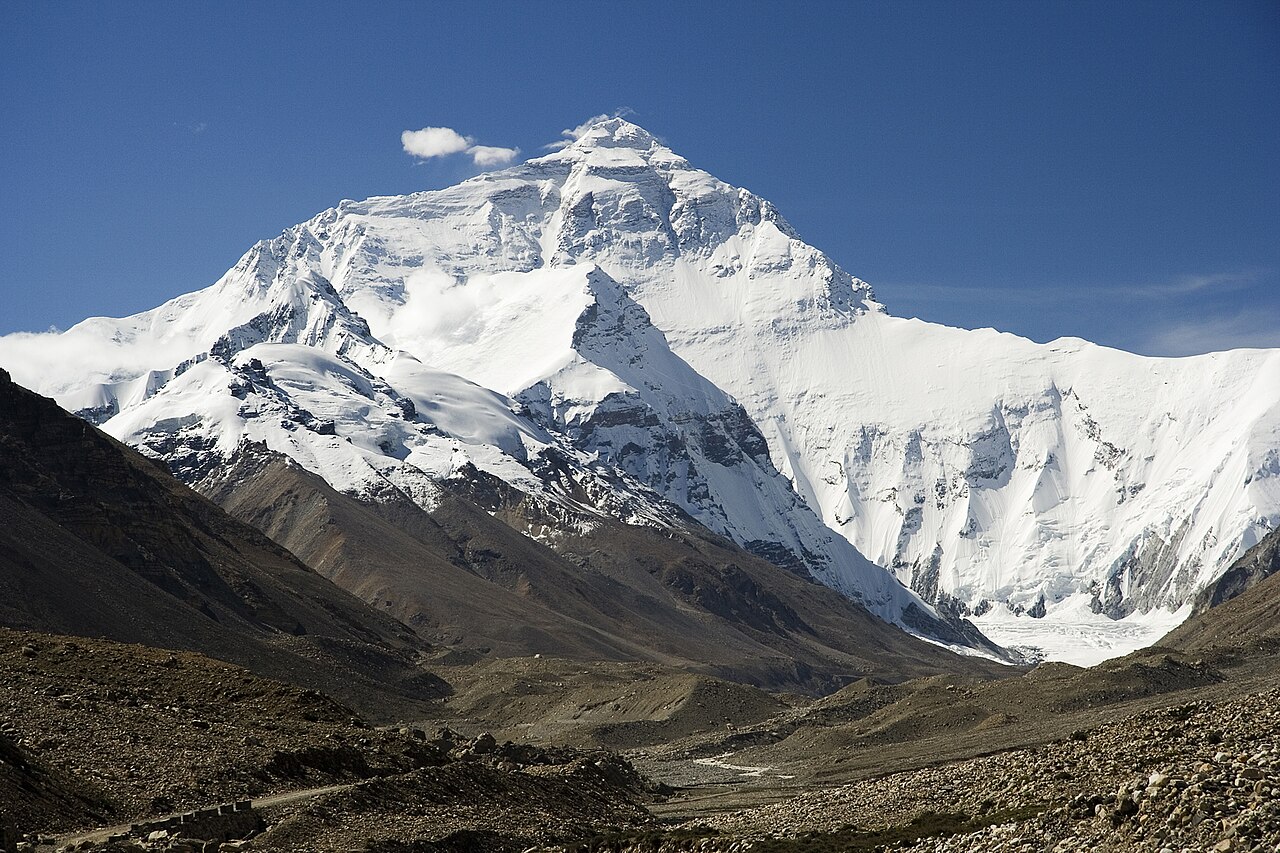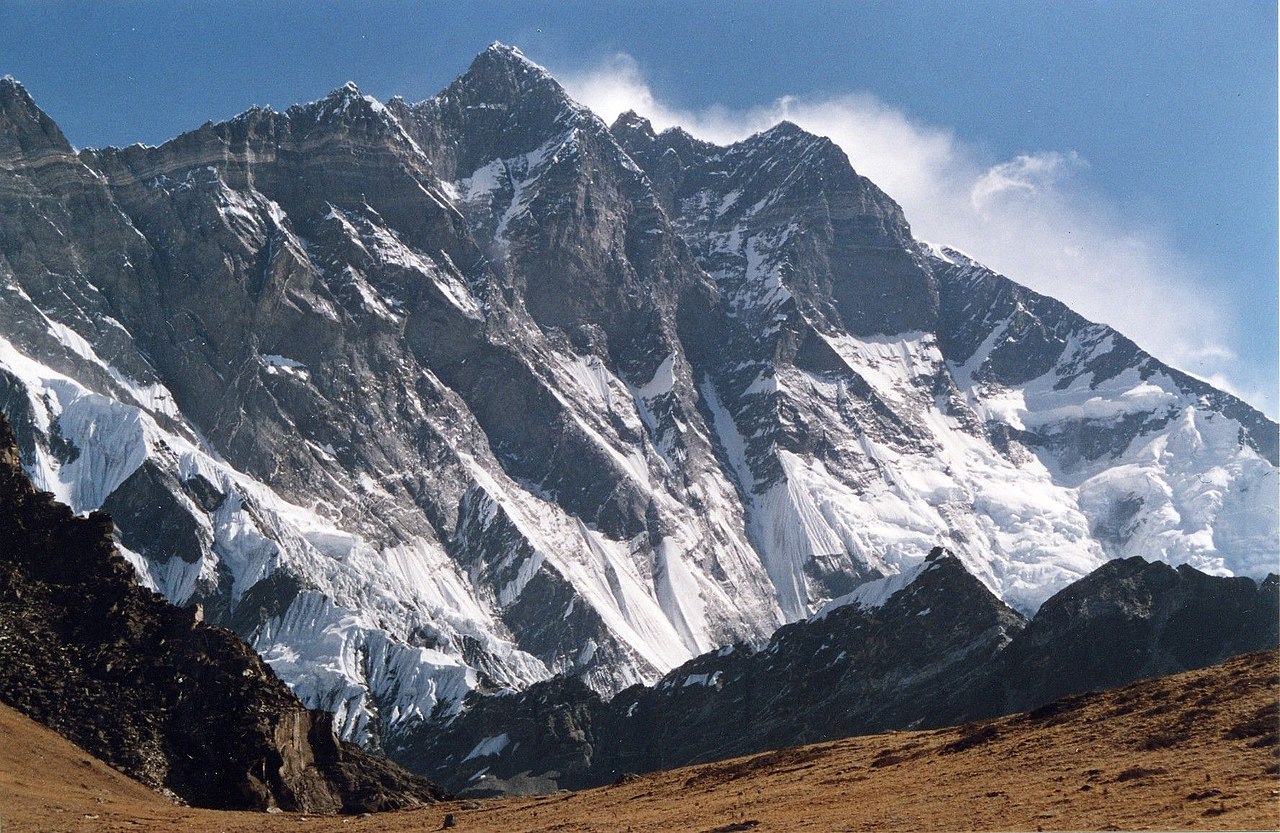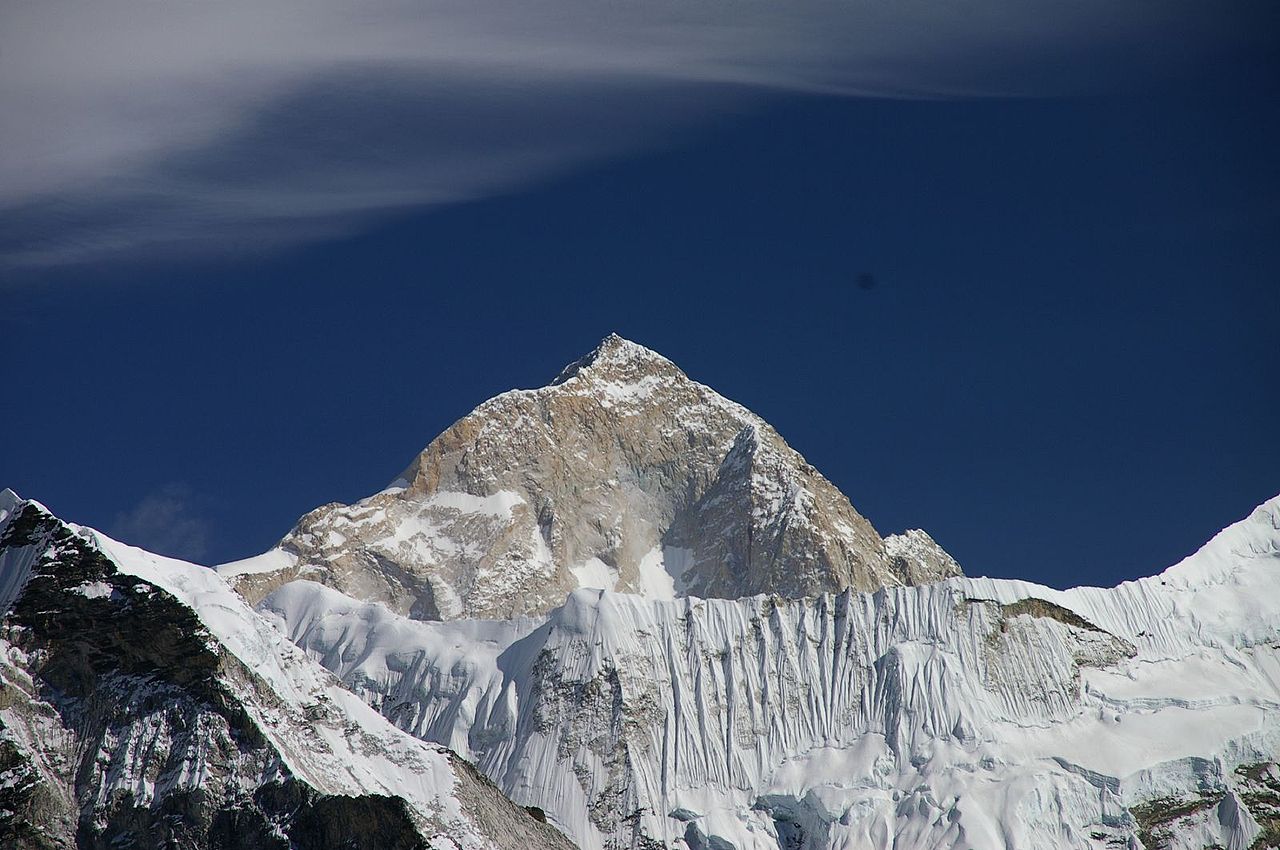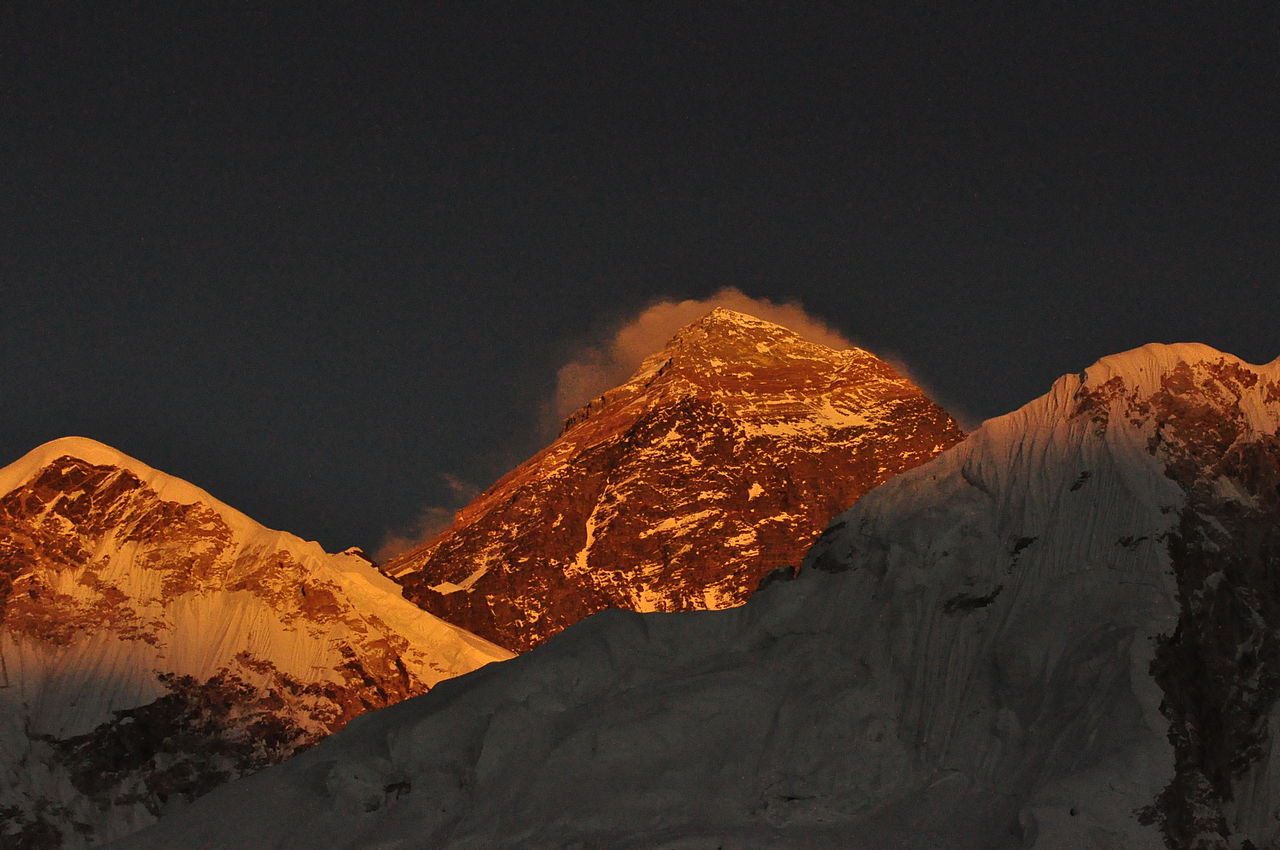
This weekend many climbers from across the globe will set out for Nepal at long last. Even though there has already been action in the Himalaya this spring, the season won't truly get underway until next week when the teams begin arriving in Kathmandu in droves. It'll take them some time to get out to their various Base Camps, but things are about to get very interesting in the big mountains.
To prepare us for the season ahead, Alan Arnette shared a post yesterday detailing some of the major expeditions to watch in the weeks ahead. Most of these climbs center around Everest of course, but several will focus on other major peaks too. Alan himself will leave shortly for Nepal as well, where he'll be attempting Lhotse this spring.
Among the climbs that Alan recommends keeping an eye on this year are an expedition to the rarely visited North-Northeast Ridge, where Canadian Raphael Slawinski will be joined by Germans David Goettler and Daniel Bartsch to attempt a new route without the use of Sherpas or supplemental oxygen. This side of the mountain has only been scaled one other time, but a Russian team back in 1996. The trio will be going up the ridge along a different path however.
Kilian Jornet's speed attempt on Everest will certainly get plenty of attention as well. His original plans were to make the attempt from the North Side, but Alan's report seems to indicate that is no longer the case. Considering the challenges and uncertainty that come with climbing in Tibet, and the fact that some operators switched sides and cancelled climbs on the North, perhaps Kilian has had to change up his plans as well. That will make things difficult for him, as the larger crowds on the South Side will certainly alter his approach.
Other interesting expeditions on the schedule an attempt to ski the Lhotse Coulair on Everest by Matt Moniz and Wilie Benegas. Alan says the coulair has never been fully skied before, and these two climbers will do it after summiting Everest. British climber Kenton Cool has ambitious plans for the weeks ahead as well. He'll first attempt to summit Everest – something he has done 11 times in the past – before moving on to Kangchenjunga and eventually K2. 23-year old Brit Rupert Jones-Warner will attempt to summit Everest from both the North and South Side, using a helicopter to travel between the two Base Camps on the respective sides of the mountain. Finally, German climbing legend Ralf Dujmovits is returning to Everest once again to attempt to summit without the use of bottled oxygen. Ralf has already climbed all 8000-meter peaks, but feels he has unfinished business on Everest after using O's to summit that peak.
That's the run-down of Alan's suggestions for climbs to watch this spring. Of course, I'm sure there will be plenty of other interesting expeditions to keep an eye on as well. The season is only about to get underway, so there should be plenty of action to come.
Showing posts with label Lhotse. Show all posts
Friday, March 27, 2015
Friday, March 20, 2015
Himalaya Spring 2015: Nepal Extends 2014 Climbing Permits for Everest
With the start of the 2015 spring climbing season in the Himalaya fast approaching, we continue to receive a string of important news stories ahead of the arrival of climbing teams. The latest announcement from the Nepali government is that they will now officially honor all of the climbing permits from 2014. You may recall that the climbing season on Everest and Lhotse was cancelled in the wake of a tragic avalanche that claimed the lives of 16 Sherpas there. Since then there has been a great deal of confusion over just how and when the teams that were on the mountain last year could return.
In this latest announcement, the Ministry of Tourism made it clear that they would honor 442 permits issued last year for climbers on Everest, Lhotse, and Nuptse. The individual climbers are free to return anytime between now and the spring of 2019, although they must do so with the commercial guide service that they had originally planned to climb with in 2014. Any mountaineers heading to Everest will be forced to pay an additional $1000 which reflects the change in pricing that went into effect this year.
Government officials had previously announced that they would recognize permits from the canceled 2014 season, but had stipulated that all the teams must return together. That meant that if some members of a squad were unable to return as part of the group they would forfeit their permit and be forced to purchase another one. This recent ruling allows individuals to come back at any time.
This announcement isn't without some issues however. Since climbers must return to Nepal with the guide service they had previously signed on with, this ruling could leave some out in the cold. For instance, the Peak Freaks and High Adventure Expeditions have already canceled their climbs for this year, and possibly 2016 as well, while other high profile squads – including Alpenglow Expeditions and Amical Alpin – have transferred their operations to the North Side of the mountain in Tibet. Unless these companies change their operations, their clients from last year may never get an opportunity to use their permits.
Additionally, with the 2015 spring climbing season about to start, more than a few climbers from last year have already signed up to return to the Himalaya. Those individuals will likely have already payed for their impending expeditions, which means they'll probably have to cut through a lot of bureaucratic red tape to try to get their money back from last year. Considering how the government in Nepal operates, those climbers shouldn't hold their breath on ever seeing that money again.
Still, this is good news for the climbers who haven't signed up to return just yet. It has taken months to get to this point, despite the fact that everyone knew this was the right decision all along, but at least there is some hope the mountaineers who had their dreams dashed last season. This isn't the most convenient way to handle the situation, but it is the best that can be done for now.
In this latest announcement, the Ministry of Tourism made it clear that they would honor 442 permits issued last year for climbers on Everest, Lhotse, and Nuptse. The individual climbers are free to return anytime between now and the spring of 2019, although they must do so with the commercial guide service that they had originally planned to climb with in 2014. Any mountaineers heading to Everest will be forced to pay an additional $1000 which reflects the change in pricing that went into effect this year.
Government officials had previously announced that they would recognize permits from the canceled 2014 season, but had stipulated that all the teams must return together. That meant that if some members of a squad were unable to return as part of the group they would forfeit their permit and be forced to purchase another one. This recent ruling allows individuals to come back at any time.
This announcement isn't without some issues however. Since climbers must return to Nepal with the guide service they had previously signed on with, this ruling could leave some out in the cold. For instance, the Peak Freaks and High Adventure Expeditions have already canceled their climbs for this year, and possibly 2016 as well, while other high profile squads – including Alpenglow Expeditions and Amical Alpin – have transferred their operations to the North Side of the mountain in Tibet. Unless these companies change their operations, their clients from last year may never get an opportunity to use their permits.
Additionally, with the 2015 spring climbing season about to start, more than a few climbers from last year have already signed up to return to the Himalaya. Those individuals will likely have already payed for their impending expeditions, which means they'll probably have to cut through a lot of bureaucratic red tape to try to get their money back from last year. Considering how the government in Nepal operates, those climbers shouldn't hold their breath on ever seeing that money again.
Still, this is good news for the climbers who haven't signed up to return just yet. It has taken months to get to this point, despite the fact that everyone knew this was the right decision all along, but at least there is some hope the mountaineers who had their dreams dashed last season. This isn't the most convenient way to handle the situation, but it is the best that can be done for now.
Tuesday, March 17, 2015
Climber to Attempt Six 8000 Meters Peaks in a Single Year
We've seen climbers set ambitious goals for the Himalaya before, but Canadian Nick Cienski has set the bar high for 2015. Nick is preparing to launch the 6 Summit Challenge, during which he will attempt to summit six 8000-meter peaks in a single year, a feat that has never been accomplished before.
The challenge will begin in Nepal this spring, where Nick will first attempt to summit Lhotse, the 8516 meter (27,940 ft) neighbor to Mt. Everest. His current plan to top out on that mountain in early May, then descend to Camp 2 where he'll rest before going back up to attempt to summit Everest (8848 m/29,029 ft) sometime around mid-May. After that, he'll descend once again, take a brief rest, and then fly to Base Camp on Makalu (8481 m/27,825 ft) where he'll go for his third 8000-meter peak in as many weeks.
With those three mountains out of the way, and with the summer Monsoon arriving in the Himalaya, Nick will take a much deserved break before returning in the fall for his second set of mountains. He'll use a similar approach as in the spring, first attempting Cho Oyu (8201 m/26,906 ft) before moving on to Shishapangma (8013 m/26,289 ft) and Manaslu (8156 m/26,759 ft). The exact timeline for those climbs hasn't been set just yet, but they should all take place during the stable weather conditions that return to the Himalaya post-Monsoon in the autumn.
Nick is undertaking the 6 Summit Challenge in an effort to raise funds and awareness of Mission 14, a nonprofit dedicated to battling human trafficking around the globe. The 6 Summit Challenge will be used as way to draw attention to this troubling practice, and to help Mission 14 and its partners to work to stamp out the illegal trade of human beings that is all too common in certain parts of the world.
As you can imagine, climbing three 8000-meter peaks back-to-back-to-back in the spring and the fall will be a logistical challenge unlike any other. During both of those time frames there will be three independent teams working on each mountain. Those teams will establish each of the camps, fix the ropes to the summit, and prepare for Nick's climbs. Meanwhile, he'll first focus on acclimatizing on one of those peaks before he launches his summit bids. He will be climbing with bottled oxygen above 8000 meters on each of these mountains, and the logistical support for the expeditions is being handled by the very experienced team from Himalayan Experience.
With the spring climbing season in the Himalaya just a few weeks away at this point, Nick is just one of many climbers getting ready to depart for Nepal. By the first of April, Kathmandu will be crawling with new arrivals as the new season begins to get underway. I'll be keeping a close eye on his progress, and posting regular updates as the season unfolds. Stay tuned for what promises to be a very interesting couple of months once again.
The challenge will begin in Nepal this spring, where Nick will first attempt to summit Lhotse, the 8516 meter (27,940 ft) neighbor to Mt. Everest. His current plan to top out on that mountain in early May, then descend to Camp 2 where he'll rest before going back up to attempt to summit Everest (8848 m/29,029 ft) sometime around mid-May. After that, he'll descend once again, take a brief rest, and then fly to Base Camp on Makalu (8481 m/27,825 ft) where he'll go for his third 8000-meter peak in as many weeks.
With those three mountains out of the way, and with the summer Monsoon arriving in the Himalaya, Nick will take a much deserved break before returning in the fall for his second set of mountains. He'll use a similar approach as in the spring, first attempting Cho Oyu (8201 m/26,906 ft) before moving on to Shishapangma (8013 m/26,289 ft) and Manaslu (8156 m/26,759 ft). The exact timeline for those climbs hasn't been set just yet, but they should all take place during the stable weather conditions that return to the Himalaya post-Monsoon in the autumn.
Nick is undertaking the 6 Summit Challenge in an effort to raise funds and awareness of Mission 14, a nonprofit dedicated to battling human trafficking around the globe. The 6 Summit Challenge will be used as way to draw attention to this troubling practice, and to help Mission 14 and its partners to work to stamp out the illegal trade of human beings that is all too common in certain parts of the world.
As you can imagine, climbing three 8000-meter peaks back-to-back-to-back in the spring and the fall will be a logistical challenge unlike any other. During both of those time frames there will be three independent teams working on each mountain. Those teams will establish each of the camps, fix the ropes to the summit, and prepare for Nick's climbs. Meanwhile, he'll first focus on acclimatizing on one of those peaks before he launches his summit bids. He will be climbing with bottled oxygen above 8000 meters on each of these mountains, and the logistical support for the expeditions is being handled by the very experienced team from Himalayan Experience.
With the spring climbing season in the Himalaya just a few weeks away at this point, Nick is just one of many climbers getting ready to depart for Nepal. By the first of April, Kathmandu will be crawling with new arrivals as the new season begins to get underway. I'll be keeping a close eye on his progress, and posting regular updates as the season unfolds. Stay tuned for what promises to be a very interesting couple of months once again.
Labels:
Cho Oyu,
Everest,
Himalaya,
Lhotse,
Makalu,
Manaslu,
Mountaineering,
Nepal,
Shishapangma
Tuesday, March 3, 2015
Alan Arnette Officially Announces Lhotse Expedition, Shares Gear For Everest
Back in early January, Alan Arnette announced his intention to become just the second American to climb all 14 of the world's 8000 meter peaks. Having already successfully topped out on Everest, Manaslu, and K2, he will now set his sights on the remaining 11 mountains starting with Lhotse this spring. The initiative is part of Alan's ongoing efforts to raise awareness and funds to fight Alzheimer's, an affliction that he has a very personal connection with having lost his mother to the disease a few years back. To date, his efforts have reached more than 50 million people, and he had raised $250,000 for the Cure Alzheimer's Fund. With Project 8000, he hopes to raise those numbers to 100 million and $1 million respectively.
This spring Alan will travel to Nepal where he'll be attempting to summit Lhotse, the 8516 meter (27,940 ft) neighbor to Everest. In fact, the two mountains are so close that they share much of the same route to the top, as mountaineers go up the Lhotse Face before diverting in separate directions. Much of the climb will be very familiar to Alan, who has spent plenty of time on Everest in the past. This should make his climb a bit easier, as he won't be facing a completely new experience while scaling this Himalayan giant.
Alan will depart the U.S. on March 30 and soon there after he'll begin blogging about his adventure both from the trail, and Everest Base Camp. Throughout the spring, we'll be able to get some very candid and personal dispatches from the climb, which should make for a very enjoyable experience for those that follow along. Alan writes with an engaging style that makes it fun to follow his efforts, and I'm sure he'll keep readers posted about any and all developments on the mountain.
Speaking of Everest, we're now just a month away from climbers setting out for Kathmandu, and in the days ahead they will be frantically packing all of their gear and preparing for the challenge ahead. Just what equipment they bring with them is crucial to their comfort on the mountain, and eventual success on a summit bid in late May or early June. With that in mind, Alan has also written a very interesting blog post about the gear that he takes with him on his expeditions. The story includes his selections for warm sleeping bags, boots, gloves, packs, and more. If you've ever wondered about what gear is best for an Everest climb, than you'll certainly want to give this article a read. He also shared the video below, which is a couple of years old, but also gives us some insights into the gear situation for climbing in the Himalaya.
This spring Alan will travel to Nepal where he'll be attempting to summit Lhotse, the 8516 meter (27,940 ft) neighbor to Everest. In fact, the two mountains are so close that they share much of the same route to the top, as mountaineers go up the Lhotse Face before diverting in separate directions. Much of the climb will be very familiar to Alan, who has spent plenty of time on Everest in the past. This should make his climb a bit easier, as he won't be facing a completely new experience while scaling this Himalayan giant.
Alan will depart the U.S. on March 30 and soon there after he'll begin blogging about his adventure both from the trail, and Everest Base Camp. Throughout the spring, we'll be able to get some very candid and personal dispatches from the climb, which should make for a very enjoyable experience for those that follow along. Alan writes with an engaging style that makes it fun to follow his efforts, and I'm sure he'll keep readers posted about any and all developments on the mountain.
Speaking of Everest, we're now just a month away from climbers setting out for Kathmandu, and in the days ahead they will be frantically packing all of their gear and preparing for the challenge ahead. Just what equipment they bring with them is crucial to their comfort on the mountain, and eventual success on a summit bid in late May or early June. With that in mind, Alan has also written a very interesting blog post about the gear that he takes with him on his expeditions. The story includes his selections for warm sleeping bags, boots, gloves, packs, and more. If you've ever wondered about what gear is best for an Everest climb, than you'll certainly want to give this article a read. He also shared the video below, which is a couple of years old, but also gives us some insights into the gear situation for climbing in the Himalaya.
Labels:
Alan Arnette,
Everest,
Gear,
Himalaya,
Lhotse,
Mountaineering,
Nepal
Friday, February 6, 2015
Fall Climbing Season in Nepal Sees Just 20% Success Rate
It was a rough fall climbing season in Nepal with a lot of mountaineers heading home without a successful summit. According to an article published in the Himalayan Times, expeditions that spent the Autumn in the Central Asian country only had a 20% success rate due to unusually bad weather across the region.
According to the article, there were 1385 foreign climbers, spread out over 183 permitted expeditions on 42 peaks in Nepal last fall. Those mountains that saw teams ranged from Nar Phu at 5921 meters (19,425 ft) to the 8163 meter (26,781 ft) Manaslu. Over the course of the season 242 climbers managed to record a total of 382 summits, with some bagging multiple peaks. Of those, the bulk of the successful climbs came on Ama Dablam and Manaslu, which saw 145 and 114 summits respectively. Furthermore, only Nanga Mari (6547 m/21,479 ft) and Nar Phu saw a 100% success rate with four and nine summits.
The other 8000-meter peaks that saw action in the fall included Makalu (8463 m/27,765 ft), Dhaulagiri (8167 m/26,795 ft), and Lhotse (8516 m/27,940 ft). All three of those mountains turned back all comers, with no teams recording a summit on any of them.
Obviously the poor weather in the Himalaya played a role in this dramatic drop-off in the number of fall summits. You may recall that a massive blizzard hit Nepal back in October, claiming the lives of more than 40 trekkers. That snow storm closed passes and dumped more than a meter of fresh powder in some areas, which hindered both trekking and climbing expeditions alike. Teams on Lhotse and Dhaulagiri in particular were hit hard by the poor weather, which was unusually bad even before the blizzard hit.
Still, this is an incredibly low success rate on many mountains that are often used as tune-ups for the bigger peaks. Traditionally those peaks see solid numbers of climbers reach the top as they build skills and experience for Everest or other Himalayan mountains. The article from the Himalayan Times only offers up the statistics however, and doesn't provide any further insight into why the success rate was so low this year.
We'll have to wait to see if this will become a trend or if the fall of 2014 was an anomaly. But with climate change impacting weather across the planet, it is possible that we could see even more big storms and extremely bad weather in the future too.
According to the article, there were 1385 foreign climbers, spread out over 183 permitted expeditions on 42 peaks in Nepal last fall. Those mountains that saw teams ranged from Nar Phu at 5921 meters (19,425 ft) to the 8163 meter (26,781 ft) Manaslu. Over the course of the season 242 climbers managed to record a total of 382 summits, with some bagging multiple peaks. Of those, the bulk of the successful climbs came on Ama Dablam and Manaslu, which saw 145 and 114 summits respectively. Furthermore, only Nanga Mari (6547 m/21,479 ft) and Nar Phu saw a 100% success rate with four and nine summits.
The other 8000-meter peaks that saw action in the fall included Makalu (8463 m/27,765 ft), Dhaulagiri (8167 m/26,795 ft), and Lhotse (8516 m/27,940 ft). All three of those mountains turned back all comers, with no teams recording a summit on any of them.
Obviously the poor weather in the Himalaya played a role in this dramatic drop-off in the number of fall summits. You may recall that a massive blizzard hit Nepal back in October, claiming the lives of more than 40 trekkers. That snow storm closed passes and dumped more than a meter of fresh powder in some areas, which hindered both trekking and climbing expeditions alike. Teams on Lhotse and Dhaulagiri in particular were hit hard by the poor weather, which was unusually bad even before the blizzard hit.
Still, this is an incredibly low success rate on many mountains that are often used as tune-ups for the bigger peaks. Traditionally those peaks see solid numbers of climbers reach the top as they build skills and experience for Everest or other Himalayan mountains. The article from the Himalayan Times only offers up the statistics however, and doesn't provide any further insight into why the success rate was so low this year.
We'll have to wait to see if this will become a trend or if the fall of 2014 was an anomaly. But with climate change impacting weather across the planet, it is possible that we could see even more big storms and extremely bad weather in the future too.
Labels:
Dhaulagiri,
Himalaya,
Lhotse,
Makalu,
Manaslu,
Mountaineering,
Nepal
Tuesday, November 18, 2014
Himalaya Fall 2014: The Season is Over
It has been a long, and often difficult, fall season in the Himalaya, where poor weather, unstable conditions, and challenging routes have made for a less than successful year in the big mountains. While I was away in Ecuador, the last remaining teams wrapped up their expeditions, and the season has come to a close at last. But before we close the book on another year in the Himalaya, I wanted to post a couple of updates on things that took place over the past couple of week.
Before I departed for South America, we were watching Lhotse closely, waiting for new from the South Korean team that has been struggling for two very long months to make progress on that mountain. In the first week of November, the team set off on a summit push, installing Camp 4, and hoping to move to the top of the 8516 meter (27,940 ft) peak. According to ExWeb, the climbers reached as high as 7800 meters (25,590 ft) before they were once again turned back by high winds and poor conditions. One of the team members was also said to be in deteriorating health as well, which eventually forced the abandonment of the entire project.
One other expedition that had been ongoing was the attempt by Canadian climbers Jason Kruk and Ian Welsted to summit Nuptse along the South Face. The duo spent four days on their summit push, but were forced to turn back after encountering conditions that prevented them from reaching the top. Later, Welsted feinted on the trail and had to be airlifted out to safety. He seems to be in good condition, and all is well, but it did put a scare into Kruk for a time. The episode took place on November 3, and was the result of fatigue after living above 5000 meters (16,404 ft) for five weeks. The boys are home now, and doing much better.
This report brings a wrap to the 2014 fall Himalaya climbing season, and now all eyes will turn towards the spring, when Everest will sure dominate the scene once again. Considering how unusual the past few seasons have been on the Big Hill, I suspect we will not lack for drama once again in 2015.
Before I departed for South America, we were watching Lhotse closely, waiting for new from the South Korean team that has been struggling for two very long months to make progress on that mountain. In the first week of November, the team set off on a summit push, installing Camp 4, and hoping to move to the top of the 8516 meter (27,940 ft) peak. According to ExWeb, the climbers reached as high as 7800 meters (25,590 ft) before they were once again turned back by high winds and poor conditions. One of the team members was also said to be in deteriorating health as well, which eventually forced the abandonment of the entire project.
One other expedition that had been ongoing was the attempt by Canadian climbers Jason Kruk and Ian Welsted to summit Nuptse along the South Face. The duo spent four days on their summit push, but were forced to turn back after encountering conditions that prevented them from reaching the top. Later, Welsted feinted on the trail and had to be airlifted out to safety. He seems to be in good condition, and all is well, but it did put a scare into Kruk for a time. The episode took place on November 3, and was the result of fatigue after living above 5000 meters (16,404 ft) for five weeks. The boys are home now, and doing much better.
This report brings a wrap to the 2014 fall Himalaya climbing season, and now all eyes will turn towards the spring, when Everest will sure dominate the scene once again. Considering how unusual the past few seasons have been on the Big Hill, I suspect we will not lack for drama once again in 2015.
Friday, October 31, 2014
Himalaya Fall 2014: Brits Depart Makalu Base Camp, First Ascent in the Indian Himalaya
As the fall climbing season in the Himalaya slowly grinds to a halt, we continue to receive a few updates from the mountains. At this point, there are only a matter of days left before the season begins to shift, but there are still a few bits of news to share.
First up, the British Tri-Services team posted a dispatch from Makalu indicating that they have now departed Base Camp on the Southeast Ridge, and are making their way back to Kathmandu. They report that poor weather continues to be the norm, with heavy snow, and rain, making it challenging to trek through the mountains once again. They are still a few days away from KTM, and the porters carrying their gear are a couple of days behind the climbers, but they expect that they should be on their way back to the U.K. by next week.
A few weeks back, the Slovenian team of Aleš Česen, Luka Lindič and Marko Prezelj became the first men to climb a new route on Hagshu, a 6657 meter (21,840 ft) peak in the Indian Himalaya. The team completed the climb in alpine style, first making the ascent of the North Face, then traversing the mountain to the main summit. While that was the main objective of the expedition, the trio first acclimatized on two other nearby peaks, making first ascents on both Lagan (5750 m/18,865 ft) and Hana's Men (6300 m/20,669 ft). It is safe to say that this was a successful expedition, considering they made first ascents on three peaks, and did all of them in light alpine style. Well done, and congratulations to the team.
Finally, there continues to be no word from Lhotse on the progress of the Korean Team. A few days back we received word that they were heading up to Camp 4, where they intended to stash gear in preparation for a summit push to come. Since then, there have been no updates, but presumably everything is going according to plan. The team has been on Lhotse for nearly two months now, and have faced bad weather and avalanches almost since the day they arrived. But time is running short now, and if they intend to make a summit bid, it will have to come soon. Hopefully we'll get an update over the weekend.
Various reports continue to indicate that the weather has been poor in the Himalaya once again. It has been a tough season there, and not an entirely successful one. Hopefully things will improve in the spring, when more teams head to the mountains, and Everest becomes a hive of activity.
More updates coming soon, as warranted.
First up, the British Tri-Services team posted a dispatch from Makalu indicating that they have now departed Base Camp on the Southeast Ridge, and are making their way back to Kathmandu. They report that poor weather continues to be the norm, with heavy snow, and rain, making it challenging to trek through the mountains once again. They are still a few days away from KTM, and the porters carrying their gear are a couple of days behind the climbers, but they expect that they should be on their way back to the U.K. by next week.
A few weeks back, the Slovenian team of Aleš Česen, Luka Lindič and Marko Prezelj became the first men to climb a new route on Hagshu, a 6657 meter (21,840 ft) peak in the Indian Himalaya. The team completed the climb in alpine style, first making the ascent of the North Face, then traversing the mountain to the main summit. While that was the main objective of the expedition, the trio first acclimatized on two other nearby peaks, making first ascents on both Lagan (5750 m/18,865 ft) and Hana's Men (6300 m/20,669 ft). It is safe to say that this was a successful expedition, considering they made first ascents on three peaks, and did all of them in light alpine style. Well done, and congratulations to the team.
Finally, there continues to be no word from Lhotse on the progress of the Korean Team. A few days back we received word that they were heading up to Camp 4, where they intended to stash gear in preparation for a summit push to come. Since then, there have been no updates, but presumably everything is going according to plan. The team has been on Lhotse for nearly two months now, and have faced bad weather and avalanches almost since the day they arrived. But time is running short now, and if they intend to make a summit bid, it will have to come soon. Hopefully we'll get an update over the weekend.
Various reports continue to indicate that the weather has been poor in the Himalaya once again. It has been a tough season there, and not an entirely successful one. Hopefully things will improve in the spring, when more teams head to the mountains, and Everest becomes a hive of activity.
More updates coming soon, as warranted.
Labels:
First Ascent,
Himalaya,
India,
Lhotse,
Makalu,
Mountaineering,
Nepal
Wednesday, October 29, 2014
Himalaya Fall 2014: Korean Lhotse Team Prepares For Summit Push
While only one team remains on an 8000-meter peak in the Himalaya this fall, the season isn't quite over yet. The Korean squad on Lhotse continues to battle poor weather, and unstable conditions, in an attempt to reach the summit on that mountain. The clock is ticking however, and after nearly two months in the Himalaya, time is starting to run out. With that in mind, the team is in the final stages of their preparation, with the hopes of summit bid to come.
Information on the team's current status has been hard to come by in recent days, but according to ExWeb, the Korean climbers set off up the mountain once again today with the hopes of establishing Camp 4 at 8200 meters (26,902 ft). This will be their final camp on the mountain, and will serve as their launching pad for the summit. It is unclear whether or not they'll attempt to go straight to the top, or will instead descend back to Base Camp, and wait for a proper weather window.
Considering the length of time they have been on the mountain (they arrived in the first week of September), and the patience that they have shown thus far, it seems likely that they will wait for the proper window to allow themselves the best opportunity of topping out. That said, temperatures have begun to drop across the region, and Lhotse has reportedly gotten much colder following the recent blizzard brought on by cyclone Hudhud.
Avalanches remain a concern as well, as they have all season long. The team has already faced several significant slides, and have been extremely careful in their approach so far. They could find even more unstable snow as they move up above C4.
Meanwhile, Canadian climbers Jason Kruk and Ian Welsted are still in the Himalaya as well, and attempting to summit Nuptse, the 7861 meter (25,791 ft) peak located in the Khumbu Valley, not far from Everest itself. A few days back, Kruk posted to his Facebook page that they duo were taking one last crack at the summit along the South Face before they pack up camp and head home. If everything is going according to plan, they should top out sometime over the next few days, but we'll have to wait for a new dispatch to report on their success.
The fall climbing season is nearly over, and in a few days, I'm sure we'll be wrapping up the last of these reports. It has been a strange autumn in the Himalaya to say the least, but there were some good success stories, most notably on Manaslu and Cho Oyu. Hopefully we'll have a few more summits to add to the list by this weekend. Stay tuned.
Update: In other Himalayan news, climbers Mick Fowler and Paul Ramadan have completed a new route along the Northeast Face of Hagshu, a 6515 meter (21,374 ft) peak in the Indian Himalaya. The mountain had been previously climbed back in 1989, but despite several attempts, has remained unclimbed ever since.
Information on the team's current status has been hard to come by in recent days, but according to ExWeb, the Korean climbers set off up the mountain once again today with the hopes of establishing Camp 4 at 8200 meters (26,902 ft). This will be their final camp on the mountain, and will serve as their launching pad for the summit. It is unclear whether or not they'll attempt to go straight to the top, or will instead descend back to Base Camp, and wait for a proper weather window.
Considering the length of time they have been on the mountain (they arrived in the first week of September), and the patience that they have shown thus far, it seems likely that they will wait for the proper window to allow themselves the best opportunity of topping out. That said, temperatures have begun to drop across the region, and Lhotse has reportedly gotten much colder following the recent blizzard brought on by cyclone Hudhud.
Avalanches remain a concern as well, as they have all season long. The team has already faced several significant slides, and have been extremely careful in their approach so far. They could find even more unstable snow as they move up above C4.
Meanwhile, Canadian climbers Jason Kruk and Ian Welsted are still in the Himalaya as well, and attempting to summit Nuptse, the 7861 meter (25,791 ft) peak located in the Khumbu Valley, not far from Everest itself. A few days back, Kruk posted to his Facebook page that they duo were taking one last crack at the summit along the South Face before they pack up camp and head home. If everything is going according to plan, they should top out sometime over the next few days, but we'll have to wait for a new dispatch to report on their success.
The fall climbing season is nearly over, and in a few days, I'm sure we'll be wrapping up the last of these reports. It has been a strange autumn in the Himalaya to say the least, but there were some good success stories, most notably on Manaslu and Cho Oyu. Hopefully we'll have a few more summits to add to the list by this weekend. Stay tuned.
Update: In other Himalayan news, climbers Mick Fowler and Paul Ramadan have completed a new route along the Northeast Face of Hagshu, a 6515 meter (21,374 ft) peak in the Indian Himalaya. The mountain had been previously climbed back in 1989, but despite several attempts, has remained unclimbed ever since.
Thursday, October 23, 2014
Himalaya Fall 2014: Season Ends on Makalu
Just a brief update from the Himalaya today, where we have received word that the British Tri-Services team has canceled their summit bid, and are now preparing to depart the mountain. It seems conditions on the upper slopes above Camp 4 were too dicey, and the team is exhausted from their efforts. They have retreated back to Base Camp, and are now preparing to head home.
The squad was expected to launch a summit push today, with the hope of topping out sometime over the next three days. The weather on the mountain is said to be very good following last week's storm, and according to yesterday's dispatch, the team was feeling fine and optimistic. Unfortunately, it seems that as they went higher, the discovered that the route to the top along the Southeast Ridge was not as stable as they would like. This is a long, and exposed, path, which would have been extremely difficult, even when conditions are good.
According to their most recent dispatch, the team has now been working the mountain for seven straight days, and are physically wore down. Typically, they could retreat to BC and rest for a few days before giving it a go, but the men are on a bit of a tight schedule, and there is no longer any time left for another summit push. With bad weather expected to arrive once again this weekend, the group made the decision to pull the plug, and go home.
Staying on Makalu, but jumping over to the Northwest side of the mountain, we have finally gotten confirmation from the Madison Mountaineering team that they to abandoned their summit bid. They launched their attempt to reach the top last weekend, and while there were rumors that they had turned back amidst poor conditions, those are now confirmed with the team's latest dispatch as well.
Apparently, they made it as far as Camp 2 at 6858 meters (22,500 ft) before deciding to turn back. At that point, they discovered deep snow deposited by the recent blizzard, that was just too unstable, and nearly impassable as well. They immediately descended back to BC, and are now preparing to depart for home.
It has been a tough fall in the Himalaya. There was some early success on Cho Oyu and Makalu amongst commercial teams, but both Shishapangma and Makalu have proven too tough to crack. The Korean team is still working on Lhotse, but they have been on that mountain for nearly two months, and have struggled to make meaningful progress. Their last report indicated they were hoping to install Camp 4, and prepare for a summit push, but it is unclear if they have accomplished that task. Still, they are a persistent bunch, and until they say the expedition is over, we'll keep monitoring their progress and hope for the best.
It now appears that the fall season is just about over. Soon, everyone's attention will turn towards preparing for the spring, and a return to Everest.
The squad was expected to launch a summit push today, with the hope of topping out sometime over the next three days. The weather on the mountain is said to be very good following last week's storm, and according to yesterday's dispatch, the team was feeling fine and optimistic. Unfortunately, it seems that as they went higher, the discovered that the route to the top along the Southeast Ridge was not as stable as they would like. This is a long, and exposed, path, which would have been extremely difficult, even when conditions are good.
According to their most recent dispatch, the team has now been working the mountain for seven straight days, and are physically wore down. Typically, they could retreat to BC and rest for a few days before giving it a go, but the men are on a bit of a tight schedule, and there is no longer any time left for another summit push. With bad weather expected to arrive once again this weekend, the group made the decision to pull the plug, and go home.
Staying on Makalu, but jumping over to the Northwest side of the mountain, we have finally gotten confirmation from the Madison Mountaineering team that they to abandoned their summit bid. They launched their attempt to reach the top last weekend, and while there were rumors that they had turned back amidst poor conditions, those are now confirmed with the team's latest dispatch as well.
Apparently, they made it as far as Camp 2 at 6858 meters (22,500 ft) before deciding to turn back. At that point, they discovered deep snow deposited by the recent blizzard, that was just too unstable, and nearly impassable as well. They immediately descended back to BC, and are now preparing to depart for home.
It has been a tough fall in the Himalaya. There was some early success on Cho Oyu and Makalu amongst commercial teams, but both Shishapangma and Makalu have proven too tough to crack. The Korean team is still working on Lhotse, but they have been on that mountain for nearly two months, and have struggled to make meaningful progress. Their last report indicated they were hoping to install Camp 4, and prepare for a summit push, but it is unclear if they have accomplished that task. Still, they are a persistent bunch, and until they say the expedition is over, we'll keep monitoring their progress and hope for the best.
It now appears that the fall season is just about over. Soon, everyone's attention will turn towards preparing for the spring, and a return to Everest.
Wednesday, October 22, 2014
Himalaya Fall 2014: Summit Bid Underway on Makalu, New Rules for Trekking in Nepal
The fall climbing season in Nepal is rapidly coming to a close, and as such, teams are making final preparations for their summit bids, particularly on Makalu. Meanwhile, in the aftermath of that massive blizzard that claimed the lives of more than 40 people in the Himalaya last week, the Ministry of Tourism has announced new regulations designed to help keep trekkers safer in the mountains.
We'll start today on Makalu, where the British Tri-Service team has put a team of climbers in place high on the mountain with the hope of reaching the summit as early as tomorrow. Climbing along the very long, and difficult, Southeast Ridge the designated 4-man summit team has now reached Camp 4, where they are currently resting before setting off for the top tomorrow morning. The weather forecast indicates three good days ahead, and they hope to take advantage of that open window if possible. The team is reportedly in good spirits, and fine health, and expectations are riding high as they begin the final stages of the expedition. A support team is standing by to lend aid should the summiteers need it, but they are anticipating a good approach to the top of the mountain. Heavy snows may have created unstable conditions however, and break trail to the top could be exhausting and time consuming. Still, they are ready to proceed in alpine style above C4. Watch for more updates over the next few days.
There is still no word from the Madison Mountaineering team, which was also attempting Makalu along the Northwest side of the mountain. They launched a summit bid last Saturday, but have not posted any status updates since. There have been some rumors that indicate that they were turned back high on the mountain due to unstable conditions, but we have not received confirmation of that at this point.
Over on Lhotse, the Korean team is back in Base Camp after another rotation up the mountain. Conditions on the mountain continue to be challenging, but they are forging ahead with their plans. There are no indications of when the team will launch its summit bid, but they have been on Lhotse for weeks now, with slow progress being made. Fortunately, the squad seems very patient, as they wait for their opportunity.
Finally, in the wake of the disastrous blizzard that swept through the Himalaya last week, Nepal has announced some changes to help protect trekkers visiting the country. They have once again reiterated that all hikers will need to be accompanied by a local guide, which is something that they have said in the past, but seem to not enforce all that tightly. Representatives from the Ministry of Tourism have also said that trekkers will be required to carry GPS tracking devices, which will make them easier to locate should another emergency situation arrive. Furthermore, the government is promising better weather forecasts to help more accurately report conditions prior to trekking groups setting off. All of these efforts are designed to keep travelers safer of course, while continuing to allow access to the best trekking routes the country has to offer.
Anything that helps make the experience safer is, of course, a good thing. It is important to acknowledge that this was a freak and unexpected storm, and while I'm sure there were some poor choices made on the parts of guides and trekkers, the blizzard that hit the Himalaya last week was not in any way typical for this time of year. Still, these moves will hopefully ensure a safer environment traveling in Nepal. The country has seen its share of tragedy this year, and its tourism industry could take a hit because of it. That would be a shame however, as the country is beautiful, accommodating, and filled with wonderful adventures.
That's all for today. More to come from Makalu in the next day or two.
We'll start today on Makalu, where the British Tri-Service team has put a team of climbers in place high on the mountain with the hope of reaching the summit as early as tomorrow. Climbing along the very long, and difficult, Southeast Ridge the designated 4-man summit team has now reached Camp 4, where they are currently resting before setting off for the top tomorrow morning. The weather forecast indicates three good days ahead, and they hope to take advantage of that open window if possible. The team is reportedly in good spirits, and fine health, and expectations are riding high as they begin the final stages of the expedition. A support team is standing by to lend aid should the summiteers need it, but they are anticipating a good approach to the top of the mountain. Heavy snows may have created unstable conditions however, and break trail to the top could be exhausting and time consuming. Still, they are ready to proceed in alpine style above C4. Watch for more updates over the next few days.
There is still no word from the Madison Mountaineering team, which was also attempting Makalu along the Northwest side of the mountain. They launched a summit bid last Saturday, but have not posted any status updates since. There have been some rumors that indicate that they were turned back high on the mountain due to unstable conditions, but we have not received confirmation of that at this point.
Over on Lhotse, the Korean team is back in Base Camp after another rotation up the mountain. Conditions on the mountain continue to be challenging, but they are forging ahead with their plans. There are no indications of when the team will launch its summit bid, but they have been on Lhotse for weeks now, with slow progress being made. Fortunately, the squad seems very patient, as they wait for their opportunity.
Finally, in the wake of the disastrous blizzard that swept through the Himalaya last week, Nepal has announced some changes to help protect trekkers visiting the country. They have once again reiterated that all hikers will need to be accompanied by a local guide, which is something that they have said in the past, but seem to not enforce all that tightly. Representatives from the Ministry of Tourism have also said that trekkers will be required to carry GPS tracking devices, which will make them easier to locate should another emergency situation arrive. Furthermore, the government is promising better weather forecasts to help more accurately report conditions prior to trekking groups setting off. All of these efforts are designed to keep travelers safer of course, while continuing to allow access to the best trekking routes the country has to offer.
Anything that helps make the experience safer is, of course, a good thing. It is important to acknowledge that this was a freak and unexpected storm, and while I'm sure there were some poor choices made on the parts of guides and trekkers, the blizzard that hit the Himalaya last week was not in any way typical for this time of year. Still, these moves will hopefully ensure a safer environment traveling in Nepal. The country has seen its share of tragedy this year, and its tourism industry could take a hit because of it. That would be a shame however, as the country is beautiful, accommodating, and filled with wonderful adventures.
That's all for today. More to come from Makalu in the next day or two.
Subscribe to:
Posts (Atom)