Showing posts with label Expedition. Show all posts

Monday, March 30, 2015

Video: Karun - Following Iran's Longest River Source to Sea

In the spring of 2014 adventurers Tom Allen and Leon McCarron traveled to Iran where they hoped to travel the length of the Karun – that country's longest river – source to sea. The 500-mile (800 km) journey proved to be more than they had expected, offering both insights into the rich history and culture of Iran, as well as the warm and friendly people that live there. But there were also plenty of challenges along the way, including brushes with disaster along that could have spelled the end of the entire expedition.

The video below is a short teaser trailer that gives you a brief taste of what their Iranian adventure was all about. If you find the clip intriguing, you can jump over to KarunFilm.com where you can watch the entire 15-minute documentary for free. I think you'll find it is more than worth your time to catch the entire thing.

And if you like what Tom and Leon have done with this project, they are also trying to get their next one off the ground at Kickstarter. The duo is not only hoping to wrap up production on their film about Iran, but produce another one about a journey they made through Patagonia as well. Find out more by clicking here.

Karun: Official Trailer from Tom Allen on Vimeo.

Tuesday, March 24, 2015

Endurance Athlete is Running from Vancouver to Buenos Aires

As a daily runner, I pride myself in slipping on my running shoes each and every day, and heading outside to put in a few miles no matter what the weather. But my running addiction is nothing compared to that of Jaime Ramsay, a British adventurer who is currently attempting to travel from Vancouver, Canada to Buenos Aires, Argentina on foot. That's a distance of more than 18,000 km (11,185 miles), of which he has already completed 6500 km (4038 miles).

Jaime has broken this epic running journey down into three stages. The first stage began in Vancouver and consisted of him running down the Pacific Coast of the U.S. That section of the run covered a total distance of 2700 km (1677 miles) before ending in the Mexican town of Tijuana. He completed that stage last fall, and immediately moved onto the second, which is a more challenging and dangerous excursion across Mexico and Central America that will eventually end in Panama City. covering some 6400 km (3976 miles) in the process. As I write this, Jaime is in the midst of that second stage, having reached Guatemala a few days back.

The next stage of the expedition will be even more difficult and dangerous. After he reaches Panama, Jaime will face the extremely remote and wild region known as The Darien Gap. This 100 km (62 mile) stretch of his run will cross through dense rainforest populated by drug runners, guerrilla fighters, dangerous animals, and incredibly difficult terrain. How exactly he'll navigate through this part of the world remains to be seen. Even he says he'll have to determine the best route once he arrives. But needless to say, it will be one of the more trying parts of the entire expedition as he passes through a place that is amongst the most dangerous in the world.


After The Darien Gap he'll pass into South America proper, where he'll begin the final stage of his run. That will be a 7750 km (4815 mile) leg that begins in Cartagena, Colombia and ends at the finish line in Buenos Aires. Along the way he'll have to cross the Andes Mountains, a challenge unlike any that he has faced so far.

When he's all said and done, Jaime hopes to have completed the entire journey in about 600 days, running a total of 428 marathons as he passes through 14 countries. But as he says on his website, he isn't doing this to set a record or become the "first" to accomplish something. Instead, he is making this run to prove that determined people can do anything that they set their mind to, and accomplish some impressive things while doing so. That's the kind of spirit that we love here at The Adventure Blog, which is why I wanted to share Jaime's story.

The intrepid runner is also using his journey to raise funds for several charities. Among them are WaterAid, an organization dedicated to helping developing nations get clean drinking water; We Are MacMillan, which provides support for cancer patients; and Campaign Against Living Miserably (CALM), which strives to prevent male suicide in the U.K.

You can follow along with Jaime's progress on his website at JaimeisRunning.com, where you'll also find links to how you can donate to his causes. You can also follow him on Twitter at @jamieisrunning too. https://twitter.com/jamieisrunning

Monday, March 23, 2015

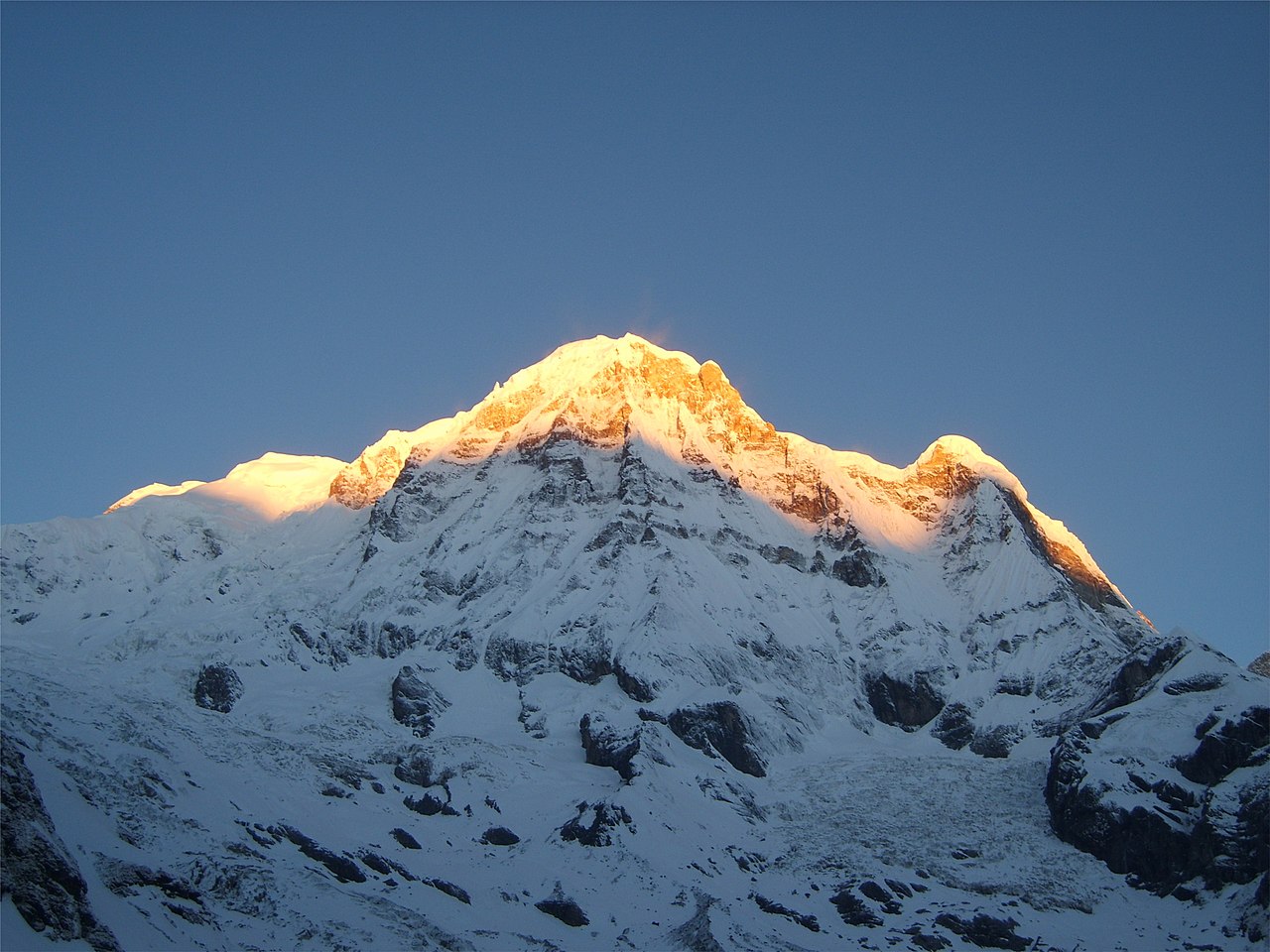
Himalaya Spring 2015: Early Summit Push on Annapurna Begins

The spring climbing season in the Himalaya is only a few days old and already we have our first summit bid. Last week I wrote about the early arrival of teams on Annapurna, with some climbers already spending a few weeks on the mountain. Now it seems that one of those teams is already prepared to head toward the top even before most mountaineers even leave home.

According to ExWeb, Mingma G. Sherpa and Anggeli Sherpa of the Dreamers Destination expedition  had planned to finish fixing the ropes to Camp 4 yesterday. Behind them, the rest of the squad, which consists of Samuli Mansikka, Reza Shahlaee, Muharrek Aydin Imrak and Zdravko Dejanovic, were making their way upwards as well. That group were planning reach Camp 3 yesterday so that they could be in position for a summit push this week. If all goes well, they could top out as early as tomorrow, depending on weather and surface conditions.

It seems that the current strategy on Annapurna is to get to the mountain early in the spring to avoid some of the dangers that the peak is so well known for. As the season evolves, more snow falls on the upper slopes, making it more challenging to climb and creating increased avalanche danger as well. But by going early, the mountain is still frozen from the winter, helping to keep rocks and snow in place. On top of that, the heavy snows associated with the spring are still a few weeks away, making it safer in general to climb up.

The Dreamers Destination team is the only one to take this approach this year. 76-year old Spaniard Carlos Soria is already on Annapurna as well, and has spent a few nights in C2 as he acclimatizes. Aussie female climber Chris Jensen Burke has also been on the mountain since last week, and has also spent some time in both Camp 1 and 2 as par to her acclimatization.

Annapurna will be a busy place this spring with more climbers due later in the season. Among them will be American Alex Barber who hopes to make a solo summit attempt without oxygen. Alex just let for Nepal yesterday however so he won't be in Base Camp for awhile yet. He will be climbing with BC support from Seven Summits Treks along the North Side but which route he takes will be determined by the conditions of the mountain upon his arrival. Watch for updates on his progress in the days ahead.

Meanwhile, the vast majority of climbers will be preparing to depart for Nepal this week. Most expeditions won't officially get underway until around the April 1, so climbers are in last minute prep mode at home as they pack their gear, make plans for the days ahead, and start thinking about their individual expeditions. It is an exciting time, but it is about to get a whole lot more exciting.

There should be a lot more new to report soon. Stay tuned.

Friday, March 20, 2015

Construction of 2015 Barneo Ice Camp Set to Begin

Over the next few days, construction is set to begin on the 2015 Barneo Ice Camp. This temporary base of operations is built in the Arctic each spring in order to serve as a staging ground for explorers, researchers, and adventure travelers heading to the North Pole. Located on the Russian side of the Arctic ice, Barneo has been operating somewhere near 89ºN Latitude for the past 15 years, providing access to the frozen Arctic Ocean to a wide variety of visitors in the process.

Traditionally, the process for building the base begins with Russian aircraft flying into the Arctic to first locate an ice flow of suitable size and stability. Once the location is selected a group of paratroopers drops onto the ice, along with construction equipment. They immediately go to work building a temporary runway that is suitable for large aircraft such as the Antonov An-74 cargo-passenger plane. The team also constructs a small camp to accommodate the men and women who come and go throughout the brief Arctic exploration season.

Once the camp is established and the runway is built, larger aircraft can land on the ice flow and begin delivering gear and supplies. They'll also shuttle the visitors to Barneo, some of whom will continue on to the North Pole by skis or helicopter.

From the sounds of things, it seems like 2015 will be quite a different season for Barneo than in year's past. Early reports indicate that there will be fewer tourists heading to the Arctic this spring, while more scientists and researchers take their place instead. Additionally, it seems the Russian military will use the camp as a base of operations while it conducts training operations in the Arctic as well.

Traditionally the camp opens around the first week of April and remains in operation for about three weeks. Weather conditions will determine just how long Barneo remains in service each year, as the ice flows begin to break up as the season advances. It is likely that the 2015 version of the base will follow roughly the same schedule.

Sadly, it seems there are fewer explorers heading into the Arctic this season, so it is unclear what kind of news we should expect out of Barneo in the days ahead. Right now it seems that visitors will be mostly limited to researchers and military personnel, but if a good story arises, I'll be sure to share it. The North Pole season will certainly be a quiet one though it seems.

Thursday, March 19, 2015

Veteran Polar Explorer Trekking and Paddling the Boundary Waters

Veteran polar explorer Will Steger has set out on a new adventure this week. The 70-year old who has visited the North and South Pole, traversed northern Greenland, and traveled from Russia to Ellesmere Island in Canada, all by dogsled. But this time out, he's making solo journey along the Boundary Waters between the U.S. and Canada, trekking and paddling the remote region of Minnesota's northern border as he goes.

Steger launched his latest expedition yesterday. He'll begin by pulling a canoe behind him as he skis through the northern wilderness. That canoe will serve much the same way a polar explorer's sled would in both the Arctic or Antarctic, carrying his supplies and equipment across the snow. As he travels, he'll reach sections of the Boundary Waters that have thawed for the spring, and he'll transition to using the canoe in the more traditional way, but in the early days of the trip he'll be pulling it behind him as he goes.

The 200-mile journey started on Lake Saganaga at the end of the Gunflint Trail. Steger moved into the Quetico Provincial Park in Ontario and continued out onto the border lakes of the Boundary Waters. Over the course of the next few weeks, he'll be traveling through a remote and rugged wilderness that sees few visitors at any time of the year, but will be especially empty so early in the spring. Along the way he'll find frozen waters just beginning to thaw with the arrival of warmer season ahead. As he makes his way further along the route, Steger will be forced to navigate through rising rapids, steep narrows, and a chain of interconnected rivers and lakes. He has brought enough fuel and supplies to last about four weeks, although rationing could stretch that time a bit further.

Due to an unprecedented spring thaw, Steger was forced to start his expedition a week earlier than he had anticipated. The rivers and lakes are already starting to swell with rising water, and it now appears that he could do more paddling than trekking along the way. But in the early stages of the trip he'll still be hauling the canoe-sled as he makes his way along the chosen route.

You can follow Will's progress on his official website. He is releasing daily audio dispatches from his expedition that will share the journey with listeners in a very personal way. Steger promises to give us insights into what crosses through his mind as travels, which considering his 50 years of exploration experience should prove very interesting. It should be fascinating to hear about the challenges of the journey from a man who has spent more time in remote, and very cold places, than just about anyone else on Earth.

Tuesday, March 10, 2015

Lamenting the Lost Arctic Season

We're about to enter a bit of a lull in the world of exploration and adventure. The winter climbing season on Nanga Parbat is likely going to wrap up later this week, with success on the mountain still far from certain. We're also a few weeks away from climbers departing for Nepal to begin the spring climbing season on Everest and other major peaks in the Himalaya. For those men and women, the remaining days of March will be the calm before the storm as they launch a two-month long odyssey to reach the top of the tallest peak on the planet. While that will certainly be a busy and interesting time as always, this year there is definitely something missing from my usual round-ups of adventurous pursuits, and it isn't hard to identify exactly what that is. With no full-distance expeditions set to launch for the North Pole from the Canadian side of the Arctic this spring there is a real vacuum in terms of challenging undertakings, and it is unclear if that vacuum will be filled ever again.

Typically this time of year there are several teams in Resolute Bay, Canada waiting to be flown out to their starting points on the ice. Those intrepid adventurers generally have big dreams of skiing unsupported to the North Pole, covering roughly 700 km (435 miles) in the process. Most don't make it. In fact, since 2010, only one team has actually been able to accomplish that feat, which I believe is the most challenging journey in the world today. Climate change has altered the Arctic in undeniable ways, and as a result, those skiing north now face impossible thin ice, massive rubble fields, open leads of water, and numerous other obstacles. It is a difficult, punishing experience that has simply become increasingly difficult as the years have passed. So much so that it now seems nearly impossible for anyone to travel on foot all the way to 90ºN.


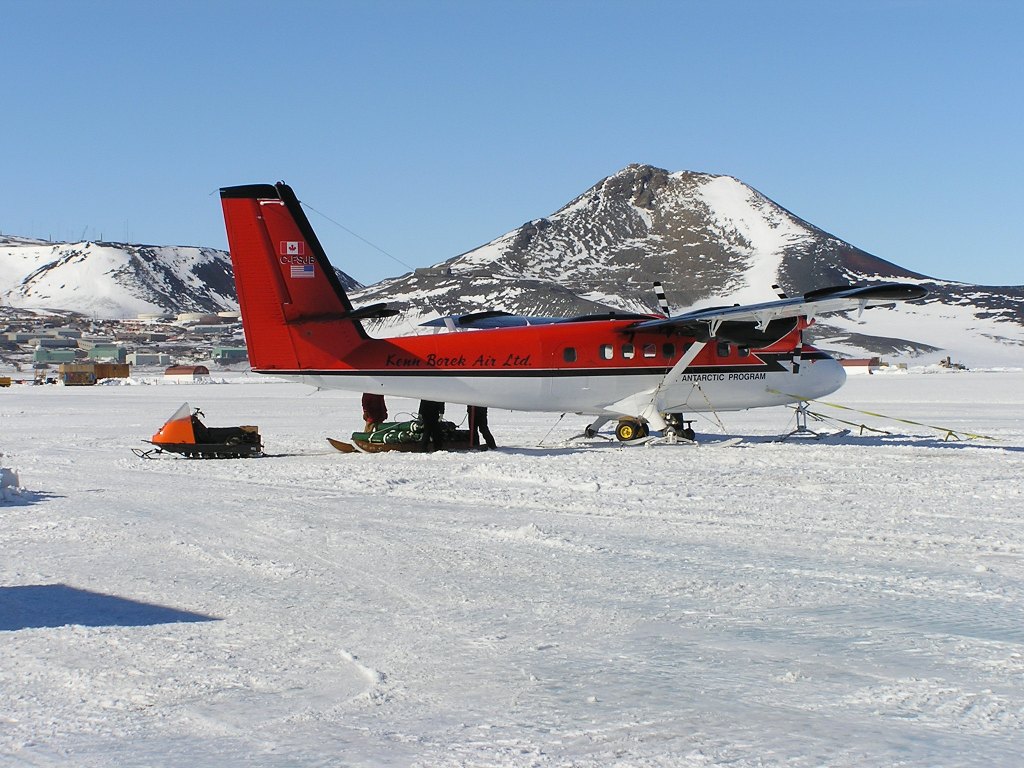
I'm not the only one who thinks that a full-distance North  Pole expedition is now almost entirely out of reach. Earlier this year, Kenn Borek Air, the charter airline that has supported Arctic explorers in the past, announced that it was ceasing operations in the region. With the increasing dangers of flying into the Arctic, it simply was no longer economically viable for the adventurous airline to continue supporting explorers in the area, and as a result the company made the surprise move to pullout. This has left a few expeditions in the lurch however and has meant that there will be no skiers attempting to reach the North Pole from the Canadian side of the ice this year.

As someone who enjoys following the intricacies of an expedition, particularly a very challenging one, the lack of North Pole skiers this year has left me disappointed, although not surprised. I've been saying for several years now that an expedition to the top of the world would only continue to get more difficult until it was simply impossible to complete. I didn't expect that to happen so soon, but it is the reality that Arctic explorers now face. Climate change was going to put an end to these kinds of journeys sooner, rather than later, but it seems that economics killed off these expeditions first.

That isn't to say that the North Pole will go completely unvisited this year. The Russians will once again build the Barneo Ice Camp on their side of the Arctic, and there will be any number of "last degree" expeditions that launch from that temporary base. Typically, Barneo opens in late March and stays active for about three weeks, granting well-heeled travelers an opportunity to scratch another destination off their bucket lists. I imagine that the camp will only see increased traffic this season with more people funneling through on their way to 90ºN.

While Barneo, and its visitors, will provide some sources of adventure news in the days ahead, it simply won't be the same as following a small team of adventurers as they spend days out on the ice struggling to ski to the North Pole. I'll miss reading daily updates on their progress while cheering them on from afar. I'll miss hearing about their struggles to cover even just a few kilometers in a day, as the weather, surface conditions, and other challenges conspire to make the journey harder than anyone ever imagined. It is an end of an era in the Arctic and in exploration in general, and I'm not sure we'll ever see anyone make this journey again in our lifetime. It is sad to see this come about, but it only makes me respect the explorers who have gone that way before all the more.

So, while we'll dutifully turn our attention to the Himalaya – and rightfully so – that doesn't mean that I won't be lamenting the fact that the North Pole is now out of reach, and that another chapter in the age of exploration has closed for good.

Wednesday, March 4, 2015

Lost City Discovered in Honduras

A team of researchers and archaeologists emerged from the rainforests of Honduras last week bearing amazing news. The group has discovered an ancient lost city that belonged to a civilization that thrived a thousand years ago, then suddenly vanished altogether. The city is believed to be the legendary "White City" or the "City of the Monkey God," which is only referred to in old tales. In fact the civilization lived in parallel with the Maya for a time, but so little is known about them that the people don't even have an official name.

Apparently the city was completely abandoned by the people that inhabited it centuries ago. As a result, archaeologists now get a peek at what day-to-day life was like there. Although the structures are mostly covered in overgrowth and sediment, there were reportedly as many as 52 artifacts that were visible upon first survey. Those included statues, monuments, ceremonial seats, and other finely crated items.

The exact location of the site has not been revealed so as to protect it from looters, but we do know that it is in a remote area of the rainforest in a valley known as La Mosquitia. The region is dominated by swamps, rivers, and mountains, making it very difficult to pass through. The explorers who discovered it documented their findings, but mostly left it undisturbed until they can return with a proper team to begin further excavation.


The White City or Ciudad Blanca has been the stuff of legends for centuries. The indigenous people who live in the area have told tales of large white structures that stuck out of the rainforest for ages. It was believed that the city served as a place of refuge from invading Spanish conquistadors, and some of say that there is a large monkey statue hidden somewhere inside the city. A number of explorers have gone in search of the place in the past, including American explorer Theodore Morde, who claimed to have discovered the city back in 1940, although he committed suicide before he could confirm the location.

The outline of the city was first discovered back in 2012 by an arial laser-mapping system. The site was believed to be over a mile in length, and contained elements consistent with manmade structures hidden under the jungle. It has taken until now for a team to actually go and visit the place however and confirm the existence of the lost city.

There is no word yet on when another team of archaeologists will return to the White City, but with this amazing discovery, you can bet it won't be too long before actual excavation operations will begin.

Tuesday, February 10, 2015

Dutch Adventurer to Ski 1200 Miles Across Canada

Over the past three years, Dutch adventurer Yuri Klaver has been working on an epic project that he calls his Arctic Venture. The idea of this expedition it to travel under his own power from Nome, Alaska to Greenland on foot, skis, and by kayak. When he finishes, he hopes to have covered more than 6000 miles (9656 km), crossing through some of the most remote areas of Alaska and Canada – not to mention the North Atlantic – in the process.

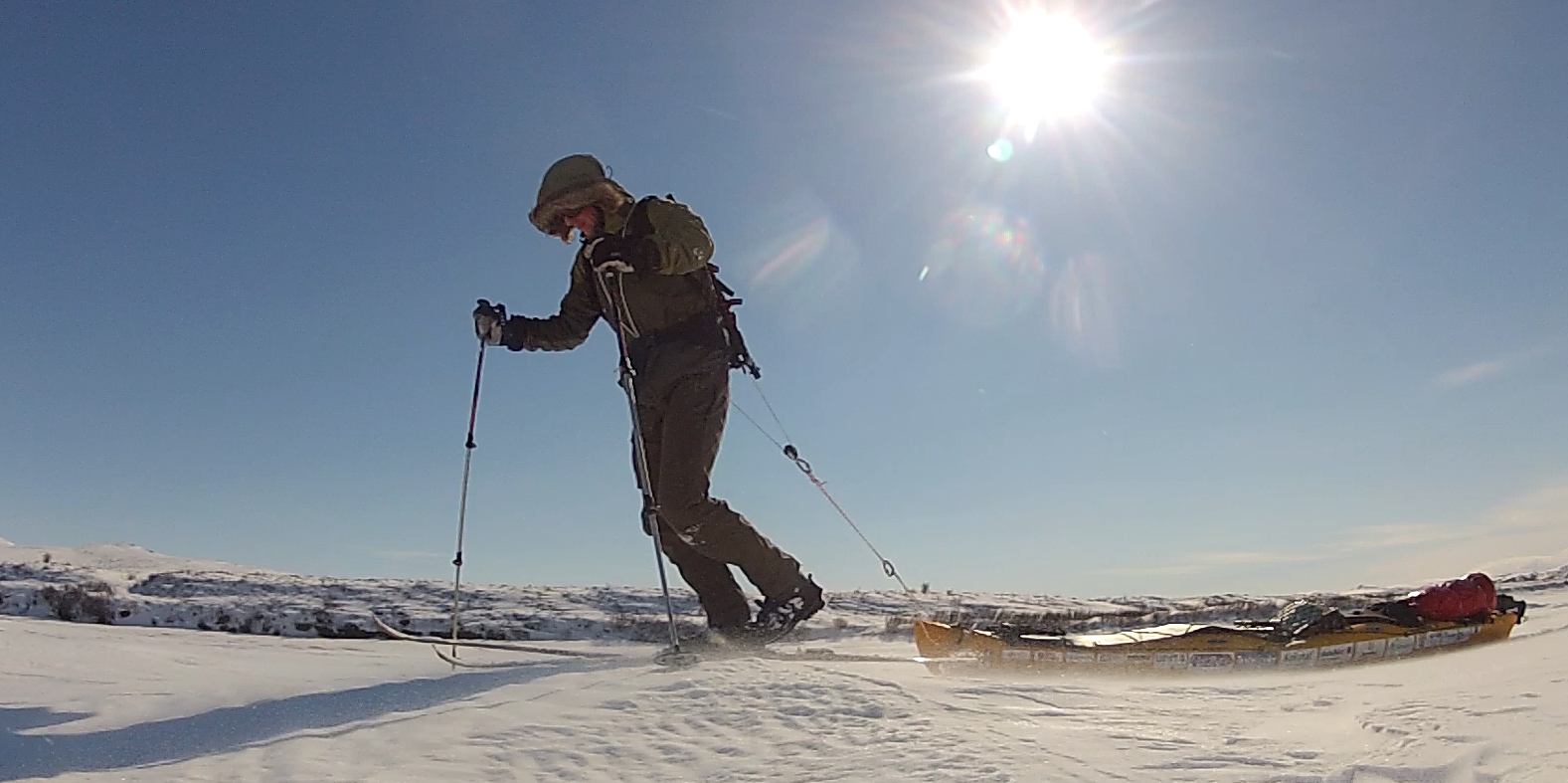
Early next week Yuri will set off on the third stage of that journey – a 1200 mile (1931 km) expedition across Northern Canada on skis. Over the coming months he hopes to travel from Prudhoe Bay in Alaska to Resolute Bay in Canada. He'll start by retrieving his trusty kayak from storage and filling it with supplies. It will serve as his sledge as he pulls it along behind him across the Canadian arctic, with all of his food, fuel, and other gear with him.

According to Yuri, he expects the trip to take approximately 6 months to complete. He hopes to arrive in Resolute sometime in September. In the meantime, he is preparing for the unexpected while traveling above the Arctic circle. He has been training with how to deal with polar bears, poor weather conditions, and fragmenting of the ice. He'll use a large caliber handgun to keep the bears at bay and has developed an alert system to help protect his tent at night. His kayak/sledge will also help him to continue to make progress even when the frozen surface conditions begin to break up, and paddling will be the only option.

Klaver is no stranger to remote expeditions. Back in 2012 he attempted to cross the Bering Sea from Russia to the United States. That journey ended prematurely when he was rescued by Russian border guards a week into the trip. His 2013 phase of Arctic Venture was more successful however, as he paddled for two months along the Bering Sea before going upriver at the Noatak River in the wild and remote Brooks Range of Alaska. Last year he returned to that spot, as he traversed the Brooks Range on skis, and paddled down the Colville River. In 2015, he'll now continue this massive undertaking by pressing on towards Resolute Bay.

On Monday, Yuri will depart from the Netherlands for Alaska where he will organize his gear and travel back to his ending point from last year before hitting the trail in early March. You'll be able to follow his progress on his website where he posts regular updates from his adventures.

Wednesday, January 28, 2015

Video: Altai - The Road and the River

This past summer, expedition kayaker Chris Korbulic traveled to the Altai Mountains of Russia to explore the wilderness and paddle the rivers found there. This short film shares that adventure with us, delivering some amazing images from that remote place, mixed with some impressive paddling on rivers that are seldom seen by outsider. Chris and his team discovered some epic whitewater along the way, with massive waterfalls, narrow canyons, and some truly wild destinations. This is a truly great piece of filmmaking with some breathtaking shots on and off the water.

Altai - The Road and the River from chris korbulic on Vimeo.

Antarctica 2014: Final Team Safely Back at Union Glacier

Yesterday I noted that the final Antarctic ski team had reached the finish line at Hercules Inlet after skiing for 74 days straight. Stéphanie and Jérémie Gicquel, along with guide Are Johnson, had set out from the Ronne-Filchner Ice Shelf back in November and had managed to traverse the Antarctic continent via the South Pole. By the time they wrapped up their journey yesterday they had covered 2045 km (1270 miles), pushing through the last 45 km (28 miles) in a grueling 18 hour dash to the end. The trio had been racing against the clock to catch the last plane out, and fortunately they had made it just in time.

When they reached Hercules yesterday the trio of skiers were exhausted, weak, and hungry. Low on supplies, all they could do was crawl into their tent, rest, and wait for a plane to come pick them up. That happened earlier today when they were plucked from the ice and flown safely back to the camp and Union Glacier. According to their final dispatch they arrived just in time to enjoy a fine pancake breakfast. Something I'm sure was greatly appreciated.

Stéphanie, Jérémie, and Are now await a flight back to Punta Arenas, Chile, which will bring an end to their Antarctic adventure. That flight could come as early as today depending on weather conditions. Their departure from the frozen continent will bring an end to the current season there, as the weather will now take a turn for the worse, making travel impossible. But as I write this, other explorers and adventurers are already planning for the next Antarctic expedition season, which will get underway in November of this year.

The 2014 season was a relatively quiet one compared to recent years. But still, there were some terrific milestones achieved. In addition to the impressive traverse from this trio, we also saw Frédérick Dion kite-ski to the Pole of Inaccessibility before continuing on to the South Pole as well. Frédérick would eventually traverse the continent too, using the wind to pull him along. Equally impressive was Newall Hunter's efforts in the Antarctic. He managed to complete a solo-ski to the South Pole before heading over to Mt. Vinson to summit that peak while he was in the neighborhood. Not a bad effort on his part either.

Now, the curtain falls on the 2014 season and we'll turn our attention elsewhere. It is a bit of a quiet time in the world of outdoor adventure, but the spring Himalaya climbing season looms, and it should be a good one.

Tuesday, January 27, 2015

Antarctica 2014: Final Team Reaches the Coast

The 2014 Antarctic season is nearly over, and the last plane is scheduled to fly out of Union Glacier tomorrow, weather permitting. The final few weeks have not been easy for the last team out on the ice, as they have raced against the clock to get back to Hercules Inlet in time for departure. Their struggle was compounded by poor weather, deep snow, and harsh winds, but today they have completed their journey, and are now ready to head home at last.

The trio of Stéphanie and Jérémie Gicquel, and guide Are Johnson, have completed a 2045 km (1270 mile) round trip journey from the coast to the South Pole, and back again. Their expedition took them 74 days to complete, and has left them exhausted, but extremely proud and satisfied with their efforts.  The final dispatch announcing their arrival at Hercules was posted earlier today and it reads as follows:
WE MADE IT !!!
74 days, 2045km. A lot of new records set. 45km in 18hrs the last day... 
A lot more on the blog in the days to come. (Text-pics) just have to sleep a little first.. 
Thanks to all of you who have followed the blog. 
Cheers from Are

As you can see, they had an extremely tough final day skiing 45 km (28 miles) over an 18 hour stretch just to get to the finish line. They are reportedly very low on food and extremely weary, and are now in their tent resting while they wait for a plane to come pick them up. That aircraft will shuttle the team, and their gear, back to Union Glacier where they'll catch another flight out to Punta Arenas, Chile before they head home.

Congratulations to Stéphanie, Jérémie, and Are for an amazing adventure. Their efforts in harsh conditions on the frozen continent are an inspiration to all. Hopefully they'll soon get plenty of good food and have a warm bed to sleep in before returning home.

Monday, January 26, 2015

Antarctica 2014: A Race Against Time at the Bottom of the World

The 2014 Antarctic season is scheduled to come to a close this Wednesday, January 28. That's the day that the last plane is scheduled to fly out of Union Glacier on its way back to Punta Arenas, Chile, carrying the remaining climbers, explorers, and South Pole skiers – as well as the support team for their efforts – home at last. While most of those teams are comfortably waiting in camp, another remains in a desperate race against time to get back to Hercules Inlet in time for their flight. And while it looks like they are going to make it, it is going to be close. 

Stéphanie and Jérémie Gicquel, along with guide Are Johnson, have now been out on the ice for 73 days. They started their journey way back in November, and were able to ski to the South Pole in time for the holidays. Since then, they've been attempting to complete the return trip to Hercules Inlet, where they'll end their epic excursion at long last. The journey back to the coast has not been an easy one however, as they have had to maintain a steady pace the entire time, even as poor weather has hindered their progress, particularly in these final days. 

After spending much of the end of last week in complete whiteout conditions, the trio had better visibility over the weekend, although high winds still made it challenging to proceed. They were able to catch a glimpse of some mountains on the horizon however, which broke up the endless plane of white that they have been staring at for days on end. Deep snow has made it difficult to pick up any speed however, but they still struggled forwards, as they really don't have any choice at this point. 

Yesterday the managed to knock of an impressive 44.8 km (27.8 miles), which leaves them with just 43.9 km (27.3 miles) to go tomorrow. That is a sizable distance to cover on the final day, particularly when the team is reportedly very tired, weak, and hungry. They are starting to run low on supplies, and have been conserving rations for a few days now, which has taken its toll some on their spirits too. 

Despite these challenges, it seems that Stéphanie, Jérémie, and Are should arrive at the finish line tomorrow on schedule. It will be a long day, but considering their current pace, they should be able to wrap things up provided unexpectedly bad weather doesn't arrive on the scene. The forecast does indicate that conditions could take a turn for the worse, but at this point that is likely to hinder their return flight more than their final push to the coast. 

I'll keep an eye on the team's progress over the next few days and post updates. Hopefully they'll reach Hercules tomorrow and will be able to get picked-up for a flight to Union Glacier where they can enjoy some good food and warm accommodations. From there, it is just a matter of time before they head back to Chile, and eventually home. 

Friday, January 23, 2015

Antarctica 2014: Tough Going for Final Antarctic Team

As mentioned earlier in the week, the 2014 Antarctic season is swiftly drawing to an end. One team remains out on the ice, struggling to reach the finish line before the last plane prepares to fly out. Their deadline is now January 26, which is Monday, and covering the final miles over the next three days isn't going to be easy.

The team of Are Johnson and Stéphanie and Jérémie Gicquel have been out on the ice for 70 days now, and have long since reached the South Pole and began their return trip to Hercules Inlet along the coast. At this point, fatigue has set in and they are doing their best to cover the remaining distance as quickly as possible. Unfortunately, the weather isn't being all that cooperative however, and yesterday they skied in white out conditions. In fact, in their most recent update, it was revealed that they couldn't see more than 3 metes in any direction at all. As a result, they struggled to cover their required distance, reaching 35 km (21.7 miles) over 11.5 hours, while battling sastrugi along the way too. 

Today doesn't look like it will be much better either. The trio expects to be skiing in a whiteout once again, and have prepared themselves for another tough go. Conditions are expected to improve however, so there is a literal light at the end of the tunnel.

Still, even with better weather, the last stretch is going to be a tough one. As of now, they have to average 43.5 km (27 miles) over the next four days to arrive back at Hercules in time. That isn't impossible, but it is going to be very difficult. To make matters worse, they are also starting to get low on food too, which will have an impact on the final stage of the journey as well. 

By the time they are finished, the team will have covered approximately 2300 km (1430 miles) and will have become one of only a handful of squad to make the journey to the South Pole and back under their own power. With any luck, the next time I post an update on their progress, they'll have finished. 

Wednesday, January 21, 2015

Antarctica 2014: End in Sight for Final South Pole Team

The end of the 2014 Antarctic season is now just a week away, and the last plane is scheduled to depart the frozen continent – weather permitting – on January 28. That means the last of the explorers must be back at Union Glacier by then, which shouldn't be a problem for most of the remaining climbers and skiers. But for one team, the clock is ticking, and there is still a considerable amount of ground to cover before they are done.

The trio of Are Johnson and Stéphanie and Jérémie Gicquel continue their race against time as they speed back to Hercules Inlet from the South Pole. They are now on day 68 of their round-trip journey, which will cover 2300+ km (1430 miles) before they are through. As of today, they still have 253 km (157 miles) to go until they reach the finish line, which means they must average roughly 36 km (22 miles) per day to catch the final plane. That's a tall order, but since they've been covering 46.5 km (29 miles) in recent days, they should arrive back at the coast sometime next Tuesday.

These final legs of the journey won't be easy though. Poor weather has set in once again, it has made for tough going in recent days. Are, Stéphanie, and Jérémie are exhausted from their efforts too, which makes each day a struggle. But now that they are finally finished, they seem like they have girded themselves up for the final push.

Elsewhere, after skiing solo to the South Pole, Newall Hunter traveled to Mt. Vinson to climb the highest peak in Antarctica as well. He reached the summit on that 4892 meter (16,050 ft) peak last Friday, and is now back in Union Glacier waiting for a flight out to Punta Arenas. Bad weather has stranded him there for the past couple of days, as winds of 112 km/h (70 mph) have been howling through the camp. But Newall says he is taking advantage of this extra time on the continent to learn how to kite-ski, which he says will come in handy next year. This season isn't even over yet, and some of the explorers are already planning their next expeditions.

Thats all from Antarctica for today. I'll be watching the final ski expedition closely as they near the finish. They should wrap things up early next week and be back at Union Glacier in time for the flight out. By then, they'll be more than ready for a much deserved rest.

Tuesday, January 20, 2015

Winter Climbs 2014-2015: Nanga Parbet Expedition Over for Tomek Mackiewicz

Sad news from Nanga Parbet today, where it has been revealed that Tomek Mankiewicz has suffered a serious injury, and must now abandon his attempt to complete the first ascent of that mountain in winter. But as he prepares to depart, two other teams will now arrive as the busy season on that mountain continues.

When last we checked in, Tomek and his climbing partner Elisabeth Revol were descending after spending ten days at altitude on the mountain. The duo had gone as high as 7800 meters (25,590 ft), and had established several high camps. For a time, they had even flirted with launching a summit bid, but exhaustion set in, so they made the wise choice to descend back to Base Camp to regain some strength.

They were expected to arrive back in BC yesterday, but along the way an accident occurred. The two climbers encountered a snow bridge on the way down, and while Elisabeth was able to cross over without incident, the bridge collapsed under Tomek, dropping him into a crevasse. He reportedly fell 50 meters (164 ft), braking some ribs, and fracturing his leg, in the process. Elisabeth was able to help get him out of the crevasse and make his way down, but the expedition is now over for the Polish climber who is luck to be alive. It is unclear at this time whether or not Elisabeth will join another team or return home as well.

Daniele Nardi is also back in BC after making a brief climb up the Mummery Rib. He is wrapping up his acclimatization efforts and is now preparing to go higher up the mountain as well. There is no time table yet on when he'll push up the Diamir Face, but it is possible that he and Elisabeth will now join forces, as the two have climbed together in the past and know each other well.

Meanwhile, ExWeb is reporting that the Iranian team of Reza Bahadorani, Iraj Maani and Mahmoud Hashemi has sorted out their issues with Pakistani immigration and will finally receive their entry visas into that country. That will allow them to make their way to the mountain at long last, where they'll begin their attempt from the Diamir Face as well. They are expected to reach Base Camp by the end of the week.

Finally, Alex Txikon, along with climbing partners Muhammad Ali "Sadpara" and Muhammad Khan are now enrollee to Nanga Parbet Base Camp as well. They are also expected to arrive on the mountain before week's end. You may recall that Alex was scheduled to climb K2 this winter, but was forced to cancel when the Chinese revoked the team's climbing permit at the last moment. He has now decided to switch focus, and is hoping for a winter ascent on this 8000-meter peak instead.

That's it for now. More soon!

Wednesday, January 14, 2015

Antarctica 2014: Faysal at the South Pole!

There was surprise news out of the Antarctic today, where kite-skier Faysal Hanneche has checked in from the South Pole, bringing an end to his very long, and sometimes frustrating expedition. Faysal set off from Russian Novo station back on November 14, and has struggled mightily with poor surface conditions, incredibly bad weather, and a lack of wind for much of his journey. After two months out on the ice, he is now on his way back home.

I've been following Faysal's progress in my regular Antarctic updates ever since he got underway. In recent days however he did not share his daily distances, and while reading his reports is seemed that he was not covering the mileage that he had hoped for. This led me to believe that he was still a very long way from the Pole. In fact, his last mention of any distance was back on January 7, when he indicated that he still had 674 km (418 miles) to go. It seems he was making great progress after all, and was able to reach his destination with plenty of time to spare.

Faysal reports that he reached the Scott-Amundsen station at 11 PM French time last evening. He was greeted by the crew there, and welcomed inside the station, where he was able to get a warm meal and some rest. His stay at 90ºS will be a short one however, as he reports that he'll fly back to Union Glacier today, where he'll soon catch a flight back to Punta Arenas, Chile as well.

Congratulations to Faysal on completing this long and difficult journey. He rarely had anything go in his favor on this trip, and I'm sure it is a huge relief for him to now be done.

Meanwhile, the trio of Are Johnson and Stéphanie and Jérémie Gicquel are back on the trail today. After a resupply, their sleds are heavier than they have been, but the clock is ticking on their return journey from the Pole, and they must now average 40 km (24.8 miles) per day to reach their end point in time to catch the final flight off the continent. That will be a tall order, but today they managed to hit that number exactly after 11 hours of skiing. The next two weeks are going to be incredibly tough for this team, but if they can reach Hercules Inlet before January 28, they'll become one of the few squads to ski to the South Pole and back again. The race is on.

That's it for today. The Antarctic season is nearly at an end, with just some climbing teams on Vinson to follow and one or two teams still skiing. Updates on the season will be more infrequent now that there is less to report, but I'll still follow the progress of those last explorers and post about their final push to the end.

Tuesday, January 13, 2015

Antarctic 2014: Faysal Still Waiting for the Wind, Newall on to Vinson

The number of teams to report on in the Antarctic has now dropped considerably. Most of the squads have wrapped up their expeditions by now, and are heading home. But there is still a few weeks to go before the frozen continent shuts down for the season, and there are still a few teams trying to accomplish their goals out on the ice.

As expected, the four-person team led by Robert Smith that included Paula Reid reached the South Pole over the weekend. The group reached 90ºS on Saturday at about 5:20 PM local time. Traveling along the Messner Route, the squad took 46 days to cover the 890 km (553 mile) journey. There has been no update since their arrival, but if the weather has held as expected, the group should be back at Union Glacier by now, and preparing to fly to Punta Arenas to start their trip home.

Meanwhile, kite-skier Faysal Hanneche continues to struggle on his expedition. He began at the Russian Novo station and has been trying to make his way to the South Pole, but the winds have simply not cooperated in recent days. In his most recent dispatch, Faysal talks about how he had to ski without aid all day, only to make camp and have the wind pick up. Hoping to cover some distance, he quickly broke camp once again, only to find that in the low light he wasn't able to make out the sastrugis or other surface obstacles. After falling twice in 500 meters, he decided to call it a day, and made camp once again.


It is clear that Faysal is starting to feel frustrated. He had intended to kite ski to the Pole, but without wind, his plan has not come together as he had hoped. As a result, he still has hundreds of kilometers to go before he is done, and the deadline for the season is closing fast. To make matters worse, he still hasn't raised all of the money he needs to get a return flight off the continent. According to ExWeb, he has set up a fund raiser page here to do jus that. He needs to come up with 3000 euro ($3530) in order to get a flight back to South America.

Newall Hunter wrapped up his solo expedition to the South Pole last week, but he isn't done with the Antarctic just yet. He has since moved over to Mt. Vinson, where he has already climbed up to Camp 2 in his attempt to summit that mountain. If the weather holds and he is feeling physically fit enough, a summit bid is likely by this coming weekend.

Finally, Are Johnson and Stéphanie and Jérémie Gicquel took a rest day yesterday as they geared up for their final push back to the coast. They have already skied to the South Pole, and are now on their return journey back to Hercules Inlet. They now have 14 days to wrap up their expedition, and still have 570 km (354 miles) left to go. That means they have to ski 40 km (24.8 miles) each and every day just to get to their end point on time. That's a tall order, particularly when they are already exhausted, and they have not been hitting those distances with consistency in recent days. Hopefully the rest day will give them the energy they need to cover the final portion of their journey.

January 28 is the absolute last day to catch a plane out of the Antarctic. If the teams have not finished by then, they will have to be picked up where they are at, and taken off the ice. That leaves them just two weeks to finish. The clock is ticking, and for several of these explorers it is going to be a tough push to the end.


Friday, January 9, 2015

Antarctica 2014: Two More Teams Arrive at the South Pole

The number of teams skiing to the South Pole has been reduced by two, as more skiers arrive at 90ºS. With the end of the Antarctic expedition season nearly in sight, things are starting to wrap up at the bottom of the world, and while it is almost time to pack it in again for another year, there are still a few hardy souls out on the ice.

Earlier this week, Ian Evans and his squad reached the South Pole, arriving at about 5:45 PM local time on Tuesday, January 6. The team, which also consisted of guide Keith Heger, and Brits Andy Styles and Bradely Cross, made the journey along the Messner Route, covering some 890 km (553 miles) in the process. The team set off on November 24, which means it took them almost exactly 44 days to finish the sojourn across the ice.

In his final report, Ian says that he is now the oldest Canadian to ski to the South Pole. He also indicates that there was no major outpouring of emotion when they reached the finish line, just a numb feeling and a sense of relief that the journey was over at last. He reports that he and his teammates are completely exhausted, with no energy left in the tank. Fortunately, he has already flown out to Union Glacier, and should be on his way back to Punta Arenas, Chile soon as well.

They're not the only team to wrap up their South Pole excursion this week. The four-person squad that includes Paula Reid should finish their journey today as well. As of last night, the team was just 14.5 km (9 miles) from the Scott-Amundsen station, which they reported seeing before clouds set in. That means they should finish early today, and could potentially catch a flight out to Union Glacier this afternoon too. The weather is predicted to take a turn for the worse however, so they may ended up stranded at the Pole for a few days instead.

Congratulations to each of these men and women. Skiing to the South Pole is quite an accomplishment, and each of them should be very proud of their efforts.


Meanwhile, Faysal Hanneche continues to struggle, with the wind. The kite-skier has not had much luck in having strong gusts to help pull him to the Pole, and as a result, he still has hundreds of miles to cover before he is done. As of his last report, Faysal indicated that he still had 674 km (419 miles) to go before he is done, and with time running short, that may be a tall order. If the winds turn in his favor, that is more than doable, but considering how much he has struggled so far, a successful end to his expedition is not guaranteed.

Sastrugis are not helping his cause any either. Faysal also reports that he has been battling the ice ridges that accumulate on the surface for the past few days too, and they have taken their toll as well. Going over or around the sastrugi can be time consuming and energy sapping work, which is coupled with the frustration of frequently falling down. Still, Henneche continues to press ahead and is determined to give his best effort until the very end.

Finally, the team of Are Johnson and Stéphanie and Jérémie Gicquel continue to steam along on their return trip to Hercules Inlet from the South Pole. They are now on Day 55 of their expedition, and have covered another 35.5 km (22 miles). They report that the weather has warmed some, allowing the trio to ski without the need for wind jackets today. They hope to reach their final supply depot in the next few days, and after that it will be clear sailing back to the coast. They're also racing against the clock to a degree, but considering how well they are moving, it seems that they will be in a good position to wrap up the expedition before the season closes at the end of the month. 

That's all from the Antarctic for today. Soon there will be only a few teams left to report on. I'll still keep updating on their progress. 

Thursday, January 8, 2015

Julian Monroe Fisher Prepares for Fourth Leg of Great African Expedition

Next week, explorer and anthropologist Julian Monroe Fisher will return to Africa to launch the next leg of his Railriders Great African Expedition. As with previous phases of the project, Julian will be traveling in the footsteps of another great explorer, while researching ethnographical diversity on the African continent in the 21st century.

The Great Africa Expedition first began back in 2012, and for each of the past three years Julian has gone back to the continent to explore the changing ethnography of the indigenous people that live in a variety of regions. This year he'll be trekking through the Karamoja region, an area that crosses through Kenya, Uganda, and Sudan. That part of Africa is home to the Karamajong people, who migrated there from what is now Ethiopia around 500 years ago.

In the fourth phase of the expedition, Fisher will follow in the footsteps of Major Percy Horace Gordon Powell-Cotton (yes, that is all one name!) and Scottish hunter-explorer W.D.M. Bell, both of whom traveled through this part of Africa in the early 20th century. The Karamoja region remains mostly unchanged since that time, with very little development and few humans occupying the area.

Julian will once again be carrying a flag from the Explorer's Club for this expedition as he continues his research into the lives of native groups who have developed from hunting with bows and spears to AK-47s. He will examine how these pastoral herdsman have adapted to the modern era, and which of their unique traditions have managed to survive in the 21st century.

Fisher's route will also take him to Mount Elgon, Mount Kadam, the Kidepo Valley, and Mount Morungole, where anthropologist Colin Turnbull studied the Ik tribe of Uganda back in the 1960's. Turnbull wrote a book about the Ik entitled The Mountain People, and his graphic depiction of their lifestyle, and the hardships they endured as the result of their displacement from their ancestral lands,  caused quite a stir at the time. The Ik were forced into a major famine due to their migration, which caused major problems for the tribe.

You can learn more about Julian's plans by visiting the official website of the Great African Expedition. He'll depart next week for the journey, and will spend about a month in the field. While he is there, he'll be posting regular updates to his website as well, keeping us apprised of his adventure along the way.

Wednesday, January 7, 2015

10 Things No One Tells You Before an Antarctic Expedition

While the Antarctic expedition season begins to wind down on the frozen continent, we still have a few more weeks before it is wrapped up completely. The final teams are on approach to the South Pole, and soon almost everyone will be heading home for the year. If you've ever wondered what it like to be out on the ice for weeks at a time, than a recent article posted by the The Telegraph in the U.K. will be of interest. It is entitled "Ten things no one tells you before an Antarctic expedition", and it is chocked full of interesting insights.

The piece was written by polar explorer Patrick Woodhead, who was part of the first team to complete an east-to-west traverse of Antarctica. During that expedition, he spent 75 days out on the ice, covering 1850 km (1149 miles) on foot. In other words, if anyone knows what it is like to live in Antarctica for days on end, it is Patrick.

You'll have to read the entire article to see his detailed description of each of the ten things that no one told him before he set out on his adventure in Antarctica. But here is the complete list from one to ten.


  1. You're going to have to eat a lot of raw butter.
  2. Washing is a painful experience.
  3. Take it one step at a time.
  4. Choose your companions carefully. You may have to eat them.
  5. Going Mental.
  6. The tent is a surprisingly nice place to be.
  7. Take a notebook and pencil. 
  8. Frostbite is about sweat, genetics, and experience. 
  9. Expect delays. 
  10. Re-entry. 
Some of those are fairly self-explanatory, but others benefit from Patrick sharing his own experiences out on the ice. For instance, he mentions that while on his expeditions he was burning 7000-9000 calories per day, hence the reason for eating the raw butter. At first it was "revolting," but later his body craved the fat content and he ate it "like blocks of cheese." 

If you're thinking about doing your own expedition to the South Pole, or just wonder what it would be like, this is definitely worth spending a few minutes going over. You'll more than likely learn something about an Antarctic expedition and gain new respect for those who have traveled there.