Showing posts with label North Pole. Show all posts

Monday, April 6, 2015

North Pole 2015: Barneo Ice Camp Opens for the Season, Aircraft Breaks Landing Gear on Runway

The 2015 North Pole season doesn't promise to be quite so active and interesting as years past, but there will still be some action up north this year, even if most if it will take place on the Russian side of the ice. Over the weekend, the Barneo Ice Camp opened for the season at N 89º 38', W 22º 27'. Over the course of the next few weeks, it will serve as the base of operations for a number of military, scientific, and commercial teams that are heading into the Arctic, and while most of those adventures still lie ahead, things have already gotten off to a shaky start.

For those who don't know much about Barneo, it is a temporary base built on an ice flow in the Arctic Ocean each year that facilitates travel to and from the North Pole. It is constructed by a special crew who first locates a proper flow, then parachutes onto the ice and sets up camp there. That group must build a runway that is long enough to allow Antonov AN-74 aircraft to land, and set up a small tent city to house the visitors that pass through. Most of them are scientists conducting research or well-heeled adventure travelers making a "last degree" ski expedition to the top of the world.

This year's Barneo base has been especially problematic to construct. The team had a hard time finding a large enough ice flow due to increased break-up of the pack ice. Instead, they ended up locating three flows that were moving in concert with one another, and built their facilities there. While this isn't the ideal approach, it will suffice for the three weeks or so that Barneo will remain open.

According to the official Barneo blog, one of the first planes to land there this year ran into some trouble. Apparently when the aircraft touched down, it destroyed its right rear landing gear, causing an accident at the base. Fortunately, no one was injured, and another plane is being scrambled to keep the flow of supplies, gear, and personnel moving in and out of the base. Repairing the aircraft will be a bit of a challenge however, and it is unclear yet what exactly will happen.

The first visitors to arrive at Barneo mostly consisted of North Pole last degree skiers. They set off on the route almost immediately and spent very little time at the camp. Others will be shuttling in over the next few days though, so things should get busy in the Arctic soon. No word yet on when explorer Thomas Ulrich will arrive however. He'll be flying directly to 90ºN and will start a ski expedition across the Arctic that will end on Ellesmere Island in Canada.

If you are wondering what it is like to land an airplane on a slab of ice floating int he Arctic Ocean, have a look at the video below. It was taken from the cockpit of the first aircraft to land at Barneo this season, and gives you and idea of what it is like to arrive there. To say it is a bit harrowing would certainly be downplaying it some.

Monday, March 30, 2015

North Pole 2015: A Lone Skier Will Take the Ice

A few weeks back I wrote a piece lamenting the lost season in the Arctic. With Kenn Borek Air withdrawing support for expeditions traveling on the Canadian side of the ice, it seemed that there would be very little to report this season. While that remains largely true, ExWeb is reporting that one lone skier will take to the ice, and attempt to cross the Arctic this season after all.

Swiss explorer Thomas Ulrich is preparing to leave for the North Pole soon, where the'll begin his latest adventure. Throughout his career, Ulrich has traveled to in some of the coldest environments on Earth, having made expeditions to the Southern Patagonian Ice Caps Franz Josef Land in the Arctic Ocean, Greenland, and more. But now, in preparation for a major undertaking scheduled for 2016, he'll travel to the North Pole to attempt a crossing of the Arctic north to south.

Ulrich will first travel to the Barneo Ice Camp, which is currently being built at 89ºN. From there, they'll catch a helicopter ride to the top of the world, where he'll launch a solo ski journey south into Canada, covering approximately 800 km (500 miles) in the process.


As the only explorer in the Arctic this season there are questions about how Ulrich will receive support if he runs into trouble. But ExWeb says that while the Swiss adventurer is closer to the North Pole he'll be covered by the Russian team at Barneo. As he moves further south, Kenn Borek will apparently provide logistical support and emergency evacuation if it is needed. Where exactly that coverage begins remains a bit uncertain, and it seems likely that Thomas could find himself alone, in no-man's land, without proper support if he isn't careful.

Ulrich is scheduled to fly to Barneo on April 3, and launch his Arctic expedition soon there after. Traveling south from the Geographic North Pole isn't quite as dangerous or difficult as going north, but it is still an incredibly challenging undertaking. It'll serve as good practice for next year however, which is when the explorer hopes to attempt a complete traverse of the Arctic on foot via 90ºN. That journey will cover more than 2000 km (1242 miles) starting at Point Cape Arktichesky in Russia and ending on Ellesmere Island in Canada. Thomas believes it will take him 90-100 days to complete the crossing, which he will make solo and unsupported.

For my money, a crossing of the Arctic Ocean remains the most difficult challenge in exploration and adventure. Making a full traverse of that ocean will only add to that challenge. Watching how Thomas does this season should give us an indication of that next expedition will proceed as well. You can bet I'll be following his journey in the days ahead. It will be an interesting adventure to watch unfold.

Friday, March 27, 2015

Video: Building the Barneo Ice Camp

A few weeks back I wrote a post about the construction of the Barneo Ice Camp, a temporary base that is set up each spring at 89ºN on the Russian side of the Arctic to help facilitate travel to and from the North Pole. Apparently construction of this year's camp is still underway, but the video below – which comes our way courtesy of Quark Expeditions – gives us an idea of the effort that is made to build the camp to prep it for visitors each season. Those efforts include airdropping supplies out on the ice, and the first arrivals at the camp parachuting in to help build a runway large enough for big aircraft to land on it. It is a fascinating story about a place that only exists for a few short weeks each spring.

Friday, March 20, 2015

Construction of 2015 Barneo Ice Camp Set to Begin

Over the next few days, construction is set to begin on the 2015 Barneo Ice Camp. This temporary base of operations is built in the Arctic each spring in order to serve as a staging ground for explorers, researchers, and adventure travelers heading to the North Pole. Located on the Russian side of the Arctic ice, Barneo has been operating somewhere near 89ºN Latitude for the past 15 years, providing access to the frozen Arctic Ocean to a wide variety of visitors in the process.

Traditionally, the process for building the base begins with Russian aircraft flying into the Arctic to first locate an ice flow of suitable size and stability. Once the location is selected a group of paratroopers drops onto the ice, along with construction equipment. They immediately go to work building a temporary runway that is suitable for large aircraft such as the Antonov An-74 cargo-passenger plane. The team also constructs a small camp to accommodate the men and women who come and go throughout the brief Arctic exploration season.

Once the camp is established and the runway is built, larger aircraft can land on the ice flow and begin delivering gear and supplies. They'll also shuttle the visitors to Barneo, some of whom will continue on to the North Pole by skis or helicopter.

From the sounds of things, it seems like 2015 will be quite a different season for Barneo than in year's past. Early reports indicate that there will be fewer tourists heading to the Arctic this spring, while more scientists and researchers take their place instead. Additionally, it seems the Russian military will use the camp as a base of operations while it conducts training operations in the Arctic as well.

Traditionally the camp opens around the first week of April and remains in operation for about three weeks. Weather conditions will determine just how long Barneo remains in service each year, as the ice flows begin to break up as the season advances. It is likely that the 2015 version of the base will follow roughly the same schedule.

Sadly, it seems there are fewer explorers heading into the Arctic this season, so it is unclear what kind of news we should expect out of Barneo in the days ahead. Right now it seems that visitors will be mostly limited to researchers and military personnel, but if a good story arises, I'll be sure to share it. The North Pole season will certainly be a quiet one though it seems.

Tuesday, March 10, 2015

Lamenting the Lost Arctic Season

We're about to enter a bit of a lull in the world of exploration and adventure. The winter climbing season on Nanga Parbat is likely going to wrap up later this week, with success on the mountain still far from certain. We're also a few weeks away from climbers departing for Nepal to begin the spring climbing season on Everest and other major peaks in the Himalaya. For those men and women, the remaining days of March will be the calm before the storm as they launch a two-month long odyssey to reach the top of the tallest peak on the planet. While that will certainly be a busy and interesting time as always, this year there is definitely something missing from my usual round-ups of adventurous pursuits, and it isn't hard to identify exactly what that is. With no full-distance expeditions set to launch for the North Pole from the Canadian side of the Arctic this spring there is a real vacuum in terms of challenging undertakings, and it is unclear if that vacuum will be filled ever again.

Typically this time of year there are several teams in Resolute Bay, Canada waiting to be flown out to their starting points on the ice. Those intrepid adventurers generally have big dreams of skiing unsupported to the North Pole, covering roughly 700 km (435 miles) in the process. Most don't make it. In fact, since 2010, only one team has actually been able to accomplish that feat, which I believe is the most challenging journey in the world today. Climate change has altered the Arctic in undeniable ways, and as a result, those skiing north now face impossible thin ice, massive rubble fields, open leads of water, and numerous other obstacles. It is a difficult, punishing experience that has simply become increasingly difficult as the years have passed. So much so that it now seems nearly impossible for anyone to travel on foot all the way to 90ºN.


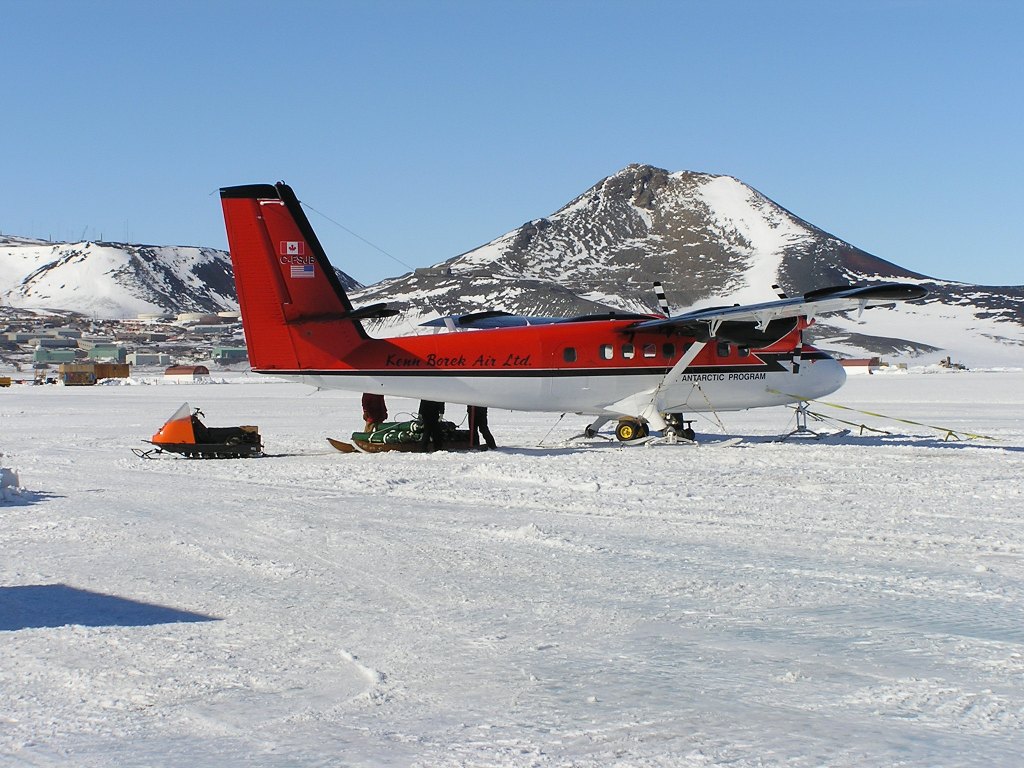
I'm not the only one who thinks that a full-distance North  Pole expedition is now almost entirely out of reach. Earlier this year, Kenn Borek Air, the charter airline that has supported Arctic explorers in the past, announced that it was ceasing operations in the region. With the increasing dangers of flying into the Arctic, it simply was no longer economically viable for the adventurous airline to continue supporting explorers in the area, and as a result the company made the surprise move to pullout. This has left a few expeditions in the lurch however and has meant that there will be no skiers attempting to reach the North Pole from the Canadian side of the ice this year.

As someone who enjoys following the intricacies of an expedition, particularly a very challenging one, the lack of North Pole skiers this year has left me disappointed, although not surprised. I've been saying for several years now that an expedition to the top of the world would only continue to get more difficult until it was simply impossible to complete. I didn't expect that to happen so soon, but it is the reality that Arctic explorers now face. Climate change was going to put an end to these kinds of journeys sooner, rather than later, but it seems that economics killed off these expeditions first.

That isn't to say that the North Pole will go completely unvisited this year. The Russians will once again build the Barneo Ice Camp on their side of the Arctic, and there will be any number of "last degree" expeditions that launch from that temporary base. Typically, Barneo opens in late March and stays active for about three weeks, granting well-heeled travelers an opportunity to scratch another destination off their bucket lists. I imagine that the camp will only see increased traffic this season with more people funneling through on their way to 90ºN.

While Barneo, and its visitors, will provide some sources of adventure news in the days ahead, it simply won't be the same as following a small team of adventurers as they spend days out on the ice struggling to ski to the North Pole. I'll miss reading daily updates on their progress while cheering them on from afar. I'll miss hearing about their struggles to cover even just a few kilometers in a day, as the weather, surface conditions, and other challenges conspire to make the journey harder than anyone ever imagined. It is an end of an era in the Arctic and in exploration in general, and I'm not sure we'll ever see anyone make this journey again in our lifetime. It is sad to see this come about, but it only makes me respect the explorers who have gone that way before all the more.

So, while we'll dutifully turn our attention to the Himalaya – and rightfully so – that doesn't mean that I won't be lamenting the fact that the North Pole is now out of reach, and that another chapter in the age of exploration has closed for good.

Tuesday, January 6, 2015

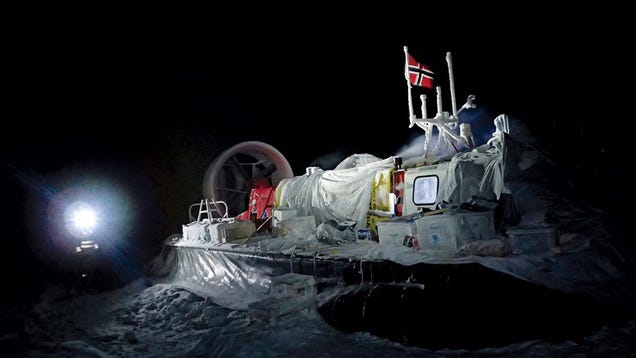
Two Norwegian Scientists Exploring the Arctic Ocean via Hovercraft

Two Norwegian scientists are on the expedition of a lifetime in the Arctic Ocean. The two men – 73-year old Yngve Kristoffersen and his partner Audun Tholfsen – have been exploring the mostly-unknown region of the world between Canada and Greenland aboard a hovercraft since last August, braving extreme cold, inhospitable weather, and months without sunlight for their research.

The 18-month long project has a number of goals, not the least of which is mapping a massive deep-sea ridge that runs from Ellesmere Island all the way to the North Pole. But they are also searching for a large meteorite that is believed to have crashed into the ice millions of years ago, as well as conducting research into what the Arctic was like back then, when the water was much warmer, and unique species of sea turtles and crocodiles lived there.

The two men have been living in a small hovercraft for the past four months, using it not only as their means of transportation, but also as a mobile research lab. The hovercraft is a vehicle that is well suited for travel in the Arctic, where the ice can get so thick at times that only specially equipped ice breakers are capable of breaking through. Riding on a cushion of air generated by two large turbines, their sturdy craft glides along above the ice however, rarely encountering any surface conditions hat it can't maneuver over or around.

The scientists will often park the hovercraft on an ice flow and stay stationary for days while they take samples of the ice and record atmospheric conditions. At other times, they're on the move, off to another location to explore a new area of the Arctic. As they go, they have witnessed the way the ice moves, breaks apart, and shifts, giving them a rare glimpse of the powerful forces that are at work at the top of the world. During their time exploring this part of the world, they have discovered indications of a tectonic fault line in the region and spotted a strange new species of fish that resembles an eel living in the cold mud of the sea floor. They have even stumbled across a Russian submarine patrolling the Arctic as well.

In a few months, Tholfsen will be airlifted home and replaced with another scientist, but Kristofferson will stay for the entirety of the expedition. You can follow their ambitious mission at the expedition's official website, which has more information about their goals, and regular updates on the team's progress as well.

Thursday, December 4, 2014

ExWeb Talks North Pole Logistics with Victor Boyarsky

A few weeks back we received news that Kenn Borek Air has ceased operations in the Arctic. The company, which goes by the motto "Anytime, Anywhere...Worldwide" has been a stalwart on the Canadian side of the North Pole, shuttling explorers to and from the ice for years, and helping with the logistics of operations in that part of the world. But its sudden departure from the scene has left some teams in the lurch. Several groups had already contracted with Kenn Borek for the 2015 and 2016 Arctic seasons. Those intrepid adventurers are now wondering what they can do to overcome this obstacle, with some considering jumping to the other side of the planet, and skiing to the North Pole from Russia instead.

With that in mind, ExWeb caught up with Victor Boyarsky, the owner of VICCAR, a company that specializes in logistical support in the Arctic and Antarctic. Boyarksy's organization offers assistance on both the Russian and Canadian side of the ice, although at this point, VICCAR will only be able to offer rescue operations and evacuations from the ice, as the company mostly works out of the Barneo Ice Camp, which is erected every year on an ice flow located around 87º or 88º N latitude.

In the interview. Victor provides some history on the Russian Start to the Geographic North Pole, which is traditionally located at 81º.2N, 95.5ºE. Originally, that point was a good place to store fuel and other supplies for helicopters heading into the Arctic, but it also became a place to drop skiers off as well. The fueling point is still used by aircraft on their way to Barneo, but in 1995 it was first used to launch an expedition to the North Pole as well. It has been used routinely since that time as the starting point from that side of the ice.


ExWeb indicates that they have inquired with other airlines to see if anyone will step up to fill the vacuum created with the departure of Kenn Borek, but so far no one has said they'll begin supporting the North Pole skiers. That means that explorers planning on heading to the Pole may have to shift to the Russian Start instead, or abandon their plans of going to the North Pole altogether. Without air support, not only will it be incredibly difficult to get to the starting point on Ellesmere Island, it could be incredibly dangerous to try to operate in the Arctic without the safety net of a rescue flight coming to retrieve them.

Skiing to the North Pole has always been an incredibly difficult endeavor. In fact, I believe it is the toughest expedition in the world today. At the moment, it seems that there will no longer be any operations conducted from the Canadian side of the ice, at least for the foreseeable future. Whether or not we see more expeditions heading to the Russian side remains to be seen.

With the North Pole season just a few months away, it will certainly be interesting to see how this will all unfold. My guess is, we'll see a few expeditions cancelled this year, and possibly rescheduled for 2016 instead. It is likely to be a quite season in the Arctic in 2015.

Wednesday, November 19, 2014

Kenn Borek Air Ceases Operations in the Arctic

For years, Kenn Borek Air has supported expeditions to some of the most far flung destinations on the planet. In fact, the company's motto is "Anytime, Anywhere... Worldwide." They may have to amend that in light of recent news involving the airline, as ExWeb is reporting that the company has ceased operations in the Arctic, and will no longer support teams heading to the North Pole. 

In a brief article posted to its website, ExWeb wrote the following:
"Rumour has been confirmed that Kenn Borek Air, operating from Canada, will not be flying any North Pole expeditions to their start points, or pick them up at the North Pole, or anywhere in between for emergency purposes, in the foreseeable future. 
Explorersweb has asked Kenn Borek for a statement, and will publish it as it becomes available."
At this time, that is all that is known about this story, but it still is a significant one. For years, Kenn Borek Air has been the logistical lifeline for expeditions heading to the North Pole from the Canadian side of the ice. The company flew skiers to their starting point, and often picked them up at the Pole as well. In recent years however, very few expeditions were able to reach 90ºN, and thus the pilots for  Kenn Borek were forced to retrieve explorers out on the ice. With the changes that have been occurring in the Arctic over the past few years, that had to increasingly more challenging.

Until we get a statement from Kenn Borek, it is hard to say exactly why this decision was made, but I'm sure the unstable conditions, and added expenses, of operating in the Arctic played a major role. Weather conditions in that part of the world seem to be getting increasingly worse during the traditional Arctic expedition season, making it all the more difficult to operate as well. Safety for both the pilots, and the explorers on their way north, are obviously one of the big concerns.

It seems rather unlikely that another airline will step in to pick up the slack, which means those hoping to ski to the North Pole will have to do some from the European side of the ice. The Russian government handle a lot of the logistics for Arctic explorers on that side of the planet, although there are a few other alternatives as well. In recent years, going to the North Pole on skies has become one of the most difficult endeavors in exploration, and without Kenn Borek, it has just gotten a little more challenging.

Hopefully we'll get more information about this development in the near future.

Tuesday, November 4, 2014

Expedition 720 Degrees: Circumnavigating the Globe East to West, and Pole to Pole

An ambitious new expedition is about to get underway in the next few weeks that if successful, will set a new standard for human powered journeys around our planet. Adventurer Angelo Wilkie-Page is  about to attempt a double-circumnavigation of the globe, first going east to west, and then north to south. He has dubbed this amazing endeavor Expedition 720 Degrees, as he'll not only pass through all lines of longitude in his travels, but latitude as well.

The 29-year old South African will start his journey in Los Angeles in just a couple of weeks, and he'll first head north by bike across the U.S. and Canada, before arriving in Anchorage, Alaska. From there. From there, he'll travel by sea kayak across the Bering Strait, then ride his bike once again across Russia, Mongolia, Kazakhstan, Georgia, Turkey, Bulgaria, Hungary, Austria, Italy, Monaco, France, and Spain, before eventually arriving in Lisbon, Portugal. On the third leg of the journey, Angelo will row across the Atlantic Ocean from Portugal to Brazil, where he'll then ride out of Rio toward the southernmost tip of South America, before turning back north toward his starting point in L.A. When he reaches that point, he'll then be halfway finished with the expedition.

The next phase of the journey will start in New York City, with Angelo traveling north into Canada, and eventually on to the North Pole, before turning back south and arriving in Norway. This stage will be completed by bike, rowboat, and on foot, as the South African attempts to complete the very difficult task of reaching 90ºN under his own power. Once he has reached Norway, he will then cycle across Europe and Asia, turning south into Thailand, where he'll once again start rowing through Malaysia, past Australia, and eventually ending in New Zealand. From there, he intends to hop across the Southern Ocean, and begin a traverse of the Antarctic via the South Pole. When he has completed that arduous leg, he'll cross over into Ushuaia, Argentina, and ride his bike back to New York City, completing the final leg of his journey.

Angelo estimates that he'll cross through 48 countries on this expedition, covering a total distance of 115,000 km (71,457 miles) along the way. He'll row or paddle across four oceans, and nine seas, while also crossing six deserts, including the five largest in the world. Along the way, he hopes to set a new record for east-west circumnavigation, and become the first person to complete a Pole to Pole circumnav that crosses four antipodal points and four Equator crossings. He also is looking to become the fist to complete both circumnavigation attempts under his own power, and set a record for the most distance covered along the way too.

At the moment, Wilkie-Page is getting ready to launch the expedition, and will be in the U.S. soon to start his amazing journey. While he is of course looking forward to the adventure, he is also making this attempt for a cause as well. Angelo hopes to raise $1 million for Heifer International, a nonprofit looking to stamp out poverty and hunger in developing nations around the world.

You can follow Angelo's progress on his website and Facebook page. This will certainly be one incredibly undertaking. Good luck!