Showing posts with label Russia. Show all posts

Friday, March 20, 2015

Construction of 2015 Barneo Ice Camp Set to Begin

Over the next few days, construction is set to begin on the 2015 Barneo Ice Camp. This temporary base of operations is built in the Arctic each spring in order to serve as a staging ground for explorers, researchers, and adventure travelers heading to the North Pole. Located on the Russian side of the Arctic ice, Barneo has been operating somewhere near 89ºN Latitude for the past 15 years, providing access to the frozen Arctic Ocean to a wide variety of visitors in the process.

Traditionally, the process for building the base begins with Russian aircraft flying into the Arctic to first locate an ice flow of suitable size and stability. Once the location is selected a group of paratroopers drops onto the ice, along with construction equipment. They immediately go to work building a temporary runway that is suitable for large aircraft such as the Antonov An-74 cargo-passenger plane. The team also constructs a small camp to accommodate the men and women who come and go throughout the brief Arctic exploration season.

Once the camp is established and the runway is built, larger aircraft can land on the ice flow and begin delivering gear and supplies. They'll also shuttle the visitors to Barneo, some of whom will continue on to the North Pole by skis or helicopter.

From the sounds of things, it seems like 2015 will be quite a different season for Barneo than in year's past. Early reports indicate that there will be fewer tourists heading to the Arctic this spring, while more scientists and researchers take their place instead. Additionally, it seems the Russian military will use the camp as a base of operations while it conducts training operations in the Arctic as well.

Traditionally the camp opens around the first week of April and remains in operation for about three weeks. Weather conditions will determine just how long Barneo remains in service each year, as the ice flows begin to break up as the season advances. It is likely that the 2015 version of the base will follow roughly the same schedule.

Sadly, it seems there are fewer explorers heading into the Arctic this season, so it is unclear what kind of news we should expect out of Barneo in the days ahead. Right now it seems that visitors will be mostly limited to researchers and military personnel, but if a good story arises, I'll be sure to share it. The North Pole season will certainly be a quiet one though it seems.

Monday, March 16, 2015

Video: Timelapse in the Altai Mountains

Located in Central Asia, the Altai Mountains stretch across Russia, Mongolia, China, and Kazakhstan. Remote, rugged, and wild, the Altai's are stark in their beauty, challenging visitors with unpredictable weather and their distant location. But this video takes viewers to that amazing landscape and gives us a taste of what that part of the world has to offer. To say it is breathtaking would be an understatement.

Altai Mountains Timescapes from Eugene Bryohin on Vimeo.

Tuesday, March 10, 2015

Lamenting the Lost Arctic Season

We're about to enter a bit of a lull in the world of exploration and adventure. The winter climbing season on Nanga Parbat is likely going to wrap up later this week, with success on the mountain still far from certain. We're also a few weeks away from climbers departing for Nepal to begin the spring climbing season on Everest and other major peaks in the Himalaya. For those men and women, the remaining days of March will be the calm before the storm as they launch a two-month long odyssey to reach the top of the tallest peak on the planet. While that will certainly be a busy and interesting time as always, this year there is definitely something missing from my usual round-ups of adventurous pursuits, and it isn't hard to identify exactly what that is. With no full-distance expeditions set to launch for the North Pole from the Canadian side of the Arctic this spring there is a real vacuum in terms of challenging undertakings, and it is unclear if that vacuum will be filled ever again.

Typically this time of year there are several teams in Resolute Bay, Canada waiting to be flown out to their starting points on the ice. Those intrepid adventurers generally have big dreams of skiing unsupported to the North Pole, covering roughly 700 km (435 miles) in the process. Most don't make it. In fact, since 2010, only one team has actually been able to accomplish that feat, which I believe is the most challenging journey in the world today. Climate change has altered the Arctic in undeniable ways, and as a result, those skiing north now face impossible thin ice, massive rubble fields, open leads of water, and numerous other obstacles. It is a difficult, punishing experience that has simply become increasingly difficult as the years have passed. So much so that it now seems nearly impossible for anyone to travel on foot all the way to 90ºN.


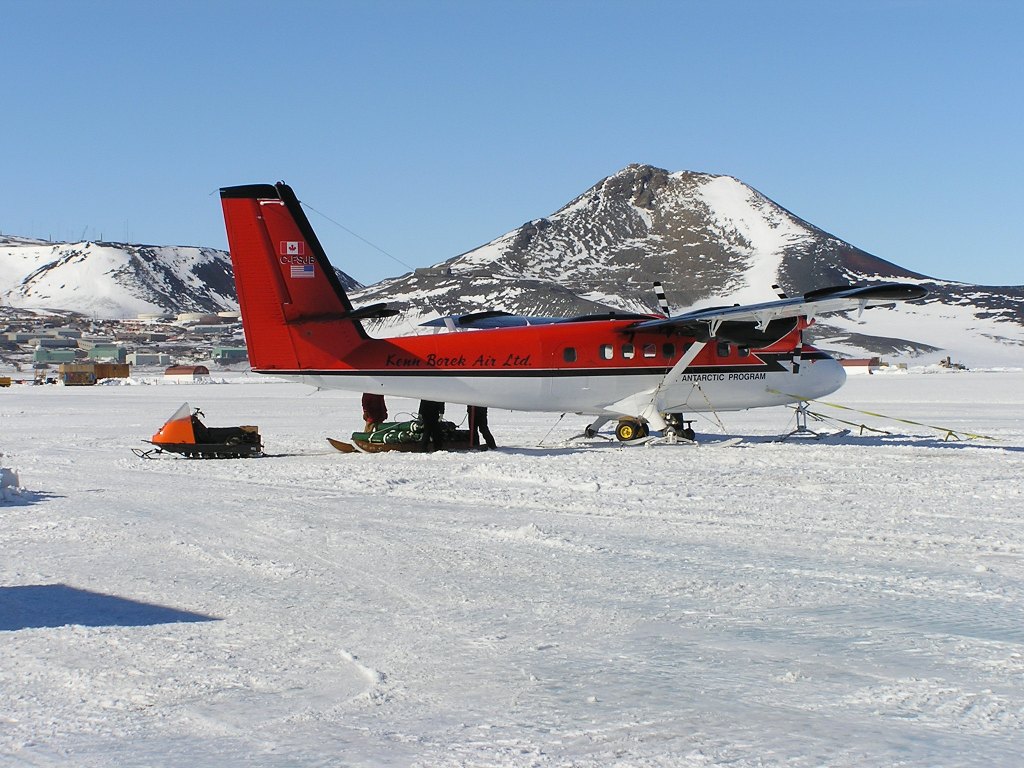
I'm not the only one who thinks that a full-distance North  Pole expedition is now almost entirely out of reach. Earlier this year, Kenn Borek Air, the charter airline that has supported Arctic explorers in the past, announced that it was ceasing operations in the region. With the increasing dangers of flying into the Arctic, it simply was no longer economically viable for the adventurous airline to continue supporting explorers in the area, and as a result the company made the surprise move to pullout. This has left a few expeditions in the lurch however and has meant that there will be no skiers attempting to reach the North Pole from the Canadian side of the ice this year.

As someone who enjoys following the intricacies of an expedition, particularly a very challenging one, the lack of North Pole skiers this year has left me disappointed, although not surprised. I've been saying for several years now that an expedition to the top of the world would only continue to get more difficult until it was simply impossible to complete. I didn't expect that to happen so soon, but it is the reality that Arctic explorers now face. Climate change was going to put an end to these kinds of journeys sooner, rather than later, but it seems that economics killed off these expeditions first.

That isn't to say that the North Pole will go completely unvisited this year. The Russians will once again build the Barneo Ice Camp on their side of the Arctic, and there will be any number of "last degree" expeditions that launch from that temporary base. Typically, Barneo opens in late March and stays active for about three weeks, granting well-heeled travelers an opportunity to scratch another destination off their bucket lists. I imagine that the camp will only see increased traffic this season with more people funneling through on their way to 90ºN.

While Barneo, and its visitors, will provide some sources of adventure news in the days ahead, it simply won't be the same as following a small team of adventurers as they spend days out on the ice struggling to ski to the North Pole. I'll miss reading daily updates on their progress while cheering them on from afar. I'll miss hearing about their struggles to cover even just a few kilometers in a day, as the weather, surface conditions, and other challenges conspire to make the journey harder than anyone ever imagined. It is an end of an era in the Arctic and in exploration in general, and I'm not sure we'll ever see anyone make this journey again in our lifetime. It is sad to see this come about, but it only makes me respect the explorers who have gone that way before all the more.

So, while we'll dutifully turn our attention to the Himalaya – and rightfully so – that doesn't mean that I won't be lamenting the fact that the North Pole is now out of reach, and that another chapter in the age of exploration has closed for good.

Wednesday, January 28, 2015

Video: Altai - The Road and the River

This past summer, expedition kayaker Chris Korbulic traveled to the Altai Mountains of Russia to explore the wilderness and paddle the rivers found there. This short film shares that adventure with us, delivering some amazing images from that remote place, mixed with some impressive paddling on rivers that are seldom seen by outsider. Chris and his team discovered some epic whitewater along the way, with massive waterfalls, narrow canyons, and some truly wild destinations. This is a truly great piece of filmmaking with some breathtaking shots on and off the water.

Altai - The Road and the River from chris korbulic on Vimeo.

Tuesday, December 9, 2014

Mongol Rally Announces New Finish Line for 2015

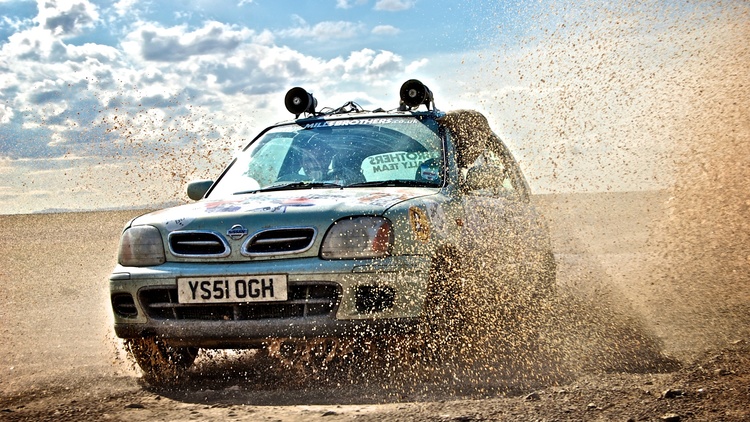
Looking for an adventurous and fun challenge for 2015? Then look no further than the Mongol Rally, which returns for its 12th edition next year. This insane race across two continents continues to be one of the best adventure travel experiences on the planet, and in 2015 organizers of the race have announced that the finish line will move to an all new location, throwing a wrinkle into an event that continues to enthrall all who enter.

For those unfamiliar with the Mongol Rally, it is a road race that covers more than 10,000 miles (16,000 km) across Europe and Asia. The race begins in England, and in the past it has run to Ulaanbaatar, the capital of Mongolia. Once under way, racers are allowed to take any route they choose between those two points, as getting lost, getting found, and discovering new places is all part of the fun.

The the exact starting point for the 2015 Rally has not been announced yet, but the finish line has. The Adventurists, the crazy group of men and women who organize the Mongol Rally, have announced that next year's edition of the race will end in Ulan Ude, Russia for the very first time. This new ending point opens up the race to all new routes and challenges, and gives the teams of racers the option of traveling a northerly route above the Arctic Circle should they choose.

Before you start making plans for this massive road trip, there is one other important detail you should know. The racers aren't making the journey in a swanky Land Rover or other powerful vehicle. Mongol Rally rules stipulate that the vehicle used in the race should have a 1.2 engine or less, with a heavy emphasis on bringing a car that is far from the ideal. In fact, most racers pick something up off the scrap heap, make minimal upgrades and repairs, and simply race as far as it will take them.


In 2015, the cars are required to be at least 10 years old, and have an engine that is 1000cc or less. The entire point of the Rally is to have an adventure, and having a crazy, piece of crap car is part of that process. For the truly adventurous, the Rally will also allow two-wheeled vehicles, but they must be under 125cc. Consider what it would be like to ride across Europe and Asia on a scooter.

The 2015 Mongol Rally will get underway on Sunday, July 19. How long it takes for you to reach the finish line really depends on your route, how fast you want to go, and how well your vehicle performs. To find out more, and to register, visit the official Mongol Rally website.

And for a glimpse of the Rally, check out the video below.


Thursday, December 4, 2014

ExWeb Talks North Pole Logistics with Victor Boyarsky

A few weeks back we received news that Kenn Borek Air has ceased operations in the Arctic. The company, which goes by the motto "Anytime, Anywhere...Worldwide" has been a stalwart on the Canadian side of the North Pole, shuttling explorers to and from the ice for years, and helping with the logistics of operations in that part of the world. But its sudden departure from the scene has left some teams in the lurch. Several groups had already contracted with Kenn Borek for the 2015 and 2016 Arctic seasons. Those intrepid adventurers are now wondering what they can do to overcome this obstacle, with some considering jumping to the other side of the planet, and skiing to the North Pole from Russia instead.

With that in mind, ExWeb caught up with Victor Boyarsky, the owner of VICCAR, a company that specializes in logistical support in the Arctic and Antarctic. Boyarksy's organization offers assistance on both the Russian and Canadian side of the ice, although at this point, VICCAR will only be able to offer rescue operations and evacuations from the ice, as the company mostly works out of the Barneo Ice Camp, which is erected every year on an ice flow located around 87º or 88º N latitude.

In the interview. Victor provides some history on the Russian Start to the Geographic North Pole, which is traditionally located at 81º.2N, 95.5ºE. Originally, that point was a good place to store fuel and other supplies for helicopters heading into the Arctic, but it also became a place to drop skiers off as well. The fueling point is still used by aircraft on their way to Barneo, but in 1995 it was first used to launch an expedition to the North Pole as well. It has been used routinely since that time as the starting point from that side of the ice.


ExWeb indicates that they have inquired with other airlines to see if anyone will step up to fill the vacuum created with the departure of Kenn Borek, but so far no one has said they'll begin supporting the North Pole skiers. That means that explorers planning on heading to the Pole may have to shift to the Russian Start instead, or abandon their plans of going to the North Pole altogether. Without air support, not only will it be incredibly difficult to get to the starting point on Ellesmere Island, it could be incredibly dangerous to try to operate in the Arctic without the safety net of a rescue flight coming to retrieve them.

Skiing to the North Pole has always been an incredibly difficult endeavor. In fact, I believe it is the toughest expedition in the world today. At the moment, it seems that there will no longer be any operations conducted from the Canadian side of the ice, at least for the foreseeable future. Whether or not we see more expeditions heading to the Russian side remains to be seen.

With the North Pole season just a few months away, it will certainly be interesting to see how this will all unfold. My guess is, we'll see a few expeditions cancelled this year, and possibly rescheduled for 2016 instead. It is likely to be a quite season in the Arctic in 2015.

Tuesday, October 28, 2014

Video: A Journey on the Trans-Siberian Express

The Trans-Siberian Railway is one of the most classic train journeys in the entire world, covering 9289 km (5771 miles) between Moscow and far-eastern Russia, with branches reaching all the way to Beijing. The video below charts filmmaker Stanislas Giroux's three-week long odyssey on the railway, as he passed through Russia, Mongolia, and China. It is three minutes of amazing footage from a three-week long journey that is unlike any other. Truly a fantastic way to see that part of the world.

Seat 22 — Trans-Siberian Odyssey from Stanislas Giroux on Vimeo.