Tuesday, November 18, 2014

Himalaya Fall 2014: The Season is Over

It has been a long, and often difficult, fall season in the Himalaya, where poor weather, unstable conditions, and challenging routes have made for a less than successful year in the big mountains. While I was away in Ecuador, the last remaining teams wrapped up their expeditions, and the season has come to a close at last. But before we close the book on another year in the Himalaya, I wanted to post a couple of updates on things that took place over the past couple of week.

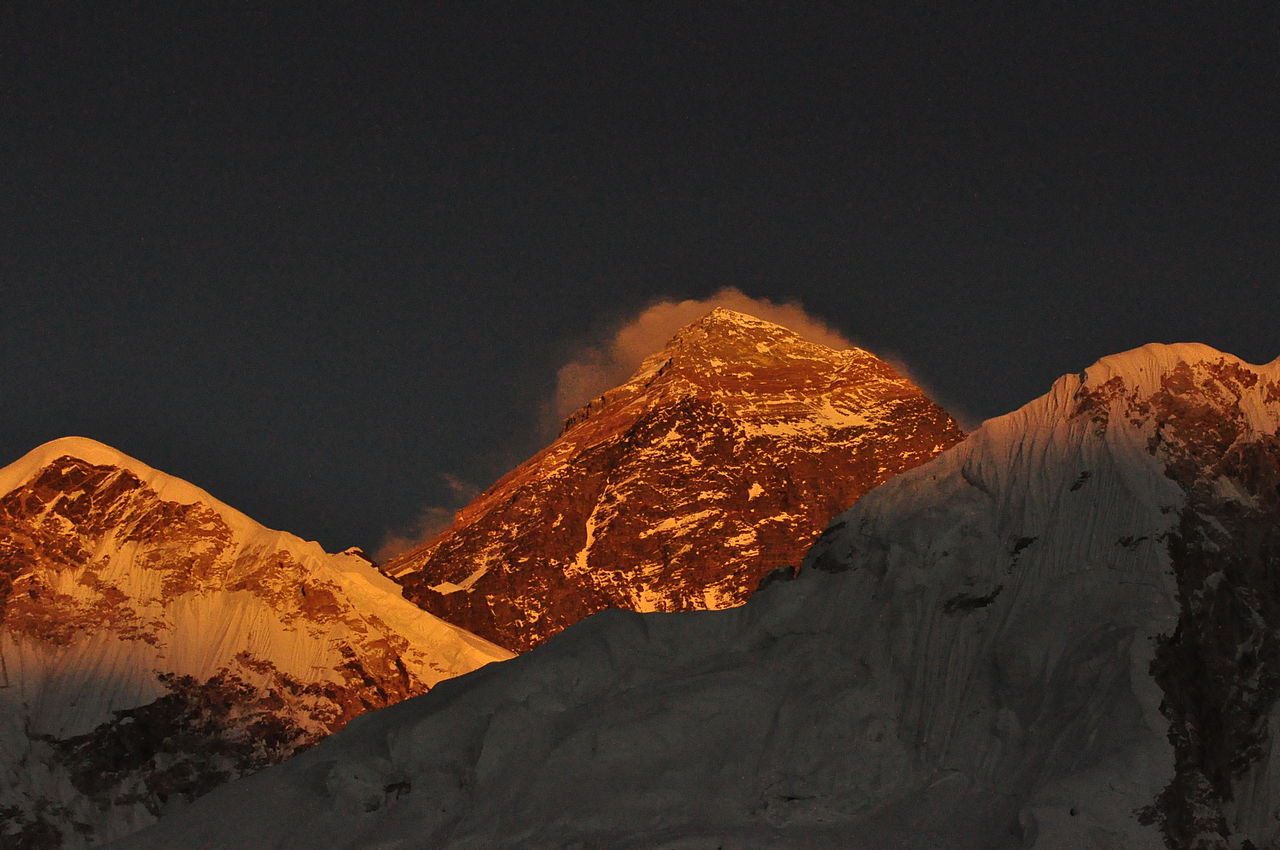
Before I departed for South America, we were watching Lhotse closely, waiting for new from the South Korean team that has been struggling for two very long months to make progress on that mountain. In the first week of November, the team set off on a summit push, installing Camp 4, and hoping to move to the top of the 8516 meter (27,940 ft) peak. According to ExWeb, the climbers reached as high as 7800 meters (25,590 ft) before they were once again turned back by high winds and poor conditions. One of the team members was also said to be in deteriorating health as well, which eventually forced the abandonment of the entire project.

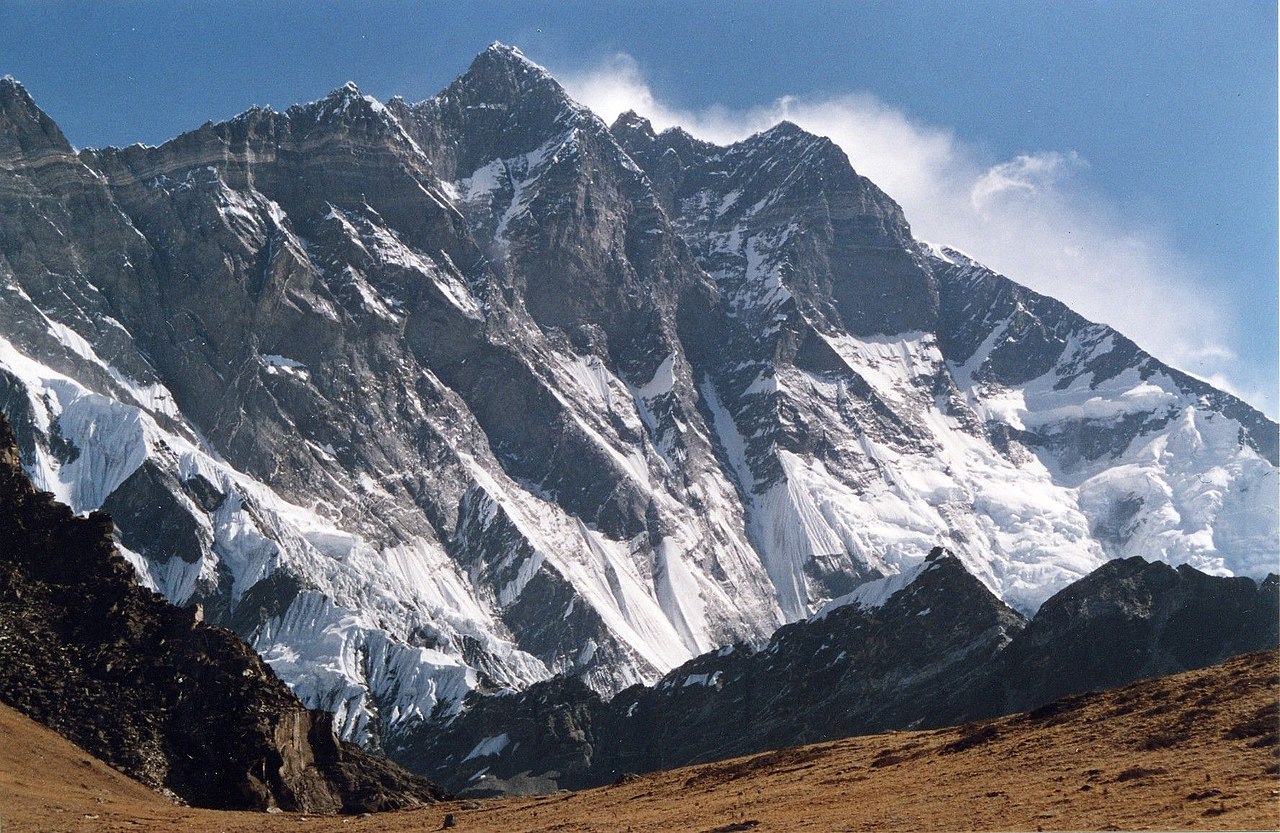
One other expedition that had been ongoing was the attempt by Canadian climbers Jason Kruk and Ian Welsted to summit Nuptse along the South Face. The duo spent four days on their summit push, but were forced to turn back after encountering conditions that prevented them from reaching the top. Later, Welsted feinted on the trail and had to be airlifted out to safety. He seems to be in good condition, and all is well, but it did put a scare into Kruk for a time. The episode took place on November 3, and was the result of fatigue after living above 5000 meters (16,404 ft) for five weeks. The boys are home now, and doing much better.

This report brings a wrap to the 2014 fall Himalaya climbing season, and now all eyes will turn towards the spring, when Everest will sure dominate the scene once again. Considering how unusual the past few seasons have been on the Big Hill, I suspect we will not lack for drama once again in 2015.


Monday, November 17, 2014

Video: What An Astronaut Sees From Space

Talk about amazing views! This video features some slick timelapse images captured from the International Space Station, with some great footage of what or planet looks like from orbit. It is filled with beautiful imagery of the Earth, from a perspective that few of us will ever get the opportunity to see for ourselves.

Thanks to the Adventure Journal for sharing this.

Astronaut - A journey to space from Guillaume JUIN on Vimeo.

Team Seagate Wins Adventure Racing World Championship

Part of the reason I was in Ecuador over the past week and a half was to cover the start of the Adventure Racing World Championship, which began in the Andean highlands, descended through the rainforest, and eventually ended on the Pacific Coast. While I was there, I witnessed the start of the race, during which 50 coed teams of four set off on a grand adventure that would cover more than 710 km (441 miles) on foot, mountain bike, and kayak. The race was an exciting one to say the least, and in the end there were some familiar names standing on the podium.

The top team at this year's ARWC was Team Seagate from New Zealand, who were the odds on favorite to win the event before it even started. They managed to complete the entire route in just 4.5 days, which is an impressive feat in and of itself. This was a course designed to test the participants at every turn, and having witnessed some of the route myself, the race certainly lived up to its billing of being a tough one.

Second place went to Team Columbia Vidaraid of Spain, who put in impressive performance throughout the race as well, finishing four hours and 15 minutes behind the winners. Team Movistar of Ecuador claimed third place overall, proving that the home field advantage can play a factor. This talented team was near the top of the leaderboard almost the entire way, and they managed to finish in a little over five days.

I want to thank the entire staff at the Huairasinchi Explorer – the host of this year's AR World Championships – for putting on such a great event. It was a joy to be back in the middle of a major adventure race once again, and it was great to catch-up with old friends, and make new ones too.

Also, congratulations to Team Seagate for running a great race. They were certainly the class of the field, and remain the best AR team in the world.

Adventures in Quito: Hiking in the Shadow of Cotopaxi

For most of my trip to Quito I had Internet access, and was able to write about my days events as they happened. On the final few days of the trip, I was in a mountain lodge that didn't have Internet, so I continued to write about my adventures so that I could share them when I got back home. I'm now getting back to my regular routine, but still have a couple of stories to share. Here's the first one about a day I spent trekking in Cotopaxi National Park.

After two straight days of gray clouds that hung low over the Earth, it was a relief to wake to sunshine and blue skies. That meant that my last day of trekking in the Andes would at least get off to a good start, and we might actually see some of the amazing scenery that had been teased over the previous two hikes. It seemed that the day was looking up, and I hadn’t even rolled out of bed yet.

Unfortunately, that feeling wouldn’t last long. When I did roust myself from the massive and comfortable bed at the Santa Ana Hacienda, I discovered that I wasn’t particularly feeling well. I’m not sure if it was the altitude or something I ate the night before, but there was definitely some stomach troubles brewing. Never the less, I was determined to hit the trail, as this was the day we would be hiking in Cotopaxi National Park, right in the shadow of the massive volcano itself.

After a quick breakfast (my stomach wasn’t much interested in food) we checked out of the Santa Ana and set off on the road to the park. Traditionally, the trek I was doing would have begun on foot at a different lodge, but my friends from Tropic were doing me a favor by showing me this route, so we had to take accommodations where we could find them. A short drive down the road put us in the national park however, and we soon transitioned to foot.
As expected, the clear skies afforded us some amazing views of the mountains that surrounded us, including Pasochoa, a 4199 meter (13,776 ft) peak that we had summited just two days earlier. But of course, the real crown jewel was Cotopaxi itself, and the gigantic volcano didn’t disappoint. It stood out starkly against the clear blue skies as clouds lightly drifted by just below the summit. It was an impressive, awe-inspiring sight, and most definitely worth the wait.

We set off across the open grassland at a steady pace with the snow-capped summit of Coto gleaming in the sun. It was impossible to ignore the giant mountain, which loomed overhead, despite the fact that there were three or four other prominent peaks that were also clearly visible from the trail. Cotopaxi is a mountain that demands attention with its beautiful, yet rugged lines, and massive presence on the landscape. 

The trail began as an access road, but soon turned into a series of twisting routes made by other trekkers, and the wild animals that inhabit the park. Before long, we were wandering through narrow valleys, up steep hills, and over prairie lands inhabited by numerous wild bulls and horses.

About an hour or so into the trek, we turned up an embankment out of one of those valleys, and climbed to the highest point of the day. It was the top of a hill that stretched roughly 3950 meters (12,959 ft) into the air, providing fantastic views of the surrounding countryside. It was a spectacular sight, and on a clear day, it was easy to see for kilometers in all directions. 

The site was so good in fact, that the ancient Incas liked it as well. More than 500 years ago, they built a fortress on top of that hill, and used it as a lookout point and way station for travelers. Some of the walls from that fortress remain to this day, marking the history that the region has witnessed over the centuries. 

The climb to the top of the hill wasn’t a particularly challenging one, but it was enough to get my already delicate stomach even more upset. I found myself laboring to hike to the top, and while there, it took longer than normal to catch my breath. Up until that point, I had been feeling fine, but the labor of the climb had kicked me into another level of suffering. For the rest of the hike I’d struggle to maintain a solid pace, and felt the energy drain from my legs in an unusual fashion. Fortunately, I never actually got sick, but the rest of the trek was a challenge when it really shouldn’t have been.

This hike is the third in a four-day lodge-to-lodge trekking itinerary offered by Tropic. The route is perhaps the most beautiful of all, but it truly shouldn’t be a very difficult walk. In fact, most of the time you didn’t need to use trekking poles at all, although Tropic definitely recommends you bring them. For the most part, the hike crosses over open landscapes, with just grasslands surrounding you. On occasion it does wander into rubble fields left over from previous eruptions of Cotopaxi, or up into the high-alpine marshlands, where the same thick, tall grass that plagued me on Pasochoa two days earlier attempted to make life hard once again. 

After descending from the Inca ruins, we struck out across open fields towards some natural springs that crisscross the national park landscape. These incredible clear – and incredibly cold – streams were a source of tranquility as we hiked along their banks. Fed by the glaciers on Cotopaxi, the water rushes down hill to join ever-enlarging rivers, which provide a steady source of water to Quito and other towns in the region. 

As we continued upstream, we actually came across the source of one of the babbling brooks. Our trail passed right over the point where the water broke out from its subterranean well, and gushed out onto the land above. It was at that point that we reached the furthest point of our trek, and started to loop back towards the end point. Cotopaxi had been on our right all morning, but was now shifting to the left as we started towards are finishing point at lodge called Tambopaxi.

On this day’s hike there were four of us crossing the wide-open fields. Our head guide Fabian lead the way, and I tried to follow close behind, although me waning energy levels made it difficult to keep up at times. We were joined by two representatives from Tropic – Javier and Carmen – who answered my questions about the trek as we walked, Typically, a group on this trek ranges in size from 2 – 6 clients, plus a guide, which is the perfect size for an adventure like this one. Anything larger becomes too cumbersome, and the fitness level to the group can vary too greatly as well. On this day, I would have said that we were all well matched, although I found myself the one who was lagging. 

By the time we started our return trip, some low hanging clouds began to move into the area, and the view of the summit of Cotopaxi became obscured. For the most part, it was still a very lovely day, but the telltale shift in the Andean weather was on the horizon. As we walked, we spied some of our locations from previously in the day from the distance, including the Inca ruins, which stood out at the top of the hill. We also encountered more wild bulls and horses as well, all of which scurried away at our approach.

Finally, we made the final push up, and out, of the valley below, and found Tambopaxi lodge, where our van was waiting to hurry us along to our next destination. For me, this marked the end of my travels with Tropic, as they dropped me off at the El Porvenir lodge, where I would spend the next two days before returning home to the states.

Traditionally, the Tropic mountain lodge trek would actually have one more leg. On the fourth day of that itinerary, the group leaves Tambopaxo and hikes up to the glacier line of the Cotopaxi, which is located at about 4800 meters (15,748 ft). While I would have liked to have been able to go for that final stage, considering my low energy levels after today’s hike, it would have been a tough slog for sure. 

Fortunately, an afternoon of rest at Hacienda El Porvenir has helped me to recover to a degree. Tomorrow, I’ll go horseback riding in the Andes, as that is one of many activities that the lodge offers. Visitors can also take in additional hiking trails, go mountain biking, or simply enjoy the ambiance that surrounds the traditional Andean farm/ranch setting. While very different from the other lodges I’ve stayed in on this trip, it provides a setting that fits in amazingly well with the Andean traditions.
National Geographic Adventure Announces 2014 Adventurers of the Year

Also while I was away, National Geographic Adventure announced the 2014 Adventurers of the Year, honoring some of the most amazing people who accomplished impressive things over the past 12 months. As usual, the list is filled with inspiring people, many of whom we have followed closely here on The Adventure Blog.

In total, there are 14 people who have earned the distinction of being named Adventurers of the Year. They include mountaineer Ueli Steck for his amazing solo-summit of Annapurna in the fall of 2013, as well as climber Tommy Caldwell, who completed the first traverse of the Fitz Roy massif in Patagonia. They are joined by ski-mountaineer Kit DesLauriers, who led an expedition to Alaska to explore the impact of climate change on glaciers there, and to more accurately measure the height of the mountains in the remote ANWR region. Swimmer Lewis Pugh get the nod for his extreme efforts in the water, but for also examining the health of the world's oceans, while blind adventurers Erik Weihenmayer and Lonnie Bedwell make the list for their successful attempt to kayak the length of the Grand Canyon. You can read about each of these men and women, and see the rest of the list, by clicking here.

Of course, Nat Geo has also opened up the voting for their annual People's Choice Adventurer of the Year as well, giving us the opportunity to vote for the person or persons, who we think made the most impressive and daring feat of the past year. Voting is open through January 31, 2015, with the winner being announced in February of next year. You can vote once a day, so be sure to check back regularly.

This is the tenth year that National Geographic has given out the Adventurer of the Year awards, and I'm proud to say that over the past few years, I've had some input on the nominees. This year, a few my suggestions once again made the cut, and it is an honor to see some of these men and women that I have followed closely since starting the blog get recognition for their efforts.

Congratulations to this year's class of Adventurers of the Year.

Nepal Extends Spring 2014 Climbing Permits for 5 Years – With a Catch!

I am back from Ecuador and ready to get back to updating The Adventure Blog on a regular schedule once again. A lot happened while I was away for the past week and a half, so over the next few days I'll be playing catch-up to a degree. So with that said, lets get stated with an important news story that broke out of Nepal last week regarding the climbing permits from the spring 2014 season, when the South Side of Everest was shut down due to the tragic avalanche that claimed the lives of 16 Sherpas on the mountain.

In the wake of that disaster – the worst in Everest history – the Nepali government announced that it would honor the climbing permits for all of the mountaineers who were unable to attempt to climb the world's highest mountain this past spring. Further, officials said that those permits would be good for up to five years, allowing climbers to come back once again, and give Everest another go. Of course, this sounds like the honorable thing for Nepal to do, considering the way the situation unfolded this past spring. But the fine print to this announcement has left many shaking their heads once again, as the Himalayan country continues to show a complete disregard for the people that spent tens of thousands of dollars to climb Everest, but didn't even get the chance to set foot on the mountain.

In their announcement, officials from the Ministry of Tourism indicated that all of the climbers listed on a permit must return to climb Everest together, or the permit will become null and void. In other words, if a single climber returns to the mountain under his or her 2014 permit, the rest of the team must accompany that climber, or they lose the right to make their attempt, and must pay for a new permit.


This is, of course, a ludicrous rule, as it will be nearly impossible for an entire team to reassemble and attempt to climb Everest together again. It makes a good deal of scheduling – not to mention budgeting – for a trip to the Himalaya to come together, and for everyone listed on a single permit to be able to coordinate their efforts seems unlikely. While some groups will probably be able to get members of the team together, it seems unlikely that entire teams will be able to agree on a date when they can all go back to Nepal together. Some climbers are simply going to lose their climbing fees, and of course Nepal is simply going to pocket that money.

The right thing to do would be to honor the permits for five years as announced, but to allow the climbers who have already paid for their permits to join other squads as their schedule permits. Why Nepal has elected to enforce these strict guidelines is unclear, but it also seems typical for the way the government their handles these situations. It is a clear sign that the officials calling the shots there are only interested in money, and not the best interest of the mountaineers who visit their country on an annual basis. Then again, this is no surprise for anyone who has followed the situation in the Himalayan country closely over the past few years. Corruption and inept management of its resources are the norm in Nepal, and that doesn't look like it is going to change anytime soon.

Hopefully, most of the climbers who were hit by the shutdown will be able to return and claim their right to use the permits they paid for. But it will simply be impossible for all of them to do so, and more than a few are going to be left out in the cold. It is a bad situation that continues to get worse.

Wednesday, November 12, 2014

Adventures in Quito: Trekking the Andes Highlands


If you read yesterday's (admittedly long) post about my adventures in and around Quito, Ecuador, you probably already know that the Andes highlands can be a challenging place to go for a hike. The weather is unpredictable – especially during the rainy season – and the trails can be steep, difficult, and often completely hidden by high grass. It was with that in mind that I woke up this morning in the incredibly warm, and comfortable, Cotopaxi Pungo lodge wondering what I'd face on my second day of hiking in the Andes. Turns out, I needn't have worried at all, as today's trek was very leisurely,  not to mention rain-free, while still providing plenty of wonderful scenery to enjoy along the way.

After yesterday's very soggy trek, I had set my trekking gear close to the fireplace in my room at Cotopaxi Pungo, and overnight, most of it dried nicely. The lone exception was my boots that still felt damp. Knowing that I needed to have good, sturdy shoes for today's walk, I dug out my thickest pair of socks, and slid them on. Then, with a bit of trepidation, I slid them into the boots in question, only to hear a resounding sloshing sounds, and feel the socks already begin to dampen. This wasn't a good start to the day, but there was nothing to do but grin and bear it. 

Fortunately, the weather outside didn't appear like it would be sending rain our way anytime soon. The clouds were once again hanging low, obscuring visions of the surrounding mountains for the most part, but it at least seemed like we'd get off to a dry start. So, after grabbing some breakfast, I returned to the trail with my guide Fabian, who led me to the summit of Pasochoa yesterday, and Carmen, a representative of Tropic  the adventure travel company that has been introducing me to one of their itineraries. The company does everything in Ecuador, including taking visitors to the Galapagos Islands, the rainforest, and the Pacific coastal region. 

Before we set off, I was informed that we were not granted the normal permit needed to hike the trail that was on the schedule for the day, so we'd be walking an alternate route along a road instead. Apparently, since we weren't scheduled to say in a certain hacienda along the route, the permits were withheld, so we had to make the most of the situation. Hearing this news, I was wondering what we might miss out on along the way, as trekking a road didn't sound like a lot of fun. It turns out the road runs almost parallel to the trail anyway, and we were still treated to some excellent views along the way. It should also be noted, that we probably encountered a half-dozen cars on the dirt and cobblestone route, and perhaps eight or ten other people walking it as well. In other words, it wasn't crowded, and it still afforded us a great connection with the Andes forests and grasslands that are common in this area.

Today's hike was to follow the Pedregal Trail, which winds its way along the Pita River – a source of water for the valley below. The Pita begins on the glaciers of Cotopaxi, and its runoff helps to sustain life in the region. But as noted, we had to take a detour, and while we were no longer following the Pedregal, we were essentially on a parallel route. 

The morning air felt cool and damp, but upon striking out from the lodge, we were soon plenty warm with the exertion of the hike. The road went over, around, and down, some rolling hills, while the clouds played peekaboo with the surrounding scenery. Nearby, Cotopaxi loomed large, but its summit remained hidden by mist and cloud cover. At one point, even Pasochoa, yesterday's big challenge, appeared from behind the fog, giving us a brief glimpse of where we had been just 24 hours earlier. 

About 45-minutes into our walk, a black puppy joined us on the trail. We weren't really sure where he came from, but he soon fell into stride along side of the three of us, as we made our way through the highlands. He stayed with us throughout the entire day, enjoying the walk as well it seems. The friendly pup showed no indication that he wanted to return to wherever he had left, and the dog was with us as we arrived at our lodge at the end of day. In fact, he seems to have already been adopted by the staff, and has made friends with the llamas that graze on the grounds. 

As our day wore on, the clouds dissipated some, giving us a better look at the surrounding countryside. What we saw were rolling hills covered in incredibly fertile grasslands, which were perfect for farming and grazing of livestock. Many of the fields we passed had horses or cattle in them, and small homesteads dotted the landscapes. Occasionally, one of the farmers could be spotted going about the days chores. Any that past close enough to see our wandering trio were quick to greet us with a friendly "hola" or "buenos días." The warm and inviting people of Ecuador are found high in the Andes as well it seems. 

Around noon we stopped for lunch, and were soon greeted by the six mountain guides that had accompanied us on our Pasachoa summit, and soggy trek from yesterday. They were walking the same route as us, and had started a short time after, but had caught up just as we sat down for sandwiches and snacks on a covered bench. It was a lively and fun reunion for all involved, as it seemed like we all shared a common bond following the mountain storm we had survived together the day before. Our combined groups would hike the final section of the road to our lodge together, with much laughter to be had along the way. 

As the afternoon drew on, the sun even poked out from behind the clouds, and blue sky appeared overhead, That made for a pleasant walk to the Hacienda Santa Ana, a historic hotel that was once home to the Jesuit priests that came to the area. It has been restored, and looks fantastic, with beautiful and comfortable rooms as well. The restaurant serves wonderful gourmet meals too, which make it a wonderful destination following a long day on the trail. 

Tomorrow, I'll spend just half of the day with Tropic doing yet another trek, this time along the Cotopaxi Trail. It is said to be another relatively easy hike, and we're predicted to finish up by around noon or so. Hopefully the weather will cooperate, and provide us with some good views of this awesome mountain. It has proven somewhat elusive over the past couple of days. Once I'm done with the trek, I'll then transfer to the Tierra del Volcan, a lodge that sits right on the edge of Cotopaxi National Park, where I'll spend my last couple of days in Ecuador before returning home. 

The trip so far has been filled with wonders, both cultural and natural. Ecuador is a wonderful place for adventure travelers, as it has so much to offer outdoor enthusiasts. But the thing that will stick with me the most upon my return to the U.S. is just how friendly and hospitable the Ecuadorian people are. Everyone I have met has been incredibly accommodating and polite. That is a wonderful impression to take away from any destination.